DOJ Nears Deal to Share State Voter Roll Data With DHS for Immigration Probes
The DOJ is finalizing a deal to share state voter rolls with ICE's Homeland Security Investigations unit — data that includes Social Security numbers and driver's license details.
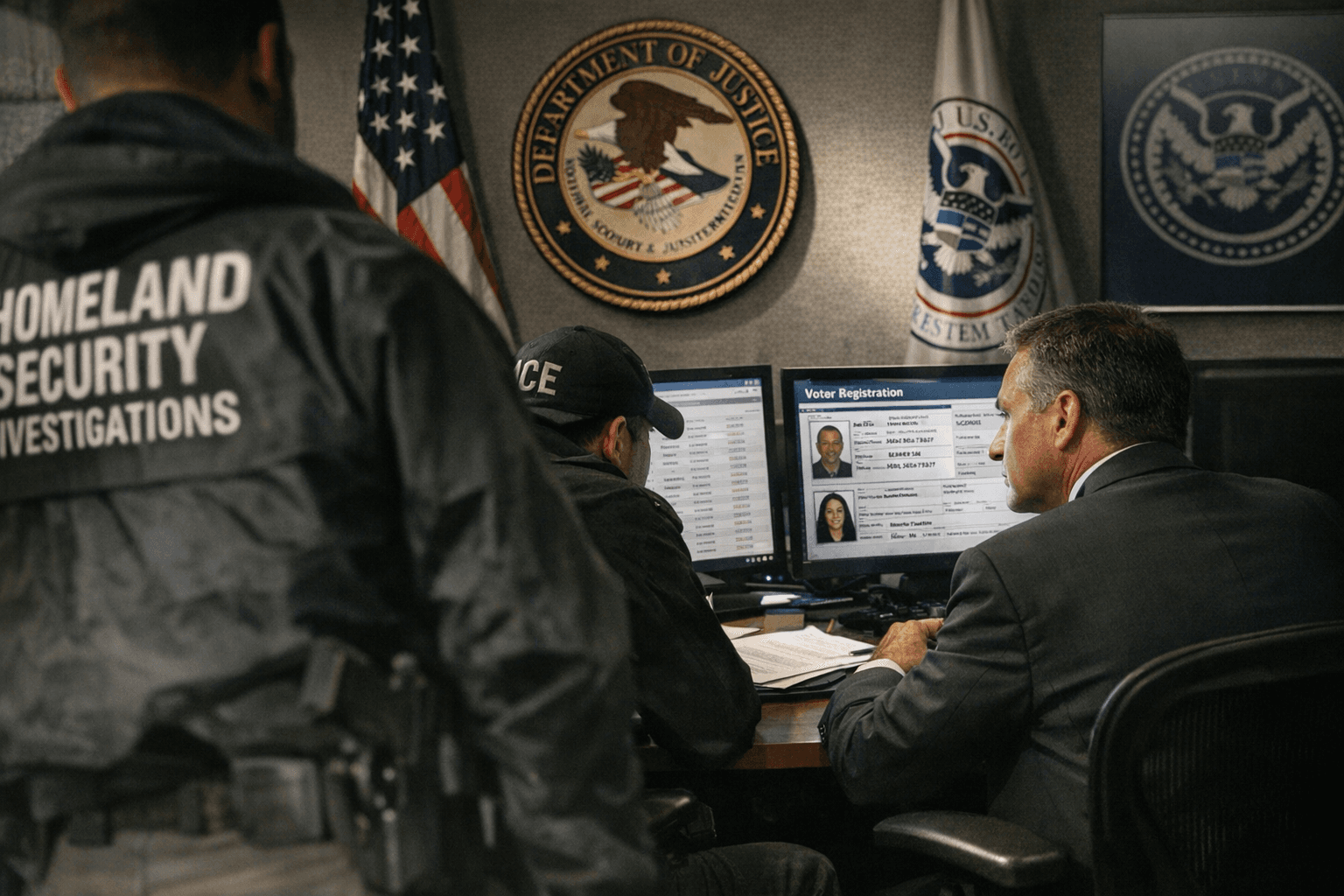
The Justice Department and the Department of Homeland Security were close to finalizing an agreement that will allow the federal government to use sensitive voter registration data for immigration and criminal investigations, sources with direct knowledge of the plan said. The arrangement came into focus just days after the DOJ settled its lawsuit against Oklahoma, securing a complete copy of the state's voter rolls including some of the most sensitive personal identifiers collected anywhere in American government.
The Justice Department will share voter roll data that its Civil Rights Division is collecting from states with Immigration and Customs Enforcement's Homeland Security Investigations unit as part of an effort to determine whether non-citizens are unlawfully registered or have cast ballots in prior elections. The Justice Department's controversial collection of voter roll data is being litigated in dozens of states, and the department has not disclosed its data-sharing plans to any of the courts.
Oklahoma agreed Tuesday to turn over its full voter rolls to the Trump Justice Department, including sensitive personal data the state had previously refused to provide. Under the settlement, state officials will give the DOJ a complete copy of Oklahoma's statewide voter registration database, including voters' names, birth dates, residential addresses and identifying numbers, including driver's license and the last four digits of Social Security numbers. In exchange, the DOJ dismissed the lawsuit against Oklahoma, avoiding a court ruling on whether it has the legal authority to demand such records. The agreement also allows the department to seek additional voter data in the future and requires Oklahoma to transmit the records through federal systems.
Assistant Attorney General Harmeet Dhillon called it "a positive step forward for election integrity," adding that "clean voter rolls are essential for there to be confidence in our elections." Oklahoma Attorney General Gentner Drummond, who entered the settlement on behalf of State Election Board Secretary Paul Ziriax, said the state remains "committed to both election integrity and the protection of personal information." The agreement marked a significant expansion of the DOJ's access to voter data and a reversal for Oklahoma, which had previously resisted turning over sensitive personal information in unredacted form. State officials had offered to share a version of the voter file without Social Security and driver's license information, but the DOJ rejected that offer.
The broader campaign has been marred by a series of legal and technical errors. In Oklahoma, DOJ officials spent months emailing election officials at the wrong address, repeatedly following up on a request the state had never received. Despite those failures, the department ultimately secured the data and moved immediately to dismiss the case.
In all of its cases, the Civil Rights Division's attorneys have not disclosed the pending data-sharing agreement with DHS, claiming instead they need the information to ensure compliance with several other federal laws that require states to maintain clean voter registration lists. That gap between stated purpose and reported plan drew sharp questioning from the bench. In a March 3 court hearing in Minnesota, a federal judge explicitly asked DOJ Civil Rights Division attorney James Tucker if the department had any "intention to use this data to conduct immigration enforcement." Tucker replied, "Not to my knowledge, your honor." During a separate hearing in Connecticut on March 19, Tucker was asked by a different judge if there was a plan to share the data with DHS. "I don't believe that's a decision that's been made," he said. When pressed further, he conceded that he does not know about Attorney General Pam Bondi's future plans.
The White House has also been involved in discussions with officials from both the Justice Department and the Department of Homeland Security about the data-sharing arrangement. A DHS spokesperson said in a statement that "collaboration with the DOJ will lawfully and critically enable DHS to prevent illegal aliens from corrupting our republic's democratic process."
The Brennan Center for Justice described the mechanism the DOJ has used to obtain state data: the government has not filed any formal notice in the Federal Register explicitly disclosing its plan to collect private voter registration data, even though the Privacy Act requires the government to provide public notice and comment before it collects records on individuals. Under a confidential memorandum of understanding the DOJ has asked states to sign, the department would "test, analyze, and assess" voter rolls and then instruct states to remove specific flagged voters within 45 days. The Brennan Center warned that the agreement "says nothing about how the DOJ will examine the voter rolls, nor does it say states would be given any reasons for demanded removals," calling it an approach "the federal government has never done before."
The department has filed lawsuits against dozens of states seeking access to unredacted voter rolls, an effort that has drawn resistance from both Democratic and Republican officials and has already been rejected in several federal courts. In recent court testimony, DOJ lawyers revealed that about 16 or 17 states had already given up their voter rolls to the department. Texas and Alaska signed the confidential memorandum; Tennessee and South Dakota refused. Colorado, one of more than 25 states that declined to turn over full voter files, was the first to make the proposed agreement public.
Several states that have already used federal immigration data to vet their rolls have frequently flagged false positives. In Idaho, after a search of that data tagged 760 potential non-citizens among more than 1 million residents on the rolls, further review by election officials narrowed the list to about a dozen cases referred for possible federal criminal investigation.
The government's silence about its DHS coordination in active court filings could potentially run afoul of rules of professional conduct governing federal attorneys, according to legal analysts familiar with the cases.
Know something we missed? Have a correction or additional information?
Submit a Tip