DOJ Opens Antitrust Probe Into NFL Broadcasting and Streaming Deals
Watching every NFL game in 2025 required access to 10 different services at a potential cost exceeding $1,500, prompting a Justice Department antitrust probe.
The Justice Department opened an antitrust investigation into the NFL's broadcasting and streaming contracts, scrutinizing whether the league deployed anticompetitive tactics that have driven fans' subscription costs to record highs while funneling games behind an expanding array of paywalls.
A government official described the probe as being "about affordability for consumers and creating an even playing field for providers." The Wall Street Journal first reported the investigation, which has since been confirmed by ESPN, CBS News, CNN, NBC News, and ABC News.
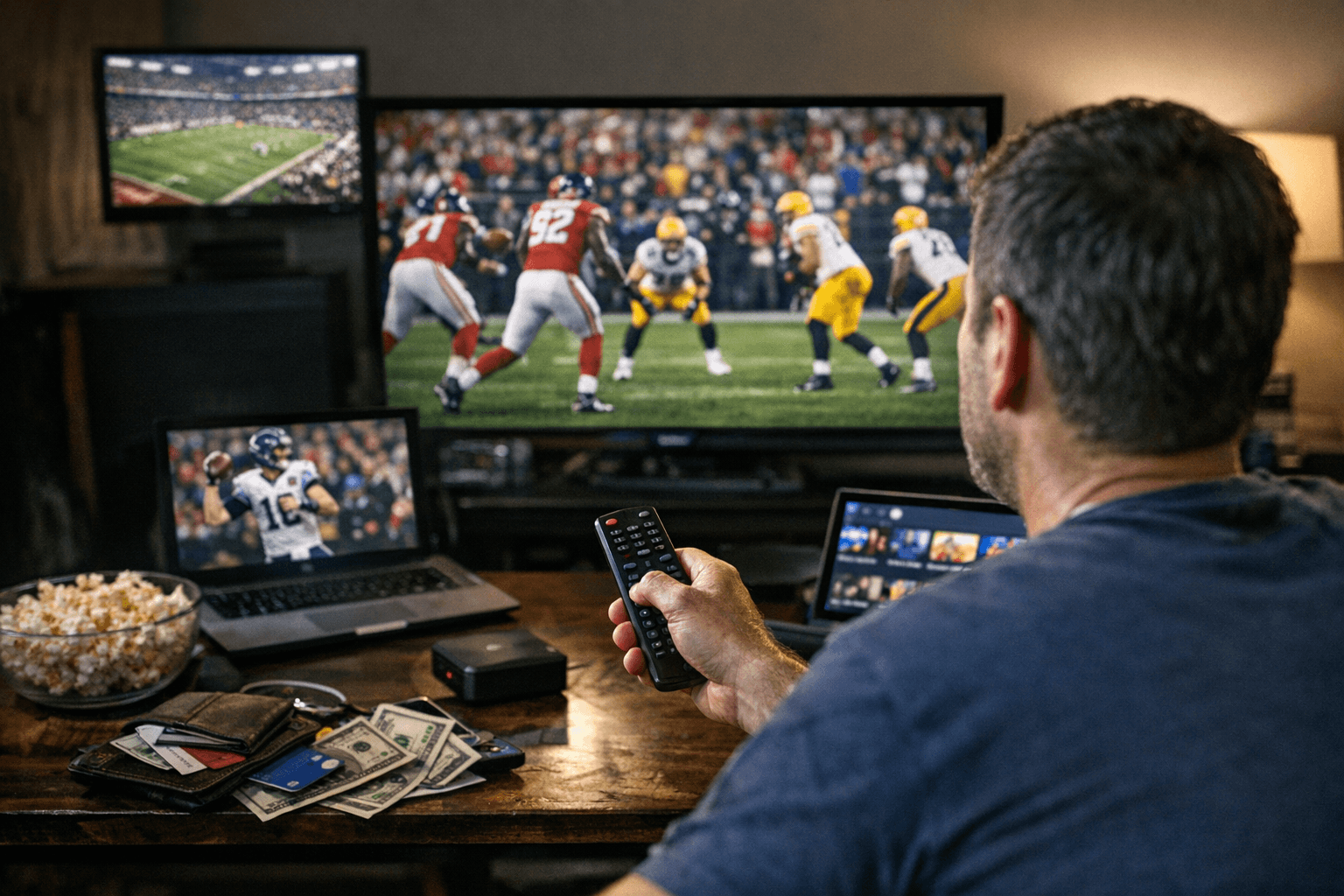
The numbers underscore the stakes. The FCC found that NFL games aired on 10 different services and networks in 2025, with 20 regular season games and one playoff contest airing exclusively on four paid streaming platforms: Amazon Prime Video, YouTube, Peacock, and Netflix. The FCC estimated that watching every NFL game last season could cost a consumer more than $1,500, a steep climb from the era when virtually all games aired on free, over-the-air broadcast television.
That cost escalation traces directly to the architecture of the NFL's current media portfolio. The league holds rights agreements collectively valued at approximately $110 billion over 11 years (2023–2033), generating roughly $12 to $12.5 billion annually from CBS, NBC, Fox, ESPN/ABC, Amazon, YouTube/Google, Netflix, and Peacock. In 2023, 93 of the 100 most-watched U.S. television broadcasts were NFL games, a statistic that explains both the league's pricing power and the regulatory attention it now faces.
At the center of the legal dispute sits the Sports Broadcasting Act of 1961, which gave professional sports leagues an antitrust carve-out to negotiate league-wide television contracts with national networks. Courts have ruled that this exemption applies only to broadcast television and does not extend to cable, satellite, or streaming platforms. As Sen. Mike Lee (R-Utah), chair of the Senate Judiciary Subcommittee on Antitrust, Competition Policy, and Consumer Rights, posted on X after news of the probe broke: "Instead of a small number of free broadcast networks, the NFL now licenses games simultaneously to subscription streaming platforms, premium cable networks, and technology companies operating under different business models."
Lee had written to the DOJ and the Federal Trade Commission on March 3 urging a formal review of the NFL's distribution practices. The U.S. House Committee on the Judiciary opened a broader review of the 1961 act last year. FCC Chairman Brendan Carr issued a public notice in February soliciting comments on sports distribution and public-interest obligations, and reported receiving "thousands and thousands" of responses, with most supporting keeping sports on free broadcast television. A Fox News poll in March found 72% of sports fans believe major sporting events should remain free.
The NFL pushed back firmly, saying in a statement: "The NFL's media distribution model is the most fan and broadcaster-friendly in the entire sports and entertainment industry. With over 87% of our games on free, broadcast television...the 2025 season was our most viewed since 1989."
The DOJ probe runs parallel to a major antitrust lawsuit still working through the courts. A Los Angeles jury awarded approximately $4.7 billion against the NFL in June 2024 in a class action brought by 2.4 million residential subscribers and 48,000 businesses who paid for the Sunday Ticket out-of-market package on DirecTV between 2011 and 2022. Under federal antitrust law, trebled damages could have exceeded $14 billion. U.S. District Judge Philip S. Gutierrez overturned the verdict in August 2024, citing flawed expert testimony, and plaintiffs appealed in January 2025. The Biden DOJ filed an amicus brief in January 2025 urging the Ninth Circuit to vacate the dismissal, and a Ninth Circuit panel has since signaled reservations about the NFL's legal position.
Legal analysts caution the investigation could run into a series of obstacles that lead to it being dropped, including unsettled questions about whether the Sports Broadcasting Act's application to streaming creates any actionable liability. With the NFL holding opt-out clauses on its current deals starting in 2029, and Paramount's 2025 merger with Skydance having triggered a change-of-control clause that enables the league to reopen broadcast deals after the 2029–30 season, the structure of sports broadcasting is already in motion. Whether federal antitrust enforcement reshapes that timeline depends on whether investigators can prove the NFL's conduct exceeded the bounds of its 65-year-old congressional exemption.
This article was produced by Prism’s automated news system from verified source data, official records, and press releases, then run through automated quality and moderation checks before publishing. The system is built and supervised by the people who set the standards it runs under. Read our full AI policy.
Know something we missed? Have a correction or additional information?
Submit a Tip