Dollar General stock slips, underperforms larger retail rivals
Shares slipped on Jan. 16, signaling investor concern that could affect hiring, store investment and operational decisions for front-line workers.
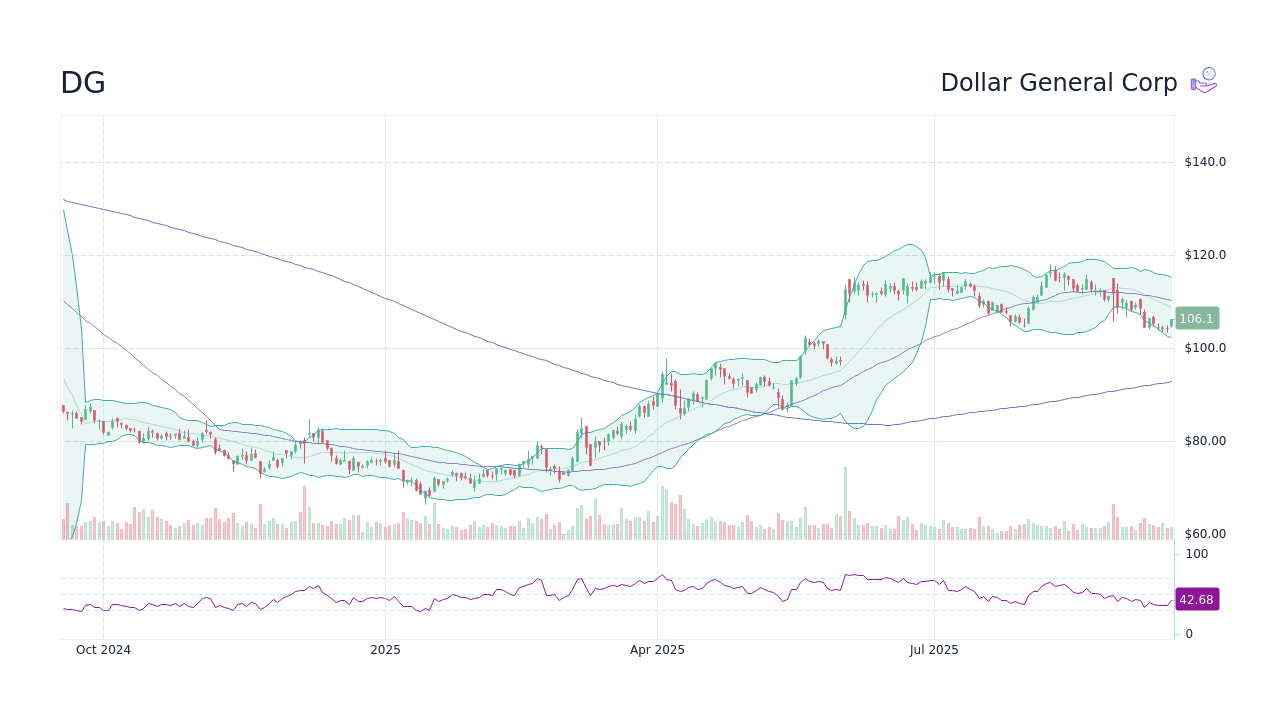
Dollar General shares moved lower during trading on Jan. 16, underperforming several larger retail peers including Walmart, Amazon and Costco. The stock's decline came amid notable intra-month price swings and elevated trading volume, with the share price trading near its 52-week high but failing to keep pace with broader retail gains.
The market action reflects investor response to a string of recent operational updates and analyst commentary that have kept the company in focus. While the move on Jan. 16 was a market event rather than a direct workplace announcement, fluctuations in the stock can quickly filter down into day-to-day decisions that affect store staffing, capital projects and resource allocation.
For employees, the implications are practical. When investor pressure mounts, companies often reassess near-term spending and execution priorities. That can mean slower rollouts of store remodels and planogram resets, tighter control of inventory orders to manage working capital, and renewed emphasis on efficiency metrics at the store level such as shrink reduction and register turnaround. Hiring and scheduling decisions for front-line roles may be influenced as corporate weighs labor costs against sales and margin objectives.
Underperformance relative to peers amplifies that scrutiny. Competing with Amazon, Walmart and Costco on assortment, price and convenience is an ongoing challenge for a dollar-store model that relies on tight margins and high-density store footprints. If management responds to the stock weakness by prioritizing margin preservation, workers could see adjustments to overtime availability, changes to hourly staffing levels, or shifts in hours for tasks such as shelf stocking, resets and promotional setups.

Heightened trading volume and intra-month volatility also signal increased investor attention that can lead to faster strategic pivots. That could speed decisions on expansion plans, corporate hiring or technology investments—areas that determine whether new stores open and whether district and corporate headcount grows or contracts. Store-level employees should watch for communications from managers about operational pilots or cost initiatives that often precede broader corporate moves.
What comes next is likely to matter more than a single day of trading. Watch for upcoming earnings guidance, analyst updates and any management commentary on capital spending, store growth and labor planning. Those items will give a clearer picture of the company's priorities and how they translate to schedules, staffing and resources at the store level.
For workers, staying informed about local store changes and keeping lines of communication open with supervisors will help spot early signals of staffing or operational shifts. Longer term, how leadership balances investor expectations with store execution will determine whether short-term market pressure becomes tangible workplace change.
Sources:
Know something we missed? Have a correction or additional information?
Submit a Tip