Employees Say Dollar General Labor Cuts Create One-Cashier Shifts, Safety Risks
A worker posted a photo showing a long checkout line with only one cashier, sparking employee reports that district labor cuts are forcing one-cashier shifts and raising safety and service concerns.
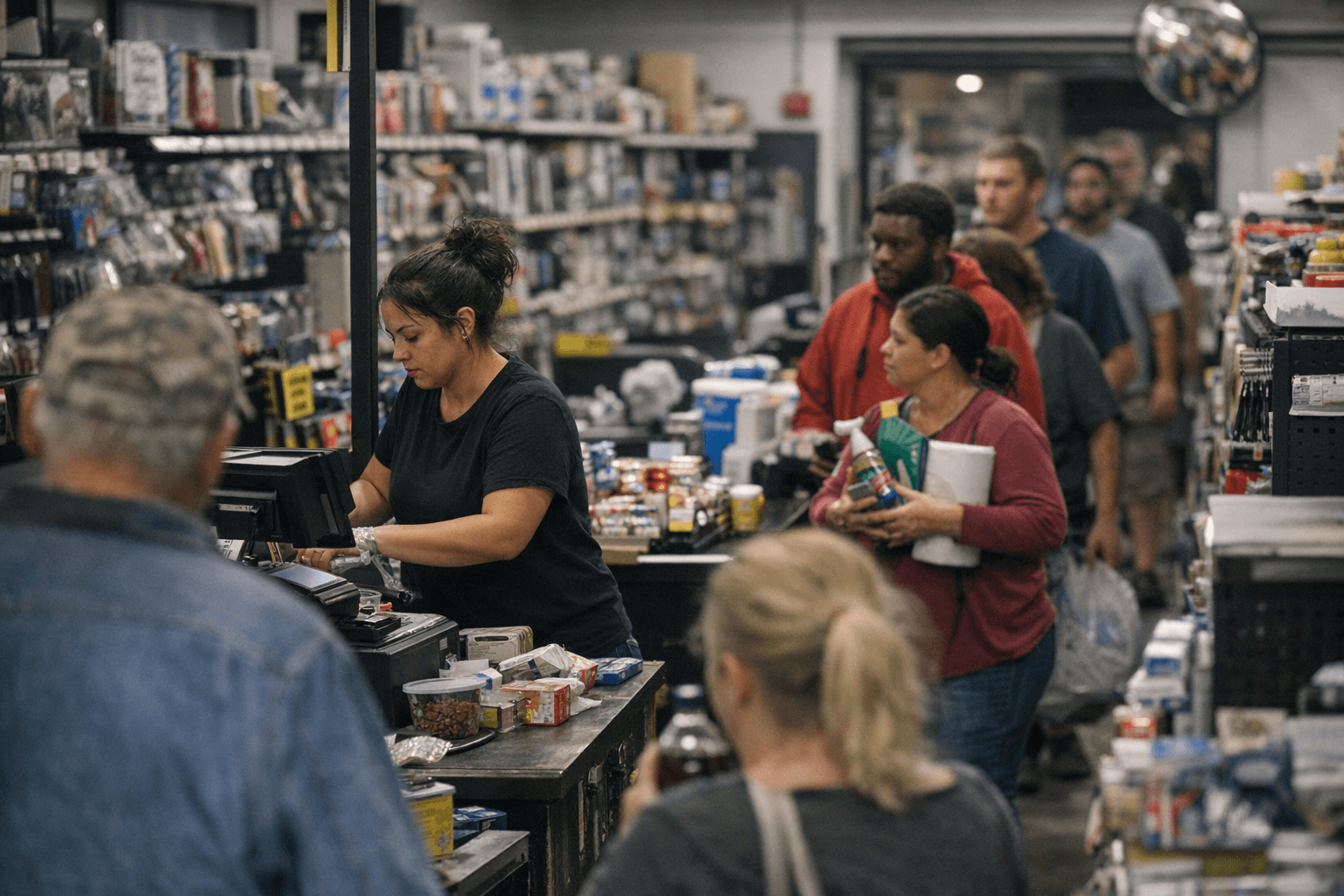
A store worker shared a photo and complaint on a community thread showing a long checkout line with only one register staffed, prompting multiple current and former employees to describe a pattern of chronic understaffing tied to cut weekly labor hours. The initial post was made on January 15, 2026, and replies from other workers between January 15 and January 18 documented firsthand accounts of stores routinely running one register at a time and managers limited by district labor allocations.
Commenters described scheduling practices that leave stores short during peak periods and reduce frontline schedules to the minimum allowable hours. Several workers wrote that their stores are given constrained weekly labor budgets from district leadership, which forces managers to choose between covering stock and checkout duties or keeping a single cashier on duty. The thread included multiple store-level examples from January 2026 showing how those decisions played out in real time on the sales floor.
Employees raised safety concerns tied to the one-cashier shifts, especially in higher-crime neighborhoods. With minimal staff, workers said they felt more vulnerable to robberies and assaults and that there were fewer coworkers available to de-escalate incidents or provide assistance after-hours. Workers also reported that routine hour cuts left stores understaffed during promotional periods and evening rushes, increasing pressure on the remaining employees and slowing customer service.
The reported effects extend beyond safety. Frontline staff described increased stress, longer lines and slower checkouts, and difficulty finding coverage when scheduled staff called out. Managers told peers they were constrained by district labor allocations, suggesting the problem stems from staffing plans set above individual stores rather than local managerial choice. Several former employees in the discussion said they had left positions after repeated staffing shortfalls and unpredictable schedules.
These accounts align with known tensions in low-margin, high-volume retail models, where tight labor budgets can improve short-term cost metrics but strain operational reliability and worker retention. For employees, the immediate impacts are tangible: heavier workloads, unresolved safety anxieties, and fewer hours. For customers, the result can be longer waits and reduced in-store services.
The conversation on the community thread underscores a broader operational stress point that is affecting multiple stores. If district-level labor allocations remain rigid, frontline workers say staffing gaps and safety risks are likely to continue. For employees and managers looking ahead, the debate raises questions about how to balance labor budgets with on-the-ground realities of peak traffic and security needs, and whether corporate scheduling practices will be adjusted in response to sustained reports from the field.
Sources:
Know something we missed? Have a correction or additional information?
Submit a Tip