Dominican Republic floods displace 30,000 as storms linger for weeks
Nearly 30,000 people fled floodwaters as stalled storms kept pounding the Dominican Republic for more than a month, exposing fragile drainage and evacuation systems.
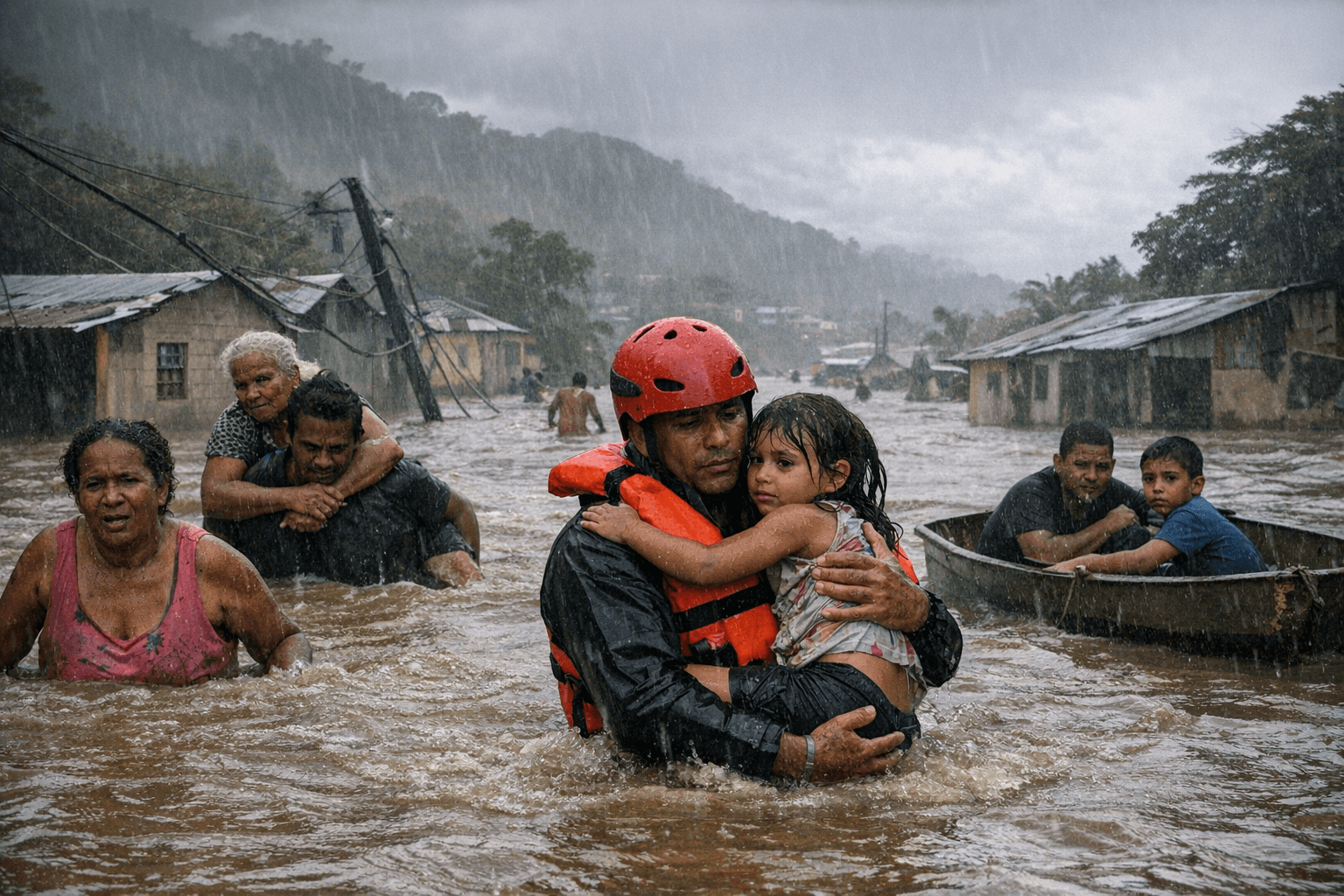
Torrential rains forced roughly 30,000 people from their homes across the Dominican Republic, turning a prolonged stretch of stormy weather into a national test of flood preparedness, emergency response and infrastructure resilience. With rain bands parked over the island for more than a month, the crisis spread beyond isolated neighborhoods and into roads, waterways, schools and power systems.
The flooding had already killed a child, damaged more than 1,000 homes and caused power and water outages by April 8. Forecasters said some areas took in as much as 12 inches, or 30 centimeters, of rain in less than 24 hours, while crews evacuated more than 5,000 people that day. Rescuers pulled seven people from rising floodwaters, including a man trapped in a sewer in Santo Domingo, and officials suspended classes at public and private schools while ordering nonessential employees to work remotely.
As the weather system lingered, the Emergency Operations Center expanded red alerts to Puerto Plata, Valverde, Espaillat and María Trinidad Sánchez, with the National District and 14 provinces under yellow alert and seven under green alert. Officials said the danger came from river, stream and ravine flooding, along with flash floods and urban flooding, after saturated soils left little capacity to absorb more rain. In San José de Ocoa, more than 20 communities were cut off after a river overflowed, a sharp reminder of how quickly inland flooding can sever access to homes, supplies and emergency crews.
President Luis Abinader responded by declaring a regional state of emergency through Decree 234-26 for Puerto Plata, Espaillat, Valverde, Santiago, Santo Domingo and the National District. The government said the measure would accelerate the deployment of financial resources, equipment and response teams as the rains and strong winds damaged agriculture, infrastructure, housing and other productive sectors. Authorities also urged people to stay away from rivers and coasts and to avoid interfering with evacuations in vulnerable areas.
The scale of displacement suggests the challenge is no longer just rainfall, but whether the country’s emergency planning, drainage systems and local infrastructure can keep pace with repeated extreme-weather events. In a nation shaped by mountains, crowded settlements and fast-rising waterways, every additional day of rain raises the cost in homes, access and public safety.
This article was produced by Prism’s automated news system from verified source data, official records, and press releases, then run through automated quality and moderation checks before publishing. The system is built and supervised by the people who set the standards it runs under. Read our full AI policy.
Did this article answer your question?