Dow Flat as Iran Conflict Escalates, Investors Bet on De-escalation
Wall Street shrugged off the latest Iran shock as oil climbed and the Strait of Hormuz tightened again. Investors are still betting any disruption stays contained.
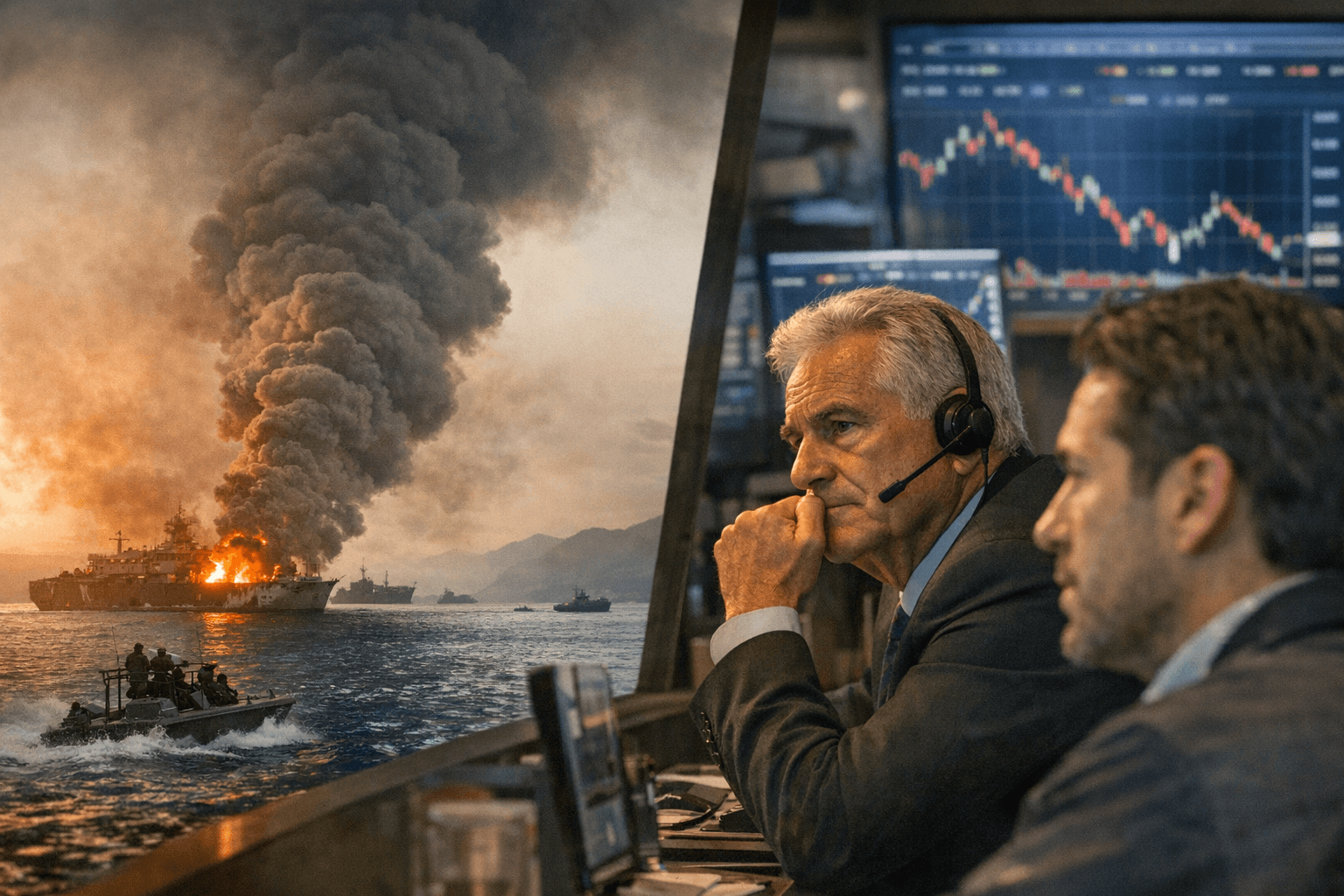
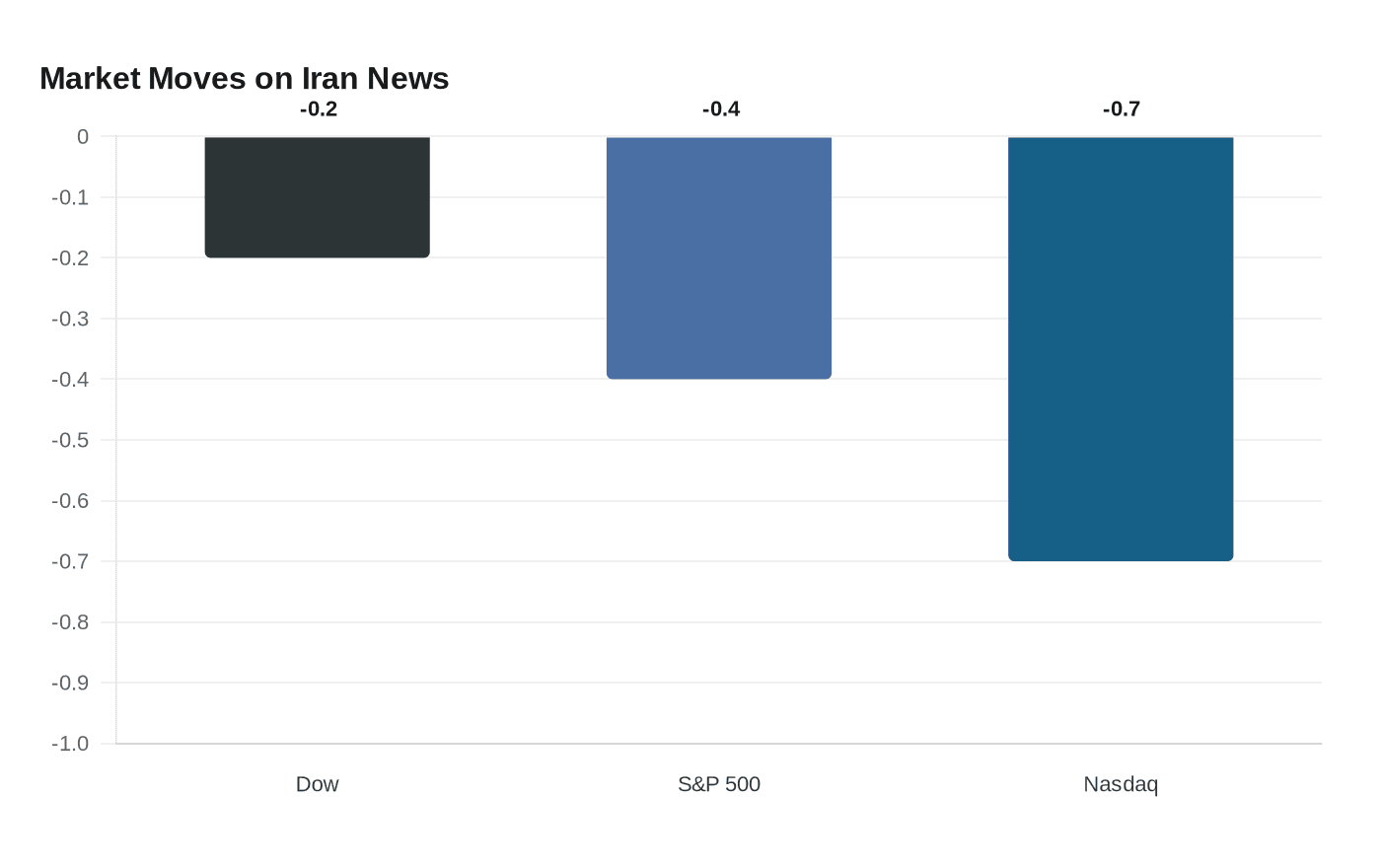
The Dow barely moved as the Iran conflict worsened, a sign that traders are still pricing a fast de-escalation rather than a sustained energy shock. The index finished down 93 points, or 0.2%, while the S&P 500 slipped 0.4% and the Nasdaq Composite fell 0.7%, even as West Texas Intermediate crude climbed above $88 a barrel and Brent topped $94.
That calm sits on a narrow assumption: the confrontation will not spill into a prolonged shutdown of Middle East oil flows. The Strait of Hormuz, which carries roughly 20% of the world’s oil and natural gas, was briefly reopened after a ceasefire, but vessel traffic through the passage was restricted again after the latest escalation. Investors had already pushed the S&P 500 and Nasdaq to all-time highs the week before, after a ceasefire between Iran and Lebanon, a reminder that markets have been willing to look through repeated flareups as long as the shipping lane stays usable.
The market’s resilience also reflects how quickly the first phase of the war was absorbed. The S&P 500 fell about 8% in the first weeks of the conflict, from February 28 to a March 30 low, before rebounding to a record by April 16. That rebound has given traders confidence that geopolitics can shake commodities without necessarily breaking the broader bull market. J.P. Morgan Private Bank economist Joe Seydl said, “The stock market is trying to price the world six to 12 months ahead, not just today.” Moody’s chief economist Mark Zandi said the market has stayed resilient because investors expect the war to be resolved relatively quickly, while Aptus Capital Advisors’ David Wagner said the war is now “in the market’s rearview mirror.”
Even so, the risk premium is not disappearing. The ceasefire that followed Pakistan-led diplomatic efforts hinged on the complete, immediate and safe opening of the Strait of Hormuz, and Iran’s insistence that passage would depend on coordination with its armed forces left enough ambiguity to unsettle the truce. Matt Gertken of BCA Research warned that that ambiguity could still derail the ceasefire later this year. Morgan Stanley Research said the disruption is already forcing production shutdowns in the Persian Gulf and beyond, and raised its 2026 oil forecast to $80 to $90 a barrel, from about $60 in its November outlook.
The regional backdrop remains fragile. Israel began marking Memorial Day under uneasy ceasefires with Iran and Lebanon, and Benjamin Netanyahu said the job against Iran was not finished. AP said a 10-day ceasefire between Israel and Lebanon had taken effect, but the market is acting as if diplomacy will hold long enough to prevent the oil shock from becoming something larger.
This article was produced by Prism’s automated news system from verified source data, official records, and press releases, then run through automated quality and moderation checks before publishing. The system is built and supervised by the people who set the standards it runs under. Read our full AI policy.
Did this article answer your question?

