Drought pushes more than two million Kenyans into worsening food insecurity
Over two million Kenyans face worsening food security after one of the driest Oct-Dec rainy seasons on record.
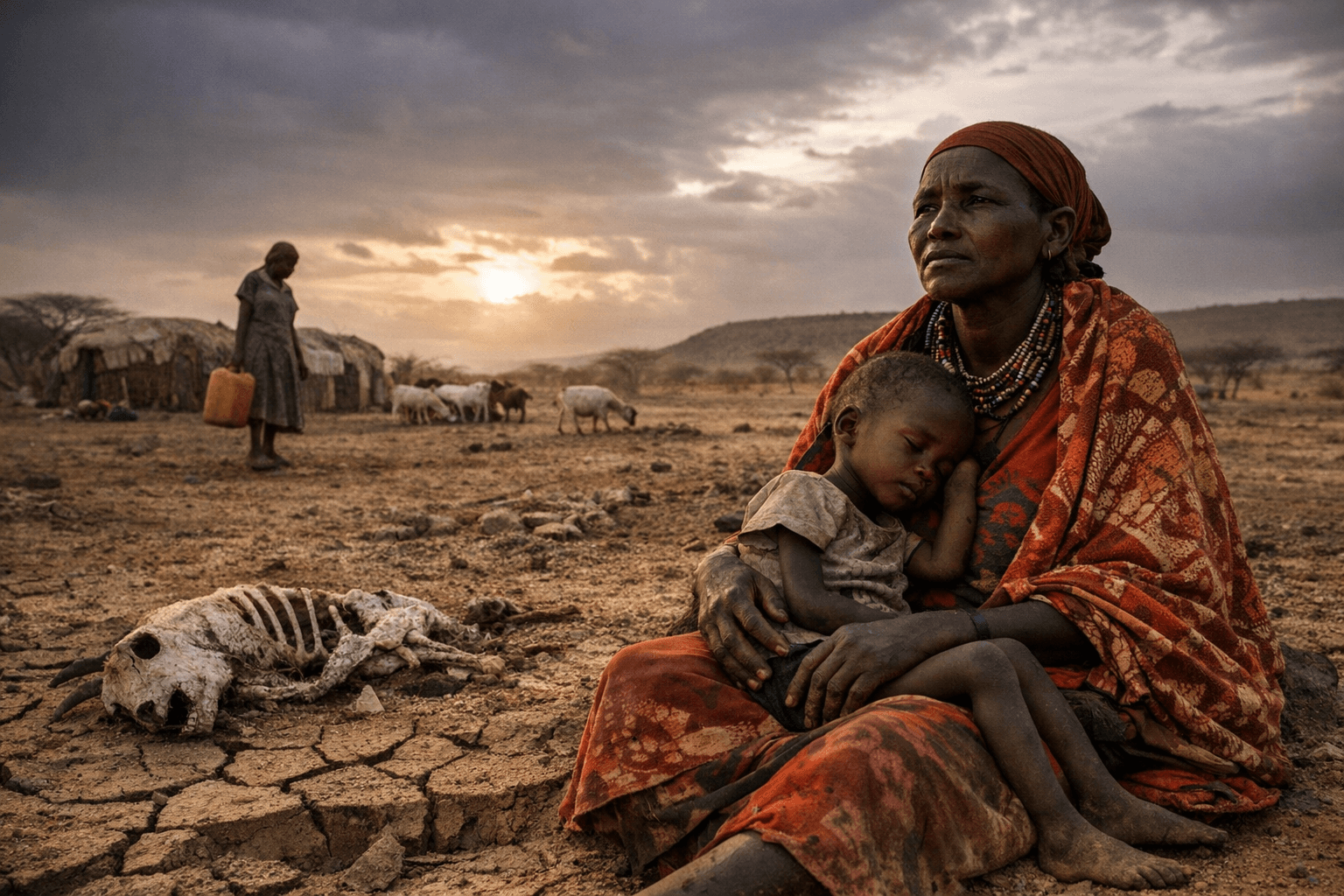
U.N. humanitarian and health agencies, together with Kenyan government assessments, reported on Jan. 24 that more than two million people in parts of Kenya were confronting deteriorating food security and heightened health and nutrition risks after one of the driest October–December rainy seasons on record. The assessments warned that the shortfall in rains left crops and pasture severely depleted and sharply reduced households' ability to buy food or sustain livestock.
The figure, more than two million people, amounts to roughly 3.7 percent of Kenya's population of about 54 million, underscoring the concentrated severity of the shock across arid and semi-arid areas. The agencies said the drought's impacts were not limited to immediate hunger. Reduced water availability increased the risk of waterborne disease, and falling food consumption was set to drive up acute malnutrition, especially among children and pregnant women. Health systems in the affected districts were already stretched from routine burdens and periodic outbreaks.
Economically, the drought was likely to reverberate beyond the worst-hit districts. Kenya's economy remains closely tied to rainfed agriculture, which represents a significant share of national livelihoods and a material portion of export earnings. Lower domestic production of staples will increase demand for imports and could add upward pressure on food prices that have been a persistent component of headline inflation in recent years. For vulnerable urban and rural households that spend a large share of income on food, even modest price rises can cause rapid declines in real living standards and push more families below subsistence thresholds.
Government and U.N. assessments called for rapid humanitarian action to blunt the immediate health and nutrition consequences and to prevent livestock losses that would prolong recovery. Recommended measures included targeted cash transfers, scaling up treatment for acute malnutrition, water trucking and rehabilitation of water points, and support to protect remaining assets such as herds. Without timely assistance, analysts warned that temporary shocks risked becoming long-term losses of productive capacity for pastoralist communities.
The unfolding crisis also feeds into longer-term policy debates about resilience and fiscal preparedness. Repeated drought episodes in East Africa have lengthened recovery times for households and increased the fiscal cost of emergency responses. Policymakers face choices about expanding social protection, investing in drought-resilient irrigation and water storage, and improving early-warning systems to trigger quicker, cheaper responses. Strengthening livestock insurance and market interventions to stabilize prices would also address some market risks exposed by the current shock.
Donor financing and an agile domestic response will determine how quickly affected communities can stabilize. But the Jan. 24 assessments made plain that one of the driest Oct-Dec seasons on record had already translated into a humanitarian and public-health emergency for millions, and that without sustained policy action and funding, economic and nutritional losses could deepen and become harder to reverse.
This article was produced by Prism’s automated news system from verified source data, official records, and press releases, then run through automated quality and moderation checks before publishing. The system is built and supervised by the people who set the standards it runs under. Read our full AI policy.
Did this article answer your question?


