Drugmakers raise legal alarms over FDA rapid review voucher program
Drugmakers are split over FDA’s rapid voucher program amid legal and safety concerns, intensifying worries about rushed approvals and agency capacity.
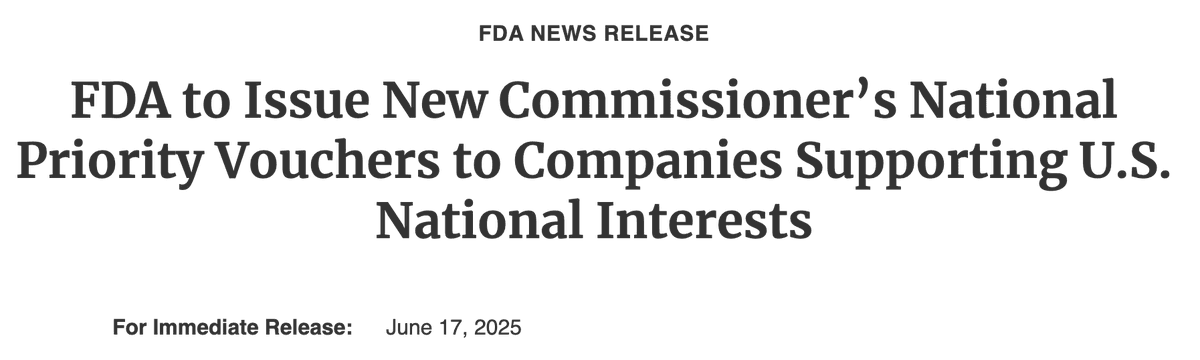
More than half a dozen major pharmaceutical companies have joined the U.S. Food and Drug Administration’s National Priority Voucher Program, while a separate group of leading firms has declined to participate, citing legal and safety risks that could reverberate across patients, manufacturers and the regulatory system.
The program, unveiled in June by FDA Commissioner Marty Makary, allows the commissioner to issue approval decisions in as little as one to two months for a limited number of drugs that meet specified criteria: therapies deemed critical to public health or national security, products manufactured in the United States, or medicines offered at low prices. It is marketed as an addition to the agency’s existing expedited pathways, which typically take six to twelve months.
Industry reaction has been sharply divided. Several companies see the voucher pathway as a potential shortcut to market for high-priority, lower-cost products. Others are refusing to apply, with multiple industry sources saying legal exposure was a chief reason. Executives and regulatory advisers at the J.P. Morgan Healthcare Conference told reporters that compressing review timelines to two months could undermine the scientific rigor needed to evaluate safety and efficacy and could leave companies vulnerable to lawsuits if serious adverse events emerge after approval. One unnamed senior company executive told colleagues their firm would not seek a voucher because it was not convinced the program would persist beyond the current administration and worried approvals could later be challenged in court.
Former reviewers, lawyers and outside experts describe two principal legal risk pathways. Plaintiffs could argue that labels issued on an accelerated timetable are unreliable, shifting greater liability onto manufacturers to warn about risks. Separately, future FDA leaders could contend that a product was not properly vetted and seek to reverse or litigate past approvals. Those possibilities create a legal fog that some firms view as unacceptable, particularly for complex biologics or first-in-class medicines where postmarket risks are harder to predict.

Procedural and governance gaps inside the agency have amplified the concerns. Program details have not been codified in federal rules; companies apply through a 350-word statement of interest; and senior officials have engaged directly with industry. Medically trained agency leaders have taken visible roles in evaluating applicants. HHS spokesman Andrew Nixon said voucher submissions are evaluated by “a senior, multidisciplinary review committee,” led by Vinay Prasad, and insisted the program prioritizes “gold standard scientific review” and aims to deliver “meaningful and effective treatments and cures.” At the same time, one senior official was reported as telling reviewers, “If the science is sound then you can overlook the regulations,” a line critics say conflicts with established FDA practice.
Those internal dynamics play out against workforce attrition at the FDA drug center: nearly 20 percent of staff have left through layoffs, buyouts, retirements and resignations, and the center has seen rapid leadership turnover. Career scientists say key decisions are being shifted from career reviewers to political leadership, increasing the risk that compressed timelines will translate into oversights.
Public health experts warn that hasty approvals could harm patients, erode trust in the agency and disproportionately affect communities with less access to follow-up care and monitoring. Policymakers face a narrow choice: preserve the stated goal of speeding access to treatments while investing in transparency, codified procedures and staffing to ensure that rapid does not mean reckless.
This article was produced by Prism’s automated news system from verified source data, official records, and press releases, then run through automated quality and moderation checks before publishing. The system is built and supervised by the people who set the standards it runs under. Read our full AI policy.
Did this article answer your question?