Ebola outbreak in Congo’s gold-mining hub exposes industry links
Mongbwalu’s mines and traders helped turn a cluster of unexplained deaths into Congo’s 17th Ebola outbreak, now spreading across three health zones.

In Mongbwalu’s gold camps, miners, traders and family members move through crowded networks that can carry infection far beyond the pit. That mobility, combined with weak health surveillance, has turned a cluster of deaths in northeastern Congo into a regional Ebola threat.
The World Health Organization first was alerted on May 5, 2026, to a high-mortality outbreak of unknown illness in Mongbwalu Health Zone in Ituri Province, where deaths had already included health workers. On May 15, the agency confirmed Bundibugyo virus disease, a species of Ebola, after laboratory analysis of eight samples. The outbreak has since affected three health zones, Mongbwalu, Rwampara and Bunia, and WHO said it was rapidly scaling up support to Congolese authorities.
Mongbwalu is not an isolated village but a poor gold-mining town of about 130,000 people, and that matters. The town sits inside a web of labor migration, informal work and market traffic that makes disease harder to contain once it starts moving. Doctors Without Borders’ Dr. Esther Sterk said transmission was active across Mongbwalu and that community deaths and suspected patients were arriving daily, a sign that the virus was already circulating beyond the first recognized cluster.
The mining industry has moved to protect its workforce. Barrick Mining said it intensified Ebola screening and tracking measures at its nearby Kibali gold mine after the outbreak, underscoring how closely the company’s operations are tied to the same movement patterns that can spread the virus. Public-health intervention now depends on breaking that chain quickly: finding cases early, tracing contacts, isolating patients and supporting treatment before transmission reaches more workers, traders and families.
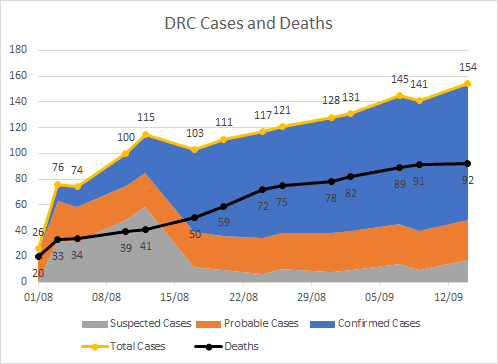
WHO has warned that Bundibugyo virus disease outbreaks in the past have had case fatality rates of 30% to 50%. Unlike Ebola virus disease more broadly, there is no licensed vaccine or specific therapy for Bundibugyo virus, which makes early supportive care especially important. The current outbreak is Congo’s 17th Ebola outbreak, a grim marker for a country that has faced repeated flare-ups in remote and resource-rich regions.
The new outbreak also arrives with the memory of West Africa’s 2014-2016 epidemic, the largest ever recorded, with more than 28,600 reported cases and 11,325 deaths. For Congo’s mining belt, the lesson is immediate: without stronger surveillance in mining towns and tighter controls on worker movement, a local health emergency can become a wider public crisis.
This article was produced by Prism’s automated news system from verified source data, official records, and press releases, then run through automated quality and moderation checks before publishing. The system is built and supervised by the people who set the standards it runs under. Read our full AI policy.
Know something we missed? Have a correction or additional information?
Submit a Tip