Trump administration cuts Hawaii Medicaid fraud unit funding over weak cases
Federal officials cut Hawaii’s Medicaid fraud unit off from about $3 million a year after it produced no criminal fraud cases for three years, raising stakes for 360,000 enrollees.
Federal officials cut off Hawaii’s Medicaid fraud control unit from annual support after deciding the state had not brought enough criminal cases, a move that could reverberate well beyond the unit’s own budget and into the state’s wider Medicaid program.
In a letter to Hawaii Attorney General Anne Lopez, HHS Inspector General March Bell said the Hawaii Medicaid Fraud Control Unit had been denied federal certification and would lose about $3 million a year in support. Bell said the unit produced no criminal indictments or convictions for Medicaid fraud, patient abuse or neglect between 2022 and 2025, even as enrollment in the program grew. Hawaii received $2.2 billion in federal Medicaid funds in 2024, making the funding fight about much more than one enforcement office.

The decision sharpened an already tense dispute between Washington and Hawaii over how aggressively states should police healthcare spending. JD Vance has publicly pressed the issue and recently accused Hawaii of giving fraudsters “free rein,” framing weak enforcement as a broader failure of accountability. Hawaii officials say that characterization misses recent activity in the state and ignores other signs of enforcement.
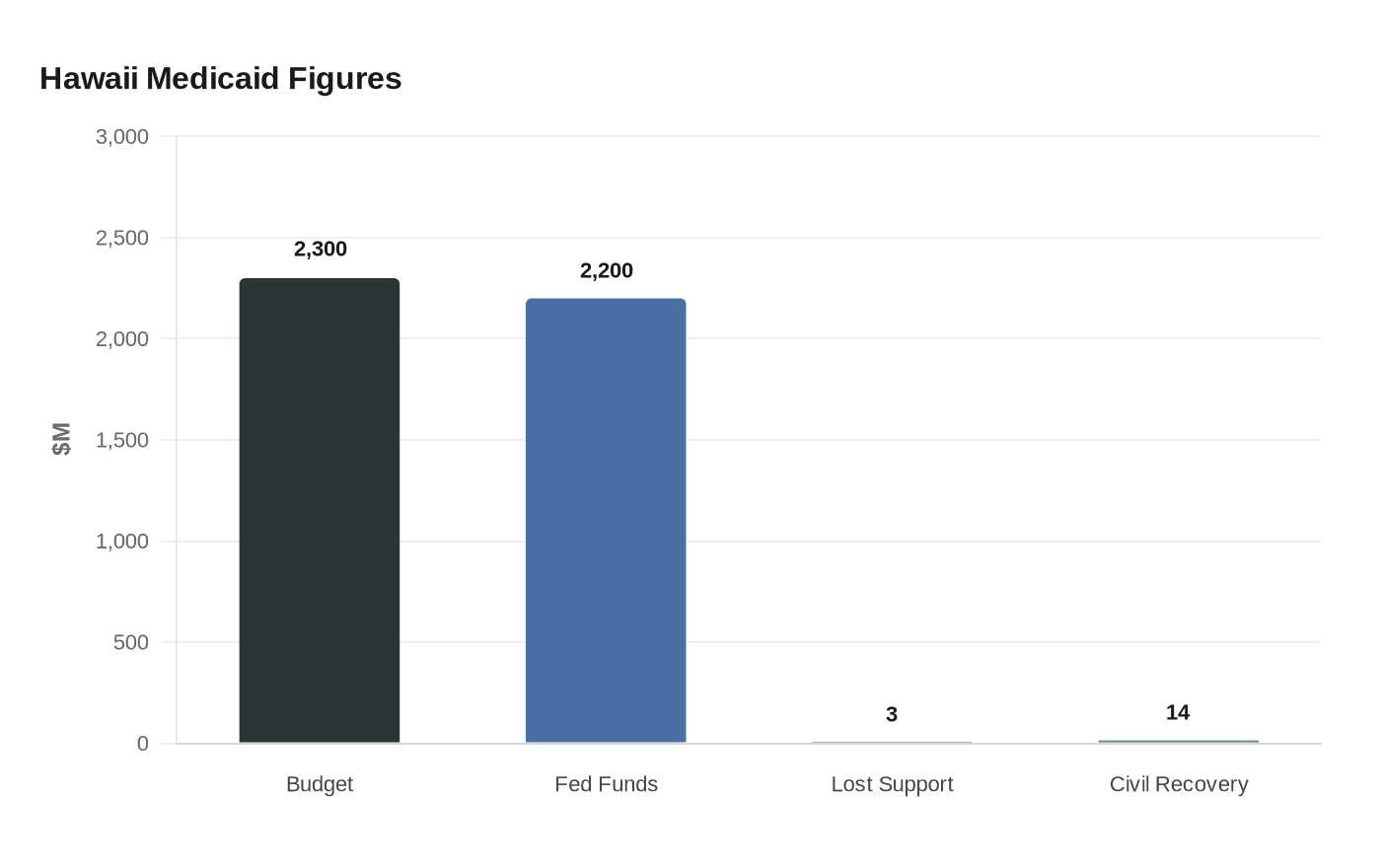
Attorney General Anne Lopez’s office said Hawaii had recovered $14 million in civil cases since 2021 and filed two criminal healthcare fraud charges earlier this year. State leaders also moved quickly after the federal action. On June 4, Gov. Josh Green announced an independent Medicaid Fraud Strike Force within the Hawaii Department of Human Services to strengthen oversight, accountability and coordination on fraud, waste and abuse. Officials said the state’s Medicaid program remained in good standing with the Centers for Medicare & Medicaid Services and that benefits and provider payments would continue without interruption.
The stakes are high in Hawaii, where Medicaid covers more than 360,000 people and the program’s budget is about $2.3 billion, with roughly 60% federally funded, according to DHS Director Joseph Campos II. State Senate health chair Joy San Buenaventura warned that if Medicaid access were disrupted, uninsured patients and the broader health system could face higher costs.
The clash also lands against a national backdrop in which Medicaid fraud control units are a standard enforcement tool in every state. The U.S. Department of Health and Human Services Office of Inspector General says those units investigate provider fraud and abuse or neglect in health facilities and among Medicaid enrollees, and OIG annually recertifies each unit while administering the federal grant that helps fund operating costs. OIG says all 50 states, Washington, D.C., Puerto Rico and the U.S. Virgin Islands are certified to operate one.
Hawaii’s problems are not new. A 2019 OIG review found low case outcomes in fiscal years 2016 through 2018, citing few fraud referrals, significant investigator turnover and a referral process that sent thousands of unsuitable complaints to the unit. Nationally, however, the picture is far different: OIG said the country’s 53 fraud control units recovered almost $2 billion in fiscal 2025, produced 1,185 convictions and returned $4.64 for every dollar spent. That contrast makes Hawaii’s near-zero criminal output stand out, and it leaves open a larger question over whether Washington is enforcing accountability or using funding leverage in a way that could weaken Medicaid oversight and services.
This article was produced by Prism’s automated news system from verified source data, official records, and press releases, then run through automated quality and moderation checks before publishing. The system is built and supervised by the people who set the standards it runs under. Read our full AI policy.
Know something we missed? Have a correction or additional information?
Submit a Tip

