WHO unveils $518 million plan to fight Ebola in central Africa
WHO and Africa CDC have launched a $518 million Ebola plan as the outbreak races through central Africa, with responders warning they are still catching up.

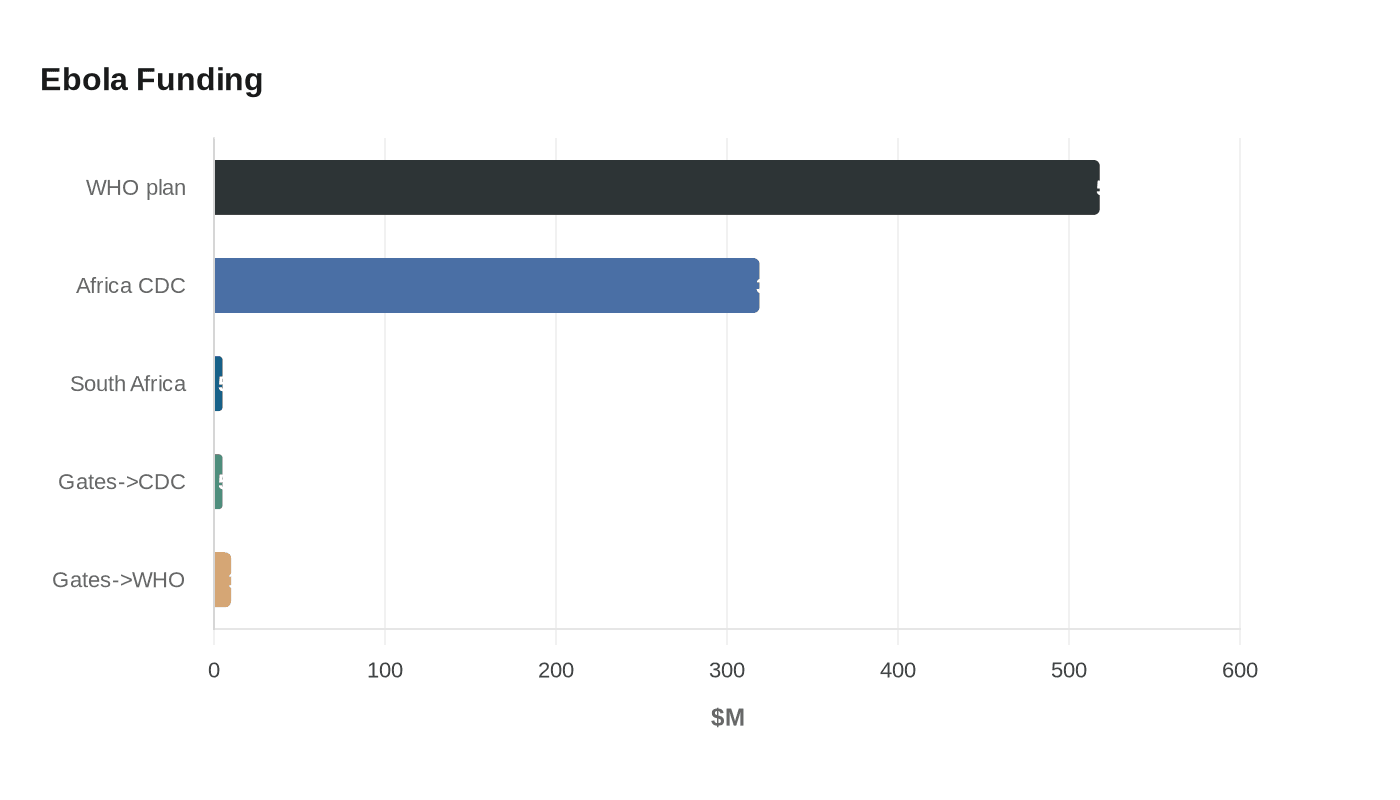
A $518 million response plan now stands between central Africa and a faster-moving Ebola outbreak that WHO says is already the fourth biggest on record. Tedros Adhanom Ghebreyesus unveiled the six-month effort with the Africa Centres for Disease Control and Prevention in Nairobi, saying the world must move from reaction to sustained containment before the virus outpaces health systems further.
The joint plan covers June through November 2026 and is meant to organize a regional push across surveillance, laboratory testing, infection prevention and control, clinical care, community engagement, research, logistics and support for essential health services. WHO said implementation is already underway in affected and at-risk countries, with 10 priority countries strengthening preparedness measures as the outbreak spreads through a region where insecurity, distance and weak transport links complicate every step of the response.

WHO confirmed the outbreak in the Democratic Republic of the Congo and Uganda in May, and declared it a Public Health Emergency of International Concern on May 17. The virus involved is Bundibugyo Ebola, which WHO says has no licensed vaccine or specific treatment, making rapid detection, isolation, contact tracing and trust in local communities especially important. WHO has said the outbreak is unfolding amid a humanitarian crisis in a remote and densely populated area with heavy population movement and cross-border trade, conditions that can turn local transmission into regional spread.
The numbers have moved quickly. WHO reported on May 21 that the Democratic Republic of the Congo had 746 suspected cases and 176 suspected deaths, while there were 85 confirmed cases and ten confirmed deaths across both countries. By June 3, the European Centre for Disease Prevention and Control said the Democratic Republic of the Congo had reported 381 confirmed cases, 64 confirmed deaths and 233 people hospitalized in isolation. In Ituri Province, authorities had already recorded eight confirmed cases, 246 suspected cases and 80 suspected deaths by May 16, underscoring how early the outbreak took hold.

Africa CDC had warned that delays in mobilizing money could widen regional transmission, and it backed a continental preparedness plan that required at least $319 million between June and November. Nearly $500 million had already been committed or pledged by governments, multilateral agencies and humanitarian partners by May 25, including South Africa’s doubled pledge of $5 million, plus $5 million from the Gates Foundation to Africa CDC and $10 million to WHO.
Tedros said responders were still playing catch-up with a fast-moving epidemic, while Africa CDC Director-General Jean Kaseya pressed for faster action. WHO says no international travel restrictions are recommended for now, but neighboring countries are being pushed to strengthen surveillance and community engagement, a sign that the first line of defense is still being built while the outbreak continues to spread.
This article was produced by Prism’s automated news system from verified source data, official records, and press releases, then run through automated quality and moderation checks before publishing. The system is built and supervised by the people who set the standards it runs under. Read our full AI policy.
Know something we missed? Have a correction or additional information?
Submit a Tip