Economists see Fed holding rates steady through 2026 as inflation persists
Mortgages, auto loans and credit cards could stay expensive through 2026 as economists see no Fed cuts and inflation remains stuck at 3.8%.
Mortgages, auto loans and credit cards are likely to stay expensive if the Federal Reserve keeps its policy rate pinned at 3.50% to 3.75% through the end of 2026. For households, that means borrowing costs could remain elevated for longer than many had hoped, and small businesses that depend on credit lines may keep delaying hiring and investment.
A survey of 102 economists conducted June 4 to 9 found that 72 expected the Fed to leave rates unchanged through year-end, the clearest sign yet that rate cuts are off the table. None of the economists expected a cut at the Federal Open Market Committee meeting on June 16-17, which will be Kevin Warsh’s first as Fed chair. The next policy statement will also come with an updated Summary of Economic Projections, giving officials another chance to signal how long they intend to keep borrowing costs restrictive.
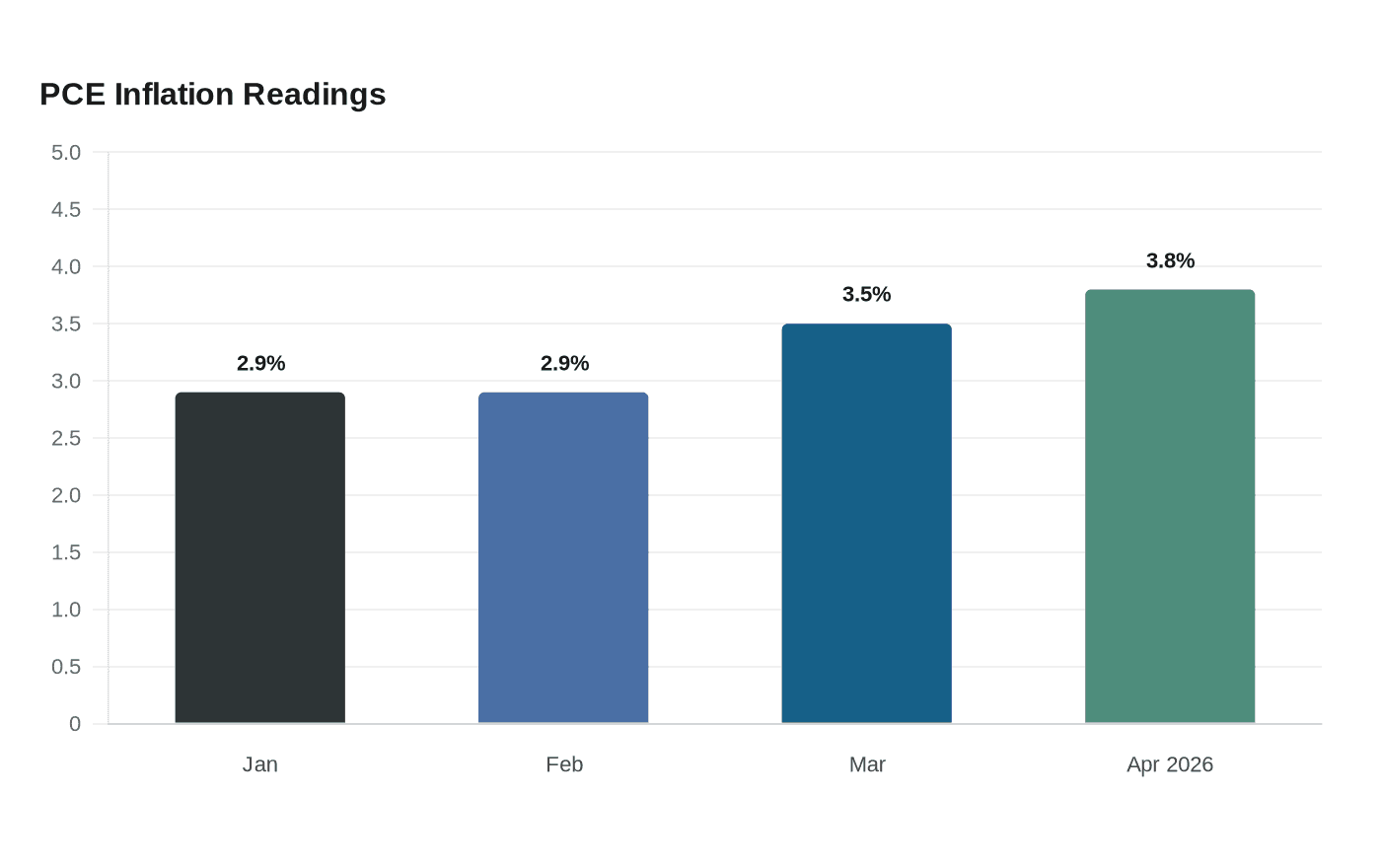
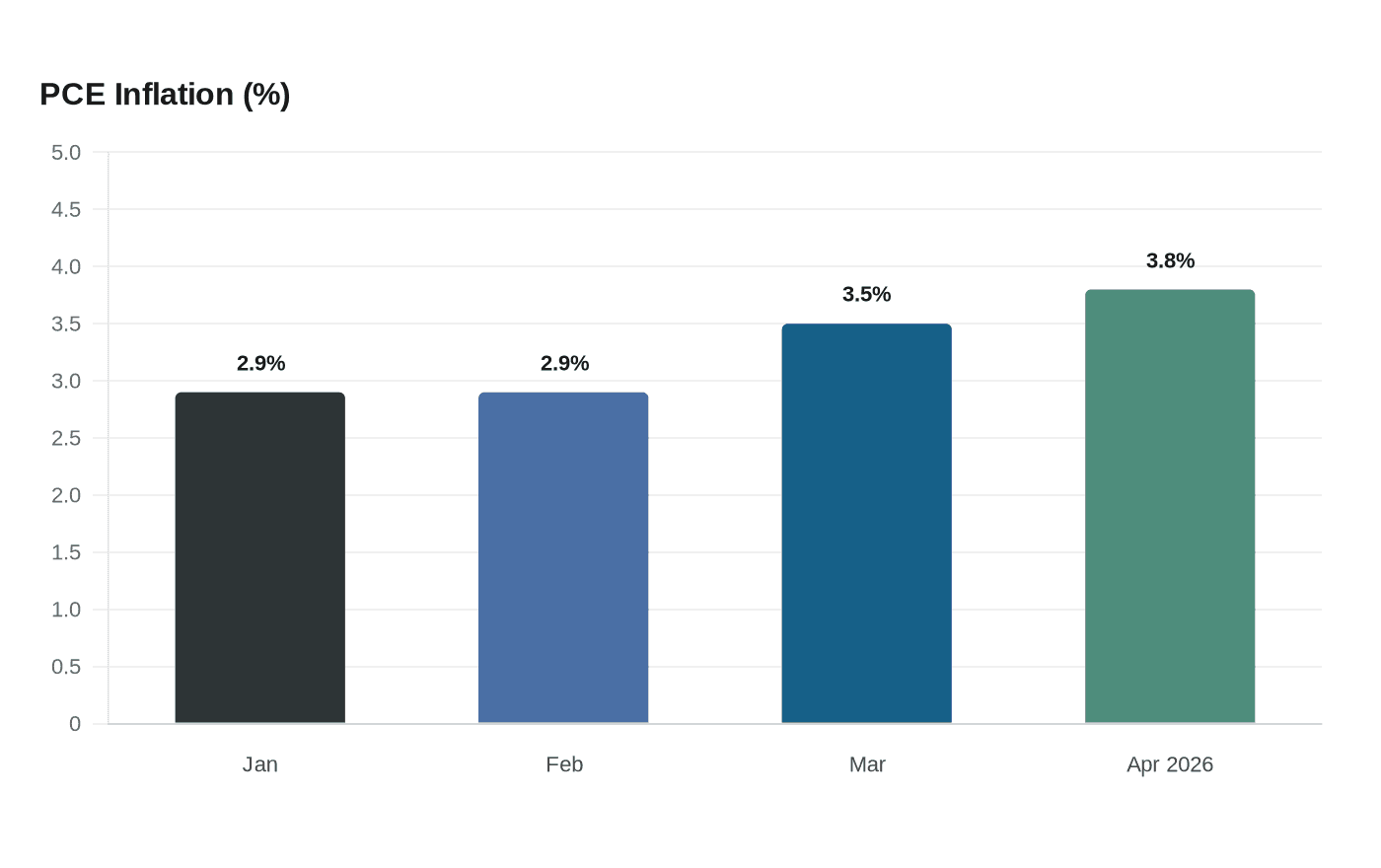
Inflation is the main reason. The Federal Reserve’s long-run goal is 2% PCE inflation, but the Bureau of Economic Analysis said the April 2026 reading was 3.8% year over year, up from 3.5% in March and 2.9% in both February and January. That pace is still far above target and suggests the recent bout of price pressure has not faded cleanly. Economists said the war-driven shock to prices is still feeding through the economy, leaving little evidence of a quick return to the Fed’s goal.
The labor market has also not weakened enough to force a pivot. The Bureau of Labor Statistics said nonfarm payrolls rose by 172,000 in May and unemployment held at 4.3%, with gains led by leisure and hospitality, local government and health care. Financial activities lost jobs, but overall hiring remained solid enough to reduce pressure on policymakers to deliver relief.
Markets are even less convinced than economists. CME FedWatch, the benchmark traders use to infer policy odds from 30-day fed-funds futures, has been pricing in at least one rate increase by the end of the year. That gap between markets and economists underscores how sticky inflation and steady hiring have kept the policy debate tilted toward patience.
What could break that consensus is a sharper turn in the data: a faster drop in PCE inflation, a clear rise in unemployment, or several months of softer payroll growth. Until then, borrowers should expect tight financing conditions to linger, and any policy shift could arrive later and more abruptly than in past cycles.
This article was produced by Prism’s automated news system from verified source data, official records, and press releases, then run through automated quality and moderation checks before publishing. The system is built and supervised by the people who set the standards it runs under. Read our full AI policy.
Know something we missed? Have a correction or additional information?
Submit a Tip