Electricity Restored in Southwestern Berlin After Suspected Arson Blackout
Power returned on Wednesday to large parts of southwestern Berlin after a suspected arson attack on a cable bridge near the Lichterfelde power station caused the German capital's longest blackout since World War Two. The outage affected tens of thousands of households and more than 2,000 businesses during a polar cold snap, raising urgent questions about grid security, emergency preparedness and the economic costs of deliberate attacks on infrastructure.
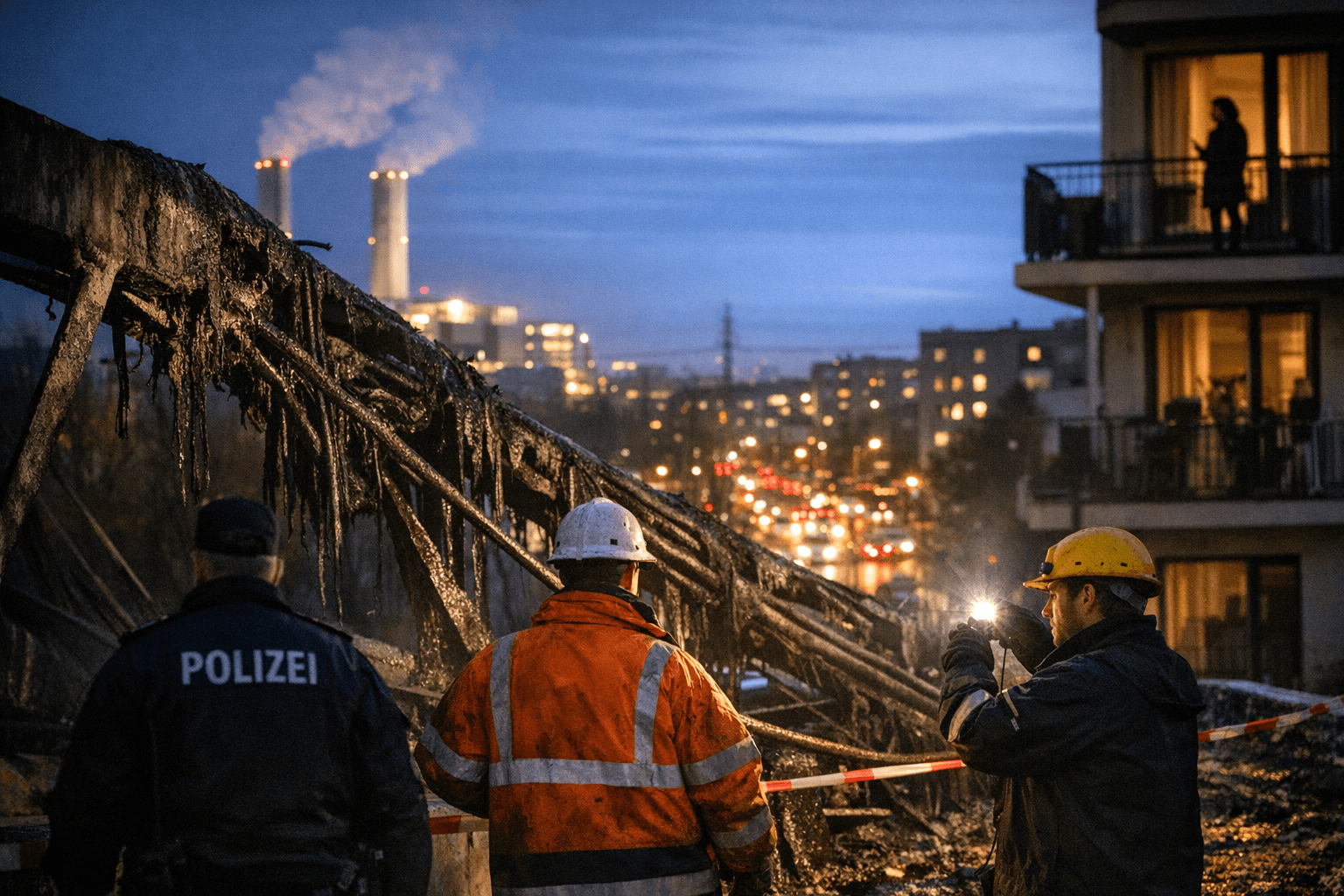
Electricity was brought back to significant swaths of southwestern Berlin on Wednesday, Jan. 7, after a fire early on Saturday, Jan. 3, destroyed high-voltage cables in a duct and bridge over the Teltow Canal adjacent to the Lichterfelde power station. Grid operator Stromnetz Berlin and municipal authorities said the blaze severed several transmission lines feeding the Steglitz-Zehlendorf area, leaving what officials described as the longest blackout in the city since World War Two.
Stromnetz Berlin began staged restorations from 11 a.m. local time on Wednesday. By midday the operator reported that roughly 10,000 households and 300 businesses had their power reconnected, reducing the number of affected customers from an initial estimate of about 45,000 households and 2,200 businesses to roughly 35,000 households and 1,900 businesses still without supply. Some reporting indicated full restoration might not be complete until Thursday afternoon as crews re-energised damaged cables and isolated sections of the local network.
The outage unfolded during sub-zero temperatures and snowfall, forcing municipal authorities and aid organisations to open sports halls and other temporary shelters for vulnerable residents, including the elderly. Emergency services and welfare teams assisted with evacuations and welfare checks. Berlin Mayor Kai Wegner said: "Today is a good day for the many people affected who had been cut off from electricity and heat since January 3," framing Wednesday's restorations as the start of recovery even as many customers remained in the dark.
Federal prosecutors have taken charge of the inquiry, treating the case as suspected "unconstitutional sabotage" and investigating possible arson, disruption of public services and links to a terrorist organisation. Local officials named a left-wing extremist group calling itself the Vulkangruppe, or Volcano Group, as claiming responsibility; the group reportedly told investigators that it did not target people but infrastructure it says "destroys the environment." Security officials said the group is known to authorities and has targeted railway and power infrastructure in Berlin and neighbouring Brandenburg in the past.
Beyond the immediate humanitarian challenge, the attack highlights economic and policy implications for cities and utilities. Tens of thousands of households and thousands of businesses losing heat and power during a cold spell translates into direct losses from spoiled goods, interrupted operations and emergency spending by municipal authorities. For small retailers and service firms concentrated in the impacted districts, even a multi-day outage can reduce weekly revenues by a large percentage and raise employment and solvency risks, particularly if insurance coverage is incomplete.
For grid operators and policymakers, the incident exposes vulnerabilities in critical infrastructure and may accelerate calls for hardening measures such as additional redundancy, further undergrounding of cables, deployment of microgrids and faster restoration protocols. Insurers and investors will watch repair-cost estimates and potential regulatory responses closely; higher perceived risk could push up financing and insurance costs for utilities and infrastructure projects. Federal criminalisation of such attacks and the prospect of terrorism charges could also trigger a heavier security and intelligence response.
As investigators work to establish responsibility and technicians complete repairs, Berlin faces both immediate recovery demands and longer-term choices about how to make its power system more resilient to deliberate disruption in an era when climate stress and societal tensions can amplify the stakes of outages.
This article was produced by Prism’s automated news system from verified source data, official records, and press releases, then run through automated quality and moderation checks before publishing. The system is built and supervised by the people who set the standards it runs under. Read our full AI policy.
Did this article answer your question?