Embryonic organizer cells reveal shared origins of animal body plans
A cell-transplant study points to a shared developmental toolkit behind animal body plans. The real breakthrough is how organizer cells let scientists test origins, not settle them.
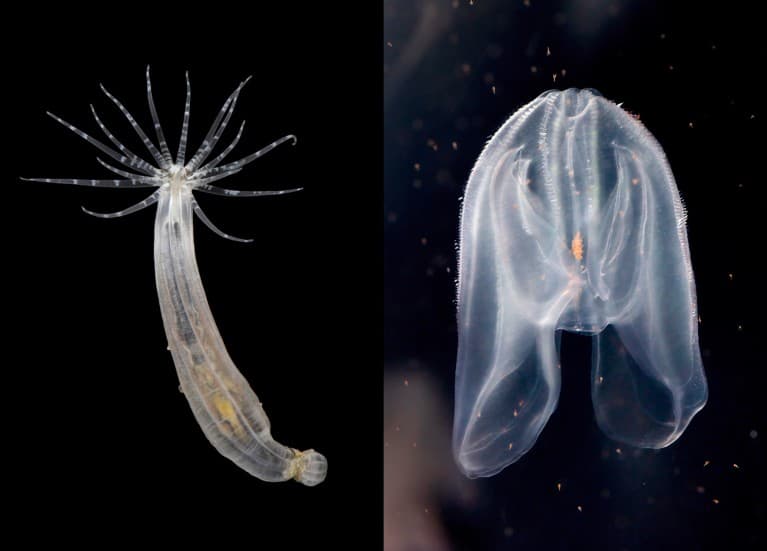
Embryonic organizer cells are pushing a century-old question back into focus: how animals learned to build bodies with left-right, front-back, and head-tail instructions in the first place. The new result matters less as a sweeping claim about evolution than as a demonstration of method, because it shows how researchers can probe deep origins by moving developmental signals across species and watching embryos respond.
What organizer cells do
Organizer cells are developmental signal centers that help set up body plans early in life. In a gastrulating embryo, the organizer is the region that induces and patterns the body axis, telling nearby cells where they belong and what they should become. That makes the organizer one of the most important control points in embryology, because a small patch of tissue can influence the architecture of the whole organism.
The significance of the new Nature report is that organizer influence appears to extend across embryos from different phyla. That does not mean every animal builds itself in the same way, but it does suggest that the logic for organizing a body may be older and more conserved than scientists once thought. For developmental biologists, that is a valuable clue: the same early signaling principles may be reused, altered, and layered into very different adult forms.
Why the Spemann-Mangold experiment still matters
This line of research has a long pedigree. In 1924, Hans Spemann and Hilde Mangold carried out the most famous experiment in experimental embryology in amphibian embryos, identifying what became known as the first self-organizing center, the Spemann organizer. Spemann later received the Nobel Prize in 1935 for embryonic induction, cementing the organizer as a foundational concept in biology.
That history matters because the new transplant work is not emerging from nowhere. It sits in the same scientific tradition that asked whether one region of an embryo could direct another region to form a complete body axis. In modern terms, the answer appears to be yes in many cases, and the fact that this can now be tested across distant branches of the tree of life makes the old question newly informative.
The field has also been shaped by later thinkers such as Lewis Wolpert, Edward M. De Robertis, Wolfgang Driever and Roberto Mayor, whose work helped define how embryos establish positional information and pattern body axes. Their contributions show why organizer biology is not just a historical curiosity. It remains central to how scientists explain form, symmetry, and the earliest decisions cells make.
What the new study actually shows
The most careful reading is that the study strengthens the case for deep evolutionary conservation in organizer-driven patterning. It shows that embryonic organizer cells can tell embryos of various phyla what kind of body to build, which is a much more precise claim than saying scientists have solved the origin of animals. The result is suggestive, not final.
That distinction matters. A successful cell transplant or comparison can reveal shared developmental rules, but it does not by itself reconstruct the exact sequence of events that produced the earliest animals. The study points toward a shared toolkit, one that may have been present before modern animal phyla diversified, yet it leaves open how those ancestral mechanisms first assembled. In other words, the evidence reaches deep into developmental biology, while the broader evolutionary explanation still requires more work.
How modern embryo research changed the question
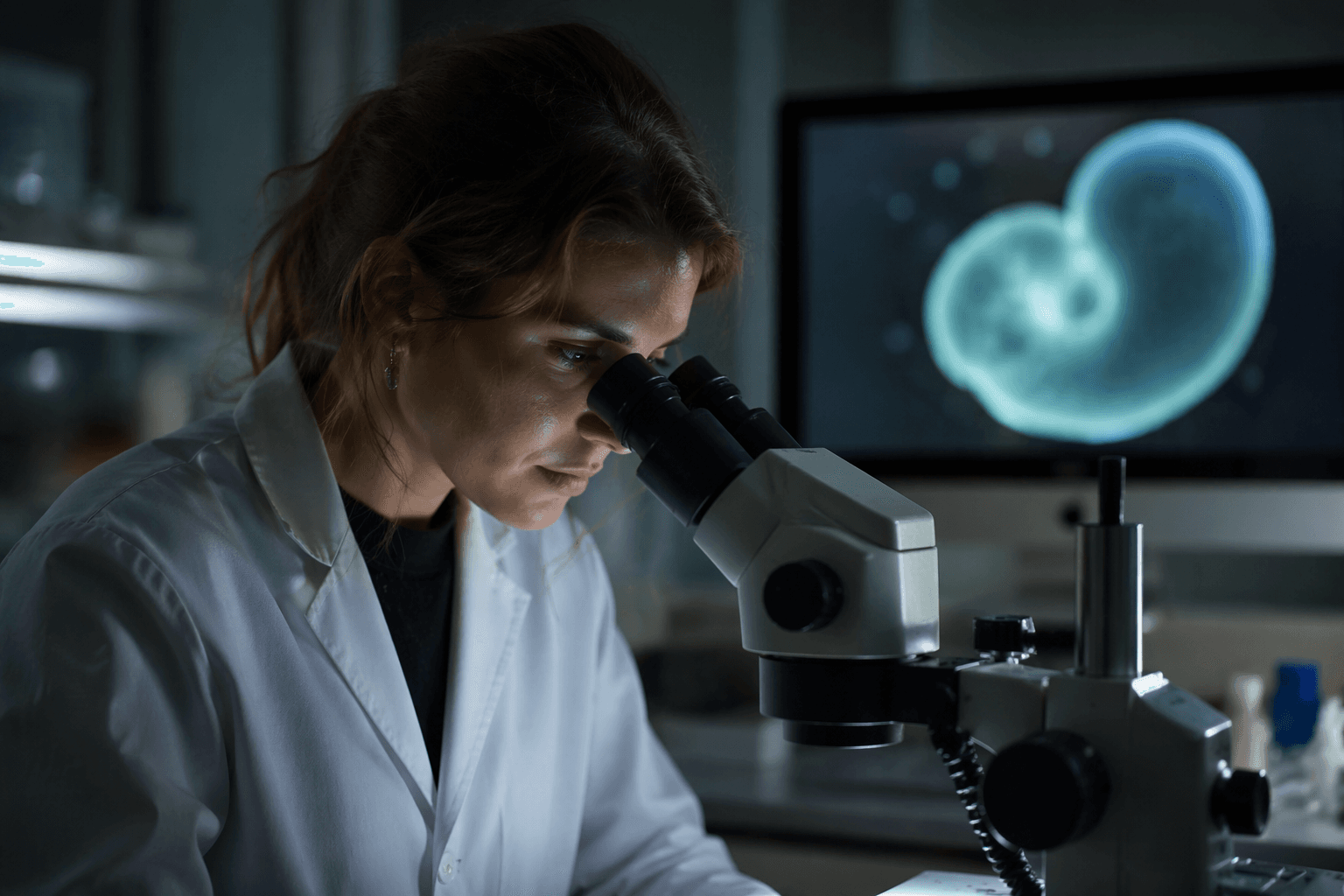
Nature’s earlier reporting noted that evidence for a human organizer had been lacking, but stem-cell methods opened new ways to investigate it. That shift is important because it shows how the question moved from classical embryo surgery to controlled laboratory systems that can model early development in human cells. The result is a field that can compare organizer behavior without relying only on rare or inaccessible embryos.
Nature has also described how human embryonic stem cells can organize into embryo-like structures, reinforcing the idea that body-plan formation can be studied in simplified systems. Those models do not replace natural embryos, but they let researchers test which signals are sufficient to trigger organization and which remain species-specific. That experimental flexibility is exactly what makes cross-species comparisons so powerful.
Why comparative cell atlases are becoming central
The new result also fits a broader scientific shift toward mapping cell types across the tree of life. A 2025 Nature paper introduced the Biodiversity Cell Atlas, an effort to build single-cell molecular atlases across the eukaryotic tree of life. That kind of dataset gives researchers a way to compare cells, gene programs, and developmental states with far more precision than older anatomical comparisons allowed.
For organizer biology, that is a major advance. If scientists can line up equivalent cells across species, they can ask which molecular signals are shared, which are modified, and which are unique to particular branches of evolution. Comparative cell biology is therefore becoming one of the clearest tools for studying how multicellularity and animal body architecture emerged.
What readers should take from it
The main lesson is not that a single experiment has settled the origin of animals. It is that embryonic organizer cells offer a rigorous way to test one of biology’s biggest ideas: whether complex life rests on a deeply conserved developmental toolkit. Nature’s reporting makes clear that the finding is important because it links a modern cell-transplant result to a century of embryology, while keeping the larger evolutionary claim appropriately cautious.
That balance is the point. The study shows how scientists can trace the roots of body plans through early developmental signals, rather than through speculation about abstract ancestry alone. It brings the origin-of-animals question down to a practical level, where the smallest cells may hold the clearest evidence for how the animal kingdom first learned to build itself.
This article was produced by Prism’s automated news system from verified source data, official records, and press releases, then run through automated quality and moderation checks before publishing. The system is built and supervised by the people who set the standards it runs under. Read our full AI policy.
Did this article answer your question?