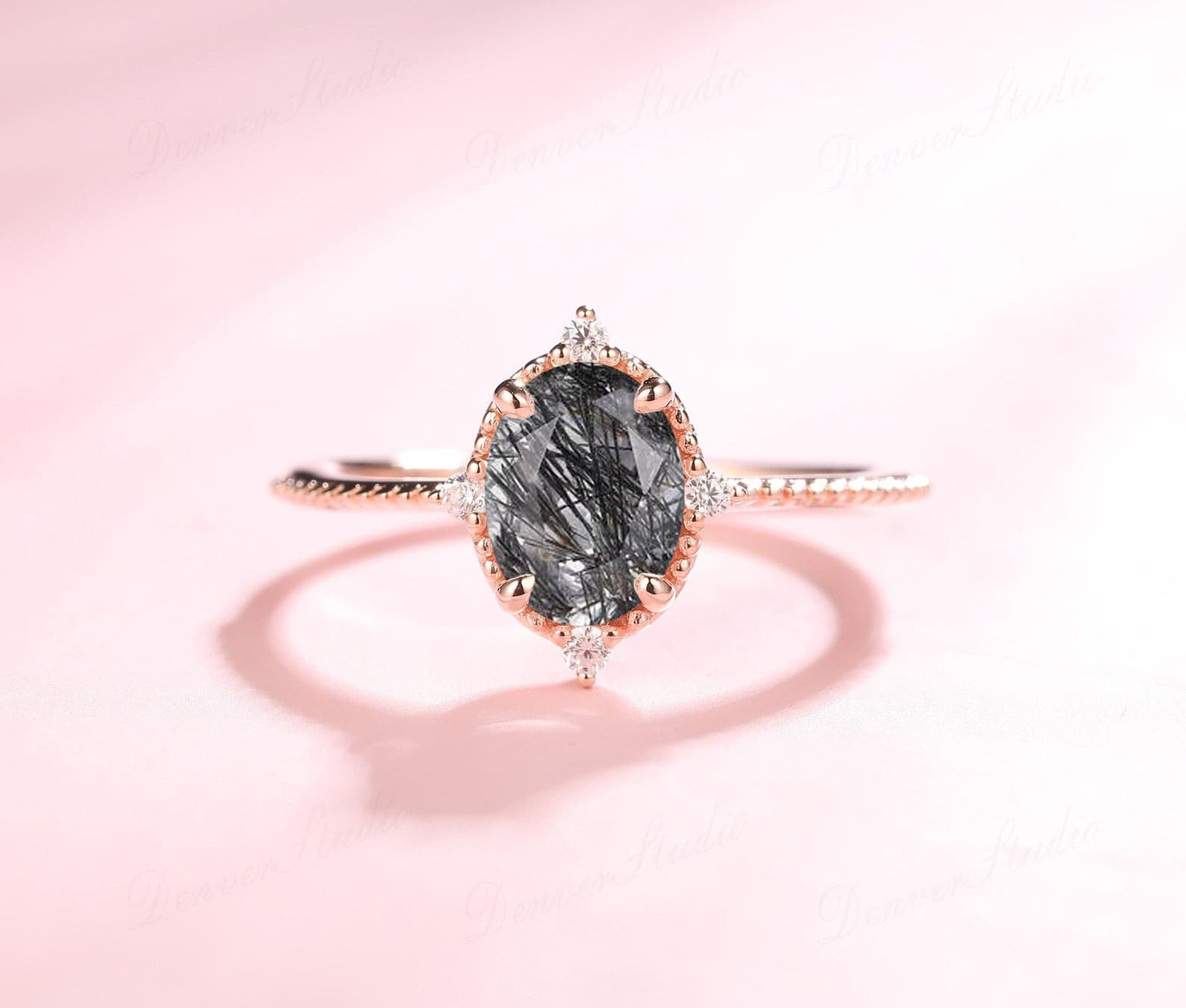
Engagement Ring Photography Tips for Shoppers, Brides-to-Be, Jewelers
Short photography playbook: clean and polish the ring, use cotton gloves to avoid fingerprints, choose a simple background, and favor soft light for crisp images for social or press.
When Meghan Markle’s three‑stone ring first circulated in glossy spreads, the most shared image was not only about provenance but about how the diamonds were lit and composed. Engagement rings live most vividly in photographs — on Instagram feeds, in announcement emails, and occasionally in press — so the technical and tactile choices you make before the shutter clicks are the story’s first lines. For shoppers, brides‑to‑be, and small jewelers, the single best investment in a memorable image is preparation: clean and polish the ring, handle it with cotton gloves, and place it against a simple background.
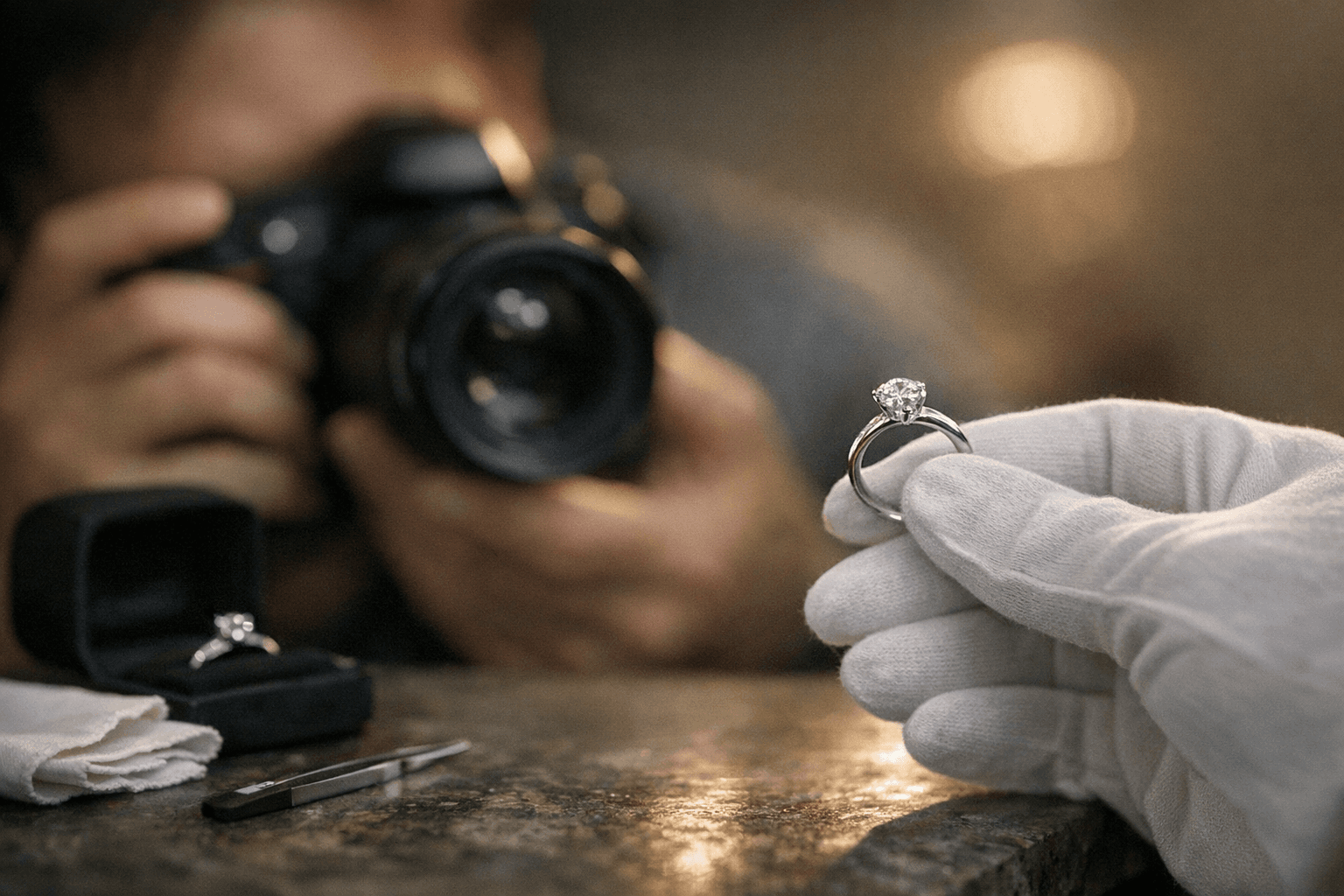
Preparation: polish, gloves, and timing Begin with the basics that make or break a close‑up. Clean and polish the ring until metal and stones show their natural brilliance; a speck of dust or a fingerprint blows out under magnification. Use cotton gloves when handling to avoid oils and smudges that require heavy post‑production correction. Choose a simple, uncluttered background — a neutral fabric, a pale marble slab, or a single‑tone paper — so the eye is drawn to cut, clarity, and setting rather than competing textures. If you’re photographing for press, prepare several versions: a pristine studio shot on a neutral background and a contextual, lifestyle shot for storytelling.
Lighting: show the gem, don’t fight it Soft, directional light is the most forgiving when photographing reflective surfaces. Window light filtered through a sheer curtain produces even illumination and controlled sparkle; avoid harsh direct sun that creates blown highlights and deep shadows. If you must use artificial light, diffuse it with a softbox or DIY diffuser and place a reflector opposite the light source to lift shadow detail on the pavilion and under the setting. Remember: a clean, polished ring handled with cotton gloves will respond to subtle lighting changes — fingerprints and grit become obvious as you increase magnification, so lighting and prep work together.
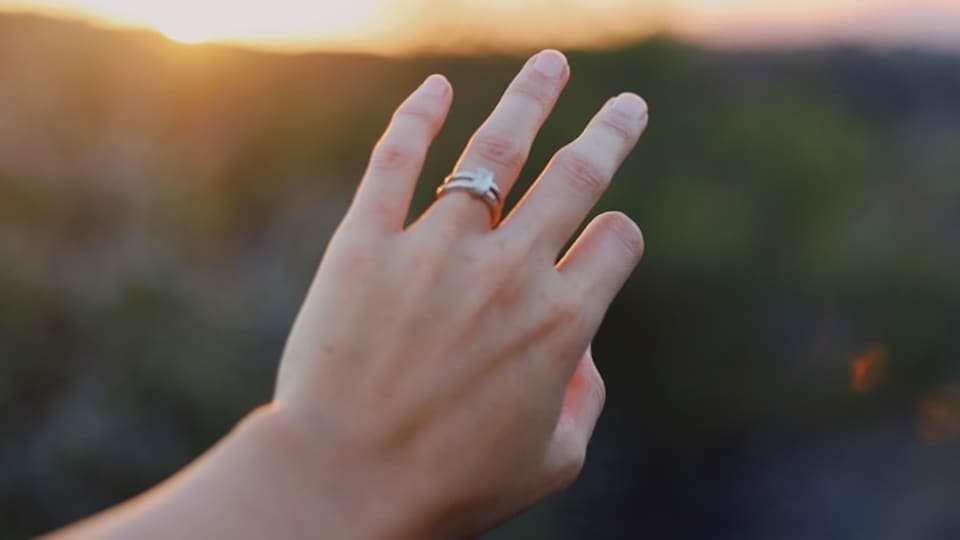
Composition and styling: tell the ring’s story Decide whether you’re documenting the ring as an object or as part of a personal narrative. For product‑style shots for social or press, center the stone, show the setting type (bezel, prong, halo), and include a close crop of the band to display metal finish and any engraving or hallmark. For on‑hand images that convey scale and sentiment, photograph the ring on a relaxed hand with natural skin tones and simple manicure; a candid moment can be as editorial as a staged flat lay. Use the simple background you prepared to keep the viewer’s attention where it belongs.
Gear and technique: getting sharp, believable detail You don’t need a boutique studio to get crisp photos, but a few technical choices matter. Use a macro lens or the macro mode on a smartphone to resolve the facets of a stone and the metalwork in a setting; stabilize the camera with a tripod or steady surface to avoid motion blur. Focus carefully on the stone’s table or the prong junction — the microstructure of the setting sells craftsmanship. When shooting for social media, capture both a tight detail and a slightly wider contextual shot; when preparing images for press, prioritize higher‑resolution files so editors can crop without losing detail.
Practical smartphone tips Smartphones are more than adequate when you respect fundamentals: clean the lens, set exposure manually if possible, lock focus on the diamond’s brightest face, and move the phone a touch until the sparkle reads as lively but not blown out. Use portrait mode judiciously—its simulated bokeh can isolate the ring, but it sometimes softens edges that should remain crisp. If you’ve followed the prep advice — clean, polished, cotton‑glove handling, simple background — a smartphone will capture the essentials for social or press.
Post‑production: subtlety over overhaul Retouching should enhance accuracy, not invent it. Remove dust spots and gently despeckle fingerprints that escaped cotton‑glove care, correct white balance so metal reads true, and use localized contrast to restore facet pop. Avoid oversaturating or artificially sharpening the stone; authenticity matters, especially for sellers and jewelers whose reputations rest on accurate representation. Export high‑resolution TIFF or maximum‑quality JPEG for press, and export a resized JPEG for social channels with conservative compression to preserve clarity.
For jewelers: consistency and metadata Small jewelers preparing images for editorial consideration or e‑commerce must supply consistency: standardized backgrounds, consistent scales, and a mix of angles (table view, profile, inside band). Include details in image metadata — carat, cut, metal, and ring size — so editors and buyers receive both the image and the facts that contextualize it. A clean, polished product shot handled with cotton gloves and framed against a simple background reads as professional and sells craftsmanship.
When to hire a pro Hire a professional when the ring’s provenance, rare cut, or high value requires editorial‑grade capture for press placement or archival photography. A pro will control light precisely, handle the ring with conservation gloves, and supply high‑bit files or structured lighting setups that reveal cut accuracy and setting quality. For everyday social sharing, the do‑it‑yourself approach — meticulous cleaning, cotton‑glove handling, simple background, soft light — will generally suffice.
Final note Photography translates the physical virtues of an engagement ring into memories and proof: the sparkle, the silhouette of a bezel or prong, the exact warmth of rose or yellow gold. Start with the ritual the work demands — clean and polish, wear cotton gloves, place the ring on a simple background — and let light and care do the rest. For shoppers, brides‑to‑be, and jewelers alike, those small acts of preparation deliver images that feel both intimate and authoritative, fit for a feed or a feature.
Know something we missed? Have a correction or additional information?
Submit a Tip