Essential Off-Road, Backcountry and Winter Safety Checklist for Southwest Colorado, Southeastern Utah
A practical safety checklist for vehicle-based, backcountry and winter travel in Southwest Colorado and southeastern Utah helps travelers reduce risk and prepare for harsh conditions.

Mastering these challenges can transform a winter off roading trip into a rewarding experience, especially with the right equipment and precautions," says Reddesertoffroad, and that idea underpins this checklist for vehicle-based, backcountry and winter adventures in Southwest Colorado and southeastern Utah. The region includes more than 8.3 million acres of public terrain and offers huge rewards, but winter travel demands planning, gear practice, and respect for the land.
This checklist is written for small guided groups and independent travelers who plan to drive scenic byways, travel graded dirt roads, and camp in remote areas. Start at the trip level: scan state trip planners for travel warnings and pass-closure alerts before you go, keep your gas tank more than half full, and, if you find yourself in hazardous driving conditions, pull off the highway into the nearest town to wait it out. If you rent, reserve a vehicle with AWD or 4WD and be sure your car has winter-appropriate tires or compliant traction equipment.
Vehicle preparedness and recovery are nonnegotiable. Reddesertoffroad recommends, "Prepare for Stuck Vehicles: Getting stuck in the snow can happen to anyone. Be sure to carry traction aids like traction boards, recovery gear, and a sturdy shovel to help get unstuck when necessary." Snow chains remain a core tool: "Snow Chains: These are essential for snow wheeling and are crucial for driving through deep snow and icy conditions." Also stock a first aid kit, flashlight, extra-warm clothing, food, water, and a sleeping bag. On the road, adopt conservative driving habits: maintain slower speeds, accelerate at a slower rate, not using cruise control in snowy conditions, and keep a slow, steady pace while avoiding sudden speed changes and using low gear when deep snow is likely.
Dress to manage moisture and temperature. Outboundmountaingear advises a waterproof, breathable outer shell with sealed seams and ventilation zips, and notes that "A common mantra is 'Be bold, start cold.' You will warm up quickly once you begin moving." Remove layers before you sweat, slow your pace to reduce moisture buildup, put shell layers on before rain or snow soaks your clothing, and use a pack rain cover to keep essential layers dry. Protect head and hands with a warm beanie, a buff or ball cap for sun and ventilation, liner gloves for movement, and insulated shell gloves for warmth when stopped.
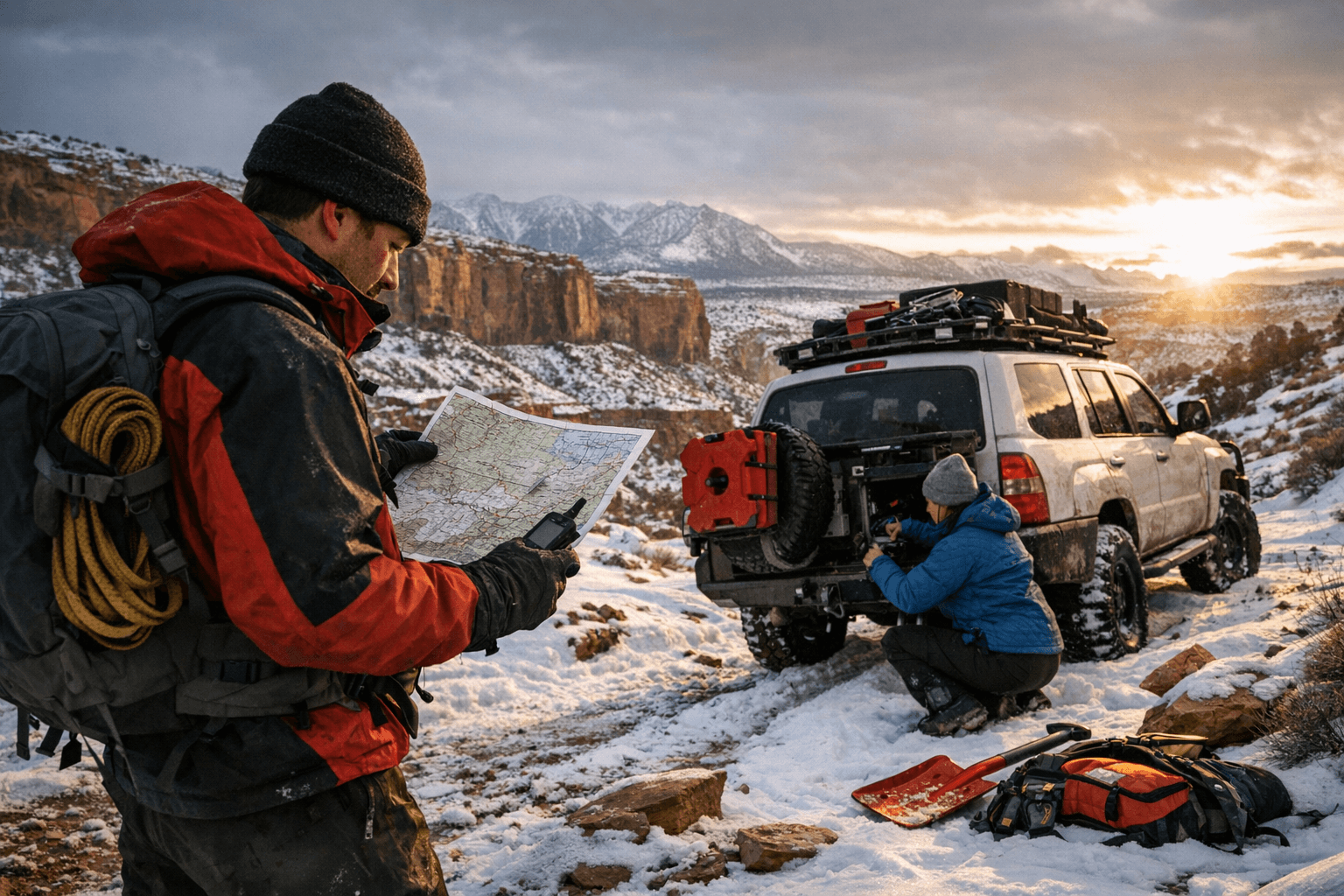
Avalanche and rescue practice matters as much as gear. The Colorado Backcountry Safety Guide cautions, "It’s not good enough to just have avalanche equipment with you if you don’t know how to use it." Practice using your gear regularly with travel companions, "Participate in trailhead-group checks to ensure the transceiver is sending a signal before you go," and note that "Some trailheads in Colorado have signage that will check your transceiver for you."
Finally, recreate responsibly. Respecting the environment and fellow off roaders is essential, especially in winter. Be mindful of icy conditions on shared trails, make way for other vehicles where possible, and always clean up after yourself to avoid damaging fragile winter terrain. Pack the essentials, practice with your gear, and check conditions early. Do Colorado Right and treat southeastern Utah routes with the same caution - preparation will keep your trip rewarding rather than risky.
Know something we missed? Have a correction or additional information?
Submit a Tip