Essential sourdough starter care and baking basics for home bakers
Practical starter care and fermentation steps to improve loaves and avoid common problems. Useful for home bakers dialing in flavor, crumb, and oven spring.
%3Amax_bytes(150000)%3Astrip_icc()%2F__opt__aboutcom__coeus__resources__content_migration__serious_eats__seriouseats.com__2020__05__20200521-sourdough-starter-diary-tim-chin-day-13-closeup2-b4a1915a06d34b618eb1e079482eb998.jpg&w=1920&q=75)
Sourdough baking comes down to three interconnected things: a living starter, controlled fermentation, and handling that respects hydration. Get those right and you get consistent flavor, a pleasing crumb, and reliable oven spring; ignore them and you chase problems like gummy centers, weak rise, and sourness that hides nuance.
A starter is a symbiotic culture of wild yeasts and lactic acid bacteria that provides lift and flavor. You can create one from scratch, take a cup from a friend, or use a commercial starter. Whatever route you choose, maintenance is the same basic idea: regular refreshment with flour and water so the beneficial microbes stay active. Feed more often when you bake daily, store in the refrigerator and feed less often if you bake weekly, and understand that refreshment frequency and flour choice change the starter’s tempo and taste profile.
Fermentation happens in stages. Bulk fermentation develops structure and flavor as the dough rests after mixing; proofing is the final rest after shaping that sets the crumb and surface tension. Both stages determine crumb openness, sourness, and oven spring. Shorter, cooler bulk fermentation favors milder flavor and tighter crumb; longer or warmer bulk fermentation builds tang and open holes. Proofing too long collapses structure and flattens oven spring; underproofing leaves a dense, gummy interior. Learn to read the dough – feel and movement matter more than clocks.
Hydration and handling are practical levers. Higher hydration doughs yield more open crumbs but demand gentler handling and stronger gluten development through folds and rest periods. Lower hydration gives a tighter crumb and is easier to shape. Adjust your folding, shaping, and bench work to match the hydration you choose. Scoring and steam at bake time control crust expansion and final oven spring.
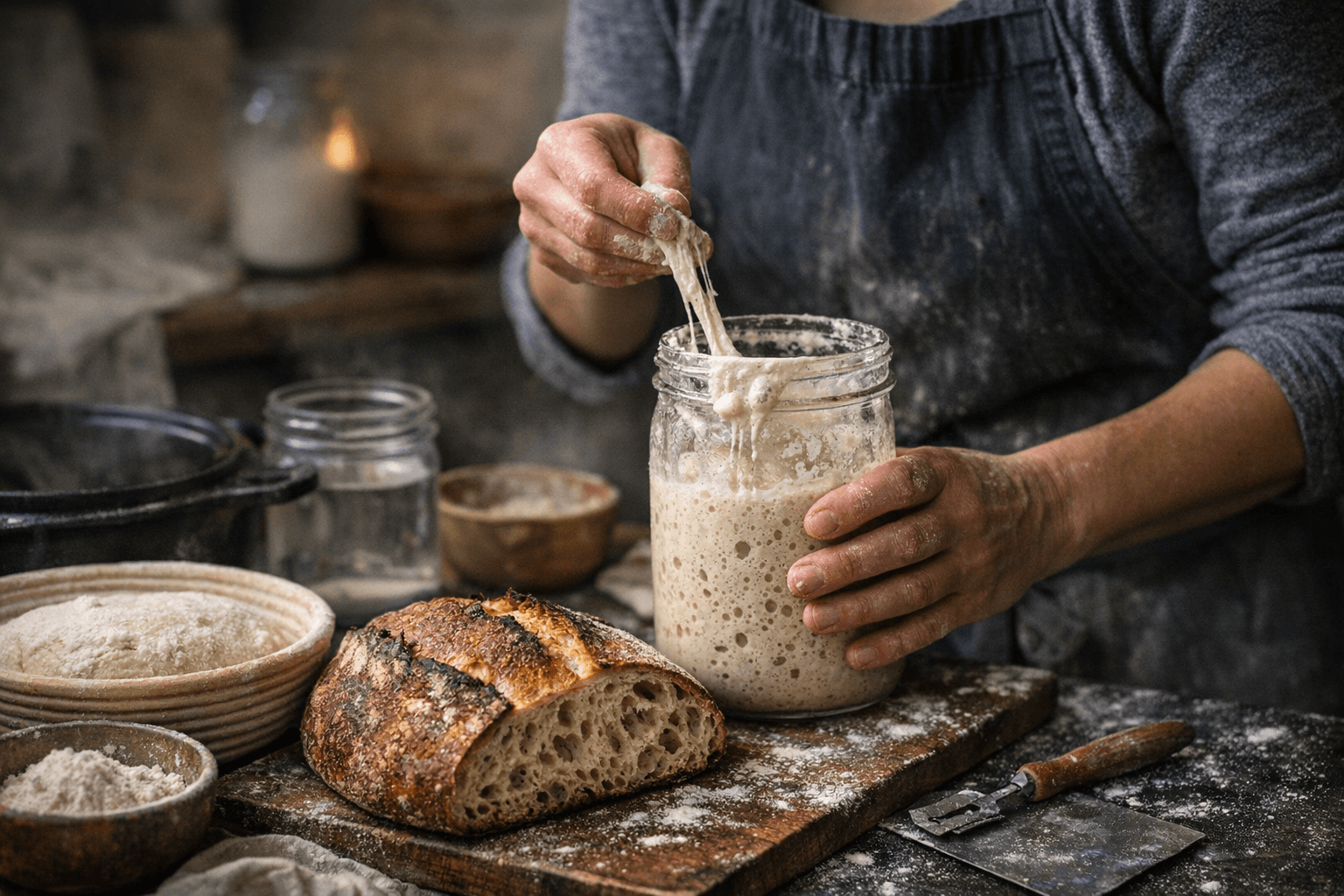
Troubleshooting starts with a checklist: confirm starter strength by how quickly it wakes after a feed, check fermentation timing versus kitchen temperature, and revisit hydration and shaping if crumb is gummy or underbaked. If oven spring is poor, consider whether the dough was underproofed, lacked surface tension, or didn’t get enough heat and steam in the oven. If flavor is off, reassess starter feeding schedule and fermentation length.
This primer presents core practices you can apply at home: keep a lively starter, let fermentation stages do the work, and match handling to hydration. Share a cup of starter with a neighbor, practice predictable feeds, and track how small changes shift your results. With patience and observation your loaves will stabilize, and you’ll spend less time troubleshooting and more time enjoying the spring and flavor you worked for.
Know something we missed? Have a correction or additional information?
Submit a Tip