Immobilized Lacticaseibacillus paracasei SP5 boosts gluten-free rice and buckwheat sourdough shelf life
Immobilizing Lacticaseibacillus paracasei SP5 on a trahanas carrier reportedly optimizes fermentation kinetics in rice and buckwheat gluten-free sourdoughs, improving bread stability and shelf life.

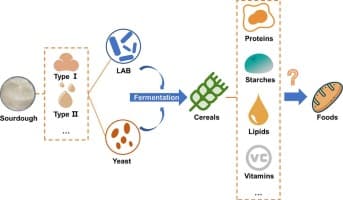
An article in the open‑access journal Fermentation (MDPI) presents experimental work using Lacticaseibacillus paracasei SP5 — both in free and immobilized forms — to prepare gluten‑free (GF) sourdough breads based on rice and buckwheat. The Fermentation paper, published in early March 2026, concludes that immobilization on a trahanas carrier affects fermentation behavior: “These findings suggest that the immobilization of L. paracasei SP5 on the trahanas carrier optimizes fermentation kinetics, facilitating a metabolite profile.”
The Fermentation report describes a direct comparison between free and immobilized SP5 in rice and buckwheat sourdough matrices, identifying immobilization on the trahanas carrier as the variable linked to altered kinetics and metabolites. The supplied fragments do not include numeric acid levels, microbial counts, fermentation time points, or sensory scores for the rice/buckwheat breads, so the paper itself must be consulted for full methods and quantitative outcomes.
Context for how changes in metabolite profiles translate to shelf life comes from a prior MDPI Foods article in 2024 by Ioanna Mantzourani, Maria Daoutidou, Antonia Terpou and Stavros Plessas. That study used supplements of freeze‑dried black chokeberry juice, unfermented or fermented by Lactiplantibacillus paracasei SP5, and reported concrete chemical and shelf‑life results: “Sourdough breads produced with freeze-dried fermented chokeberry juice exhibited elevated concentrations of lactic acid (2.82–2.99 g/kg) and acetic acid (0.93–0.99 g/kg), which significantly prolonged their resistance to mould growth and rope contamination, maintaining freshness for over 13 days.” Foods 2024 evaluated nutritional features, antimicrobial capacity and sensorial characteristics as part of that finding.
Two taxonomic forms of the SP5 strain appear in the supplied material: the Fermentation fragments use the name Lacticaseibacillus paracasei SP5 while the Foods 2024 article uses Lactiplantibacillus paracasei SP5. The divergence in genus spelling is recorded verbatim in the source excerpts and should be clarified against the strain deposit or the full Fermentation article when applying the findings in a bakery setting.
Taken together, the MDPI items point to a plausible route for shelf‑life improvement in gluten‑free rice and buckwheat sourdoughs: immobilization of SP5 on a trahanas carrier to shift fermentation kinetics and metabolite output, and previously documented acid increases associated with over 13 days of freshness when SP5‑fermented supplements were used in sourdough. For bakers and small producers, the Foods 2024 numbers provide concrete benchmarks, and the Fermentation 2026 claim frames immobilization on trahanas as a technical lever to reach those kinds of antimicrobial and stability outcomes once the full numeric results and methods from the Fermentation paper are reviewed.
Know something we missed? Have a correction or additional information?
Submit a Tip