EU Approves €90 Billion Ukraine Loan, With Military Spending Focus
Brussels locked in a €90 billion loan for Ukraine, with two-thirds aimed at defense industry and procurement as Europe plans for a prolonged war.

Europe locked in its clearest signal yet that it expects Ukraine’s war to drag on, not end soon. The Council of the European Union finalized a €90 billion support loan on April 23, with €60 billion set aside for defense industrial capacity and procurement, far more than the €30 billion reserved for macroeconomic support.
The package is designed to cover Ukraine’s most urgent budgetary and defense needs in 2026 and 2027, and the Council said disbursements should begin as soon as possible in the second quarter of 2026. Backed by EU borrowing on capital markets and the EU budget’s headroom, the loan will be repaid by reparations due by Russia to Ukraine, a structure that ties Europe’s financing plan directly to its view of the conflict’s long tail.
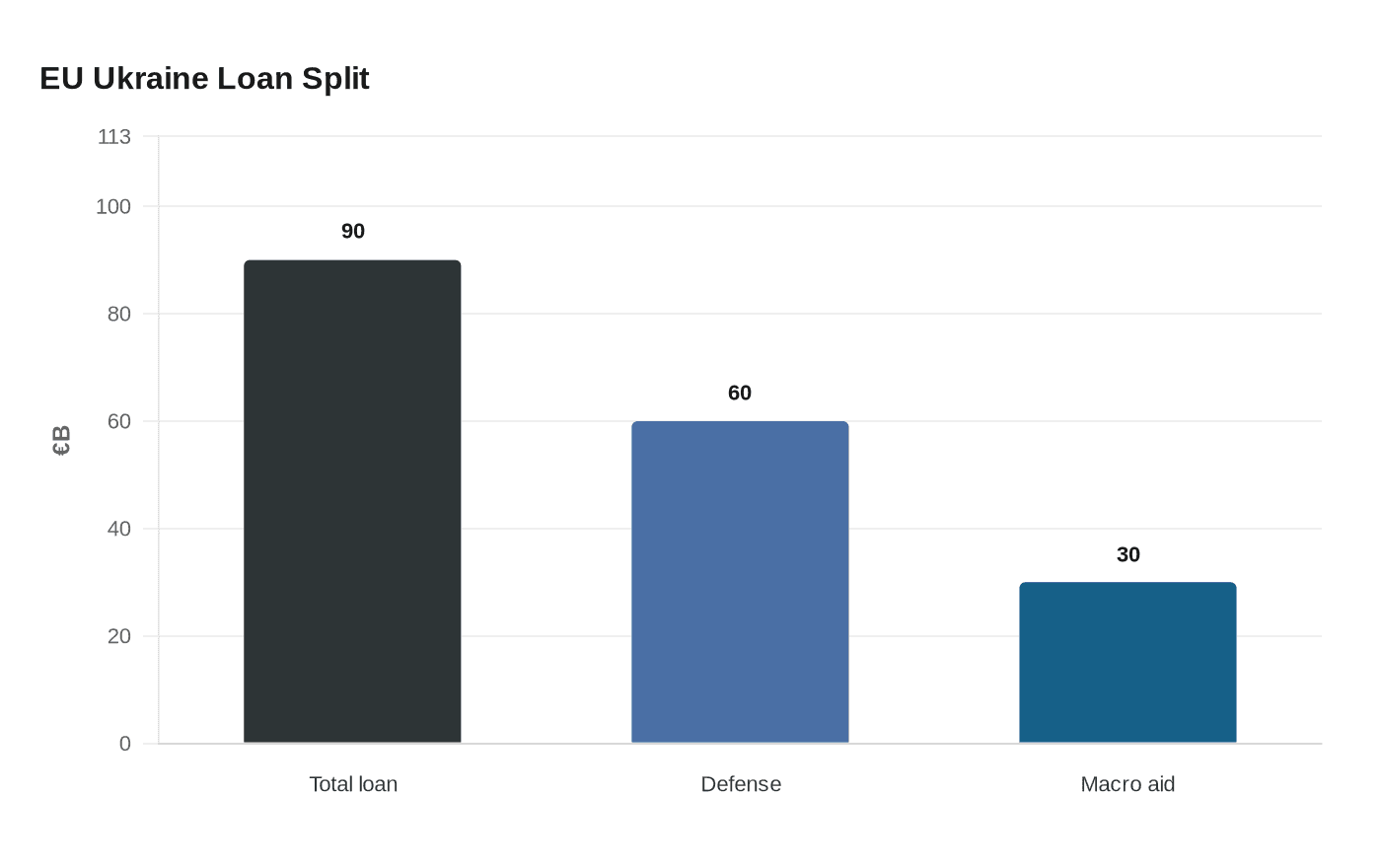
The shift matters because it recasts the European Union from emergency donor to long-haul security partner. Earlier aid packages were weighted more toward budget support and short-term stabilization. This one leans heavily toward military capacity, signaling that Brussels sees Ukraine’s battlefield resilience and defense industry as central to the continent’s own security. The legal framework was first agreed by EU leaders in December 2025, but final approval came only after months of deadlock and Hungary’s veto.
That blockage reflected more than budget politics. AP reported that Hungary linked its stance to the resumption of Russian oil flows through the Druzhba pipeline via Ukraine, a dispute that dragged the package deep into spring. EU envoys met in Brussels on April 22 as Cyprus held the rotating presidency, and EU foreign policy chief Kaja Kallas signaled optimism that a deal could be reached. The breakthrough arrived alongside the EU’s 20th package of sanctions against Russia, sharpening the message that Brussels was pairing financial support for Kyiv with fresh pressure on Moscow.
Ukraine’s finance ministry said it expects €45 billion annually in 2026 and 2027 from the package. For 2026 alone, it said €16.7 billion would go to budget support and €8.3 billion to defense needs. The funding is also subject to strict conditions on Ukraine, including rule-of-law and anti-corruption requirements, underscoring that the EU wants leverage as well as influence.
The bloc had previously explored using frozen Russian assets as collateral, but Belgium blocked that route, forcing Brussels back to a loan model built on its own balance sheet. The result is a more conservative legal structure and a more aggressive strategic signal: Europe is no longer preparing only to keep Ukraine afloat, but to finance a prolonged war economy.
This article was produced by Prism’s automated news system from verified source data, official records, and press releases, then run through automated quality and moderation checks before publishing. The system is built and supervised by the people who set the standards it runs under. Read our full AI policy.
Did this article answer your question?


