European fleets reflag ships to capture Indian Ocean tuna quotas
European fishing firms have used reflagged vessels to tap Indian Ocean tuna quotas, taking a third of the tropical catch as Malé hosts a high-stakes quota meeting.
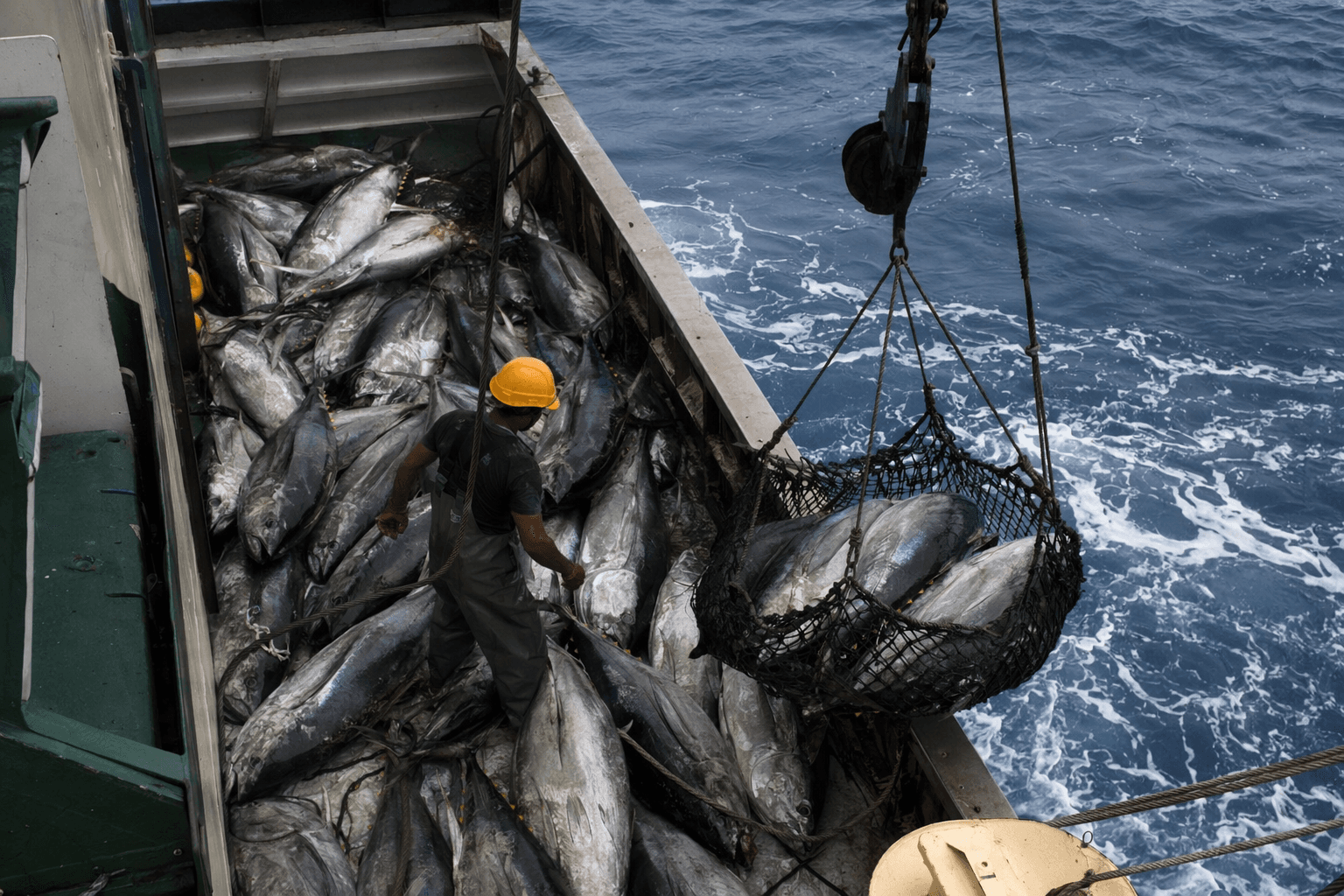
European fishing companies have found a way to reach Indian Ocean tuna quotas by changing the flags their ships fly, a practice that can be legal but has sharpened questions about who gets access to one of the world’s most valuable fisheries. The result is a larger share of skipjack, yellowfin and bigeye tuna flowing to industrial fleets, even as coastal states argue that the rules are tilting away from local livelihoods and toward distant-water operators.
The vessels at the center of the dispute are purse seiners, giant industrial ships that can hold as much as 4 million pounds, or 1.8 million kilograms, of fish at once. They move across the Indian Ocean in search of tropical tuna that ultimately end up in canned products and other seafood items on grocery shelves. The AP investigation said European companies have taken a third of the Indian Ocean’s tropical tuna catch, a scale that gives them outsized influence over a fishery that many countries depend on for food, jobs and export income.
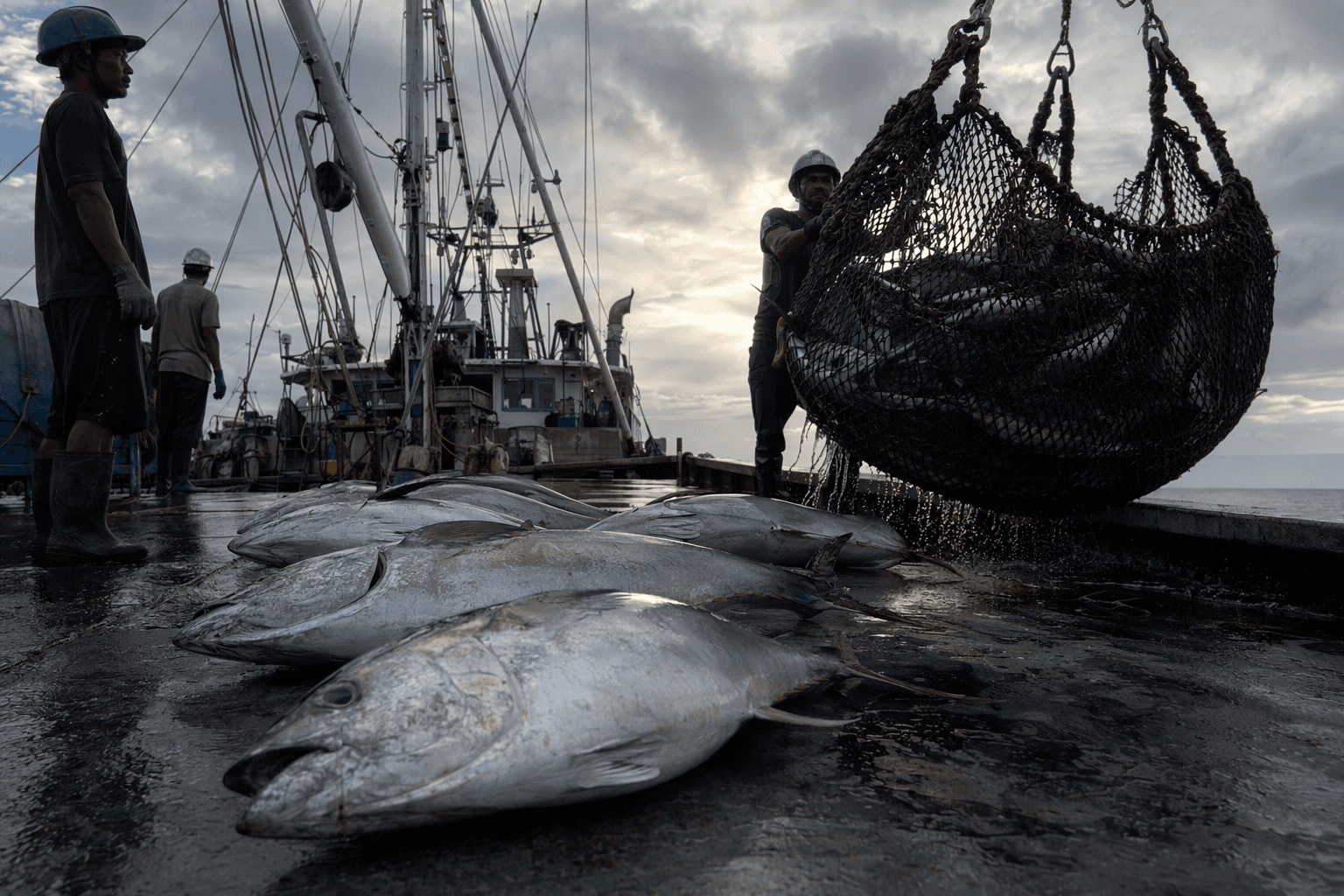
Blue Marine Foundation said the European Union has held a dominant position in Indian Ocean tuna fleets since the 1980s. At times, vessels flying Spanish or French flags accounted for nearly 40% of the catch of the region’s three key tropical tuna species. The foundation also said the European-owned fleet has grown to more than 50 purse seine ships and supply vessels, with companies registering vessels under the flags of Seychelles, Mauritius, Kenya, Tanzania and Oman to gain access to higher catch limits.
That maneuvering matters because the Indian Ocean Tuna Commission is the body responsible for managing tuna and tuna-like species across the region. The Maldives is hosting the commission’s 30th session in Malé from May 4 to May 15, 2026, bringing together the European Union and 28 countries with a stake in the fishery. For the Maldives, where fisheries remain economically and socially important, the meeting carries added weight as the country pushes for a stronger voice in regional tuna governance.
The stakes have grown sharper after the European Commission said that, for the first time in 2025, the IOTC adopted binding catch limits for yellowfin, bigeye and skipjack tuna. Yet the commission’s 29th annual meeting in La Réunion in April 2025 deferred an interim plan to rebuild the yellowfin stock, underscoring how difficult agreement remains. Disputes over transshipment, vessel monitoring and high-seas inspection have also exposed tensions between small-scale fisheries and industrial fleets.
The result is a governance test as much as a fishing one. Reflagging can help large firms preserve access to quota systems, but it leaves coastal states fighting for a fairer share of the catch and consumers increasingly dependent on a supply chain shaped by opaque maritime paperwork and fragile tuna stocks.
This article was produced by Prism’s automated news system from verified source data, official records, and press releases, then run through automated quality and moderation checks before publishing. The system is built and supervised by the people who set the standards it runs under. Read our full AI policy.
Did this article answer your question?