European Parliament trade committee pauses EU‑U.S. deal over Greenland tariffs
European Parliament pauses ratification of the EU‑U.S. trade pact after U.S. tariff threats linked to Greenland, heightening transatlantic political and market risks.
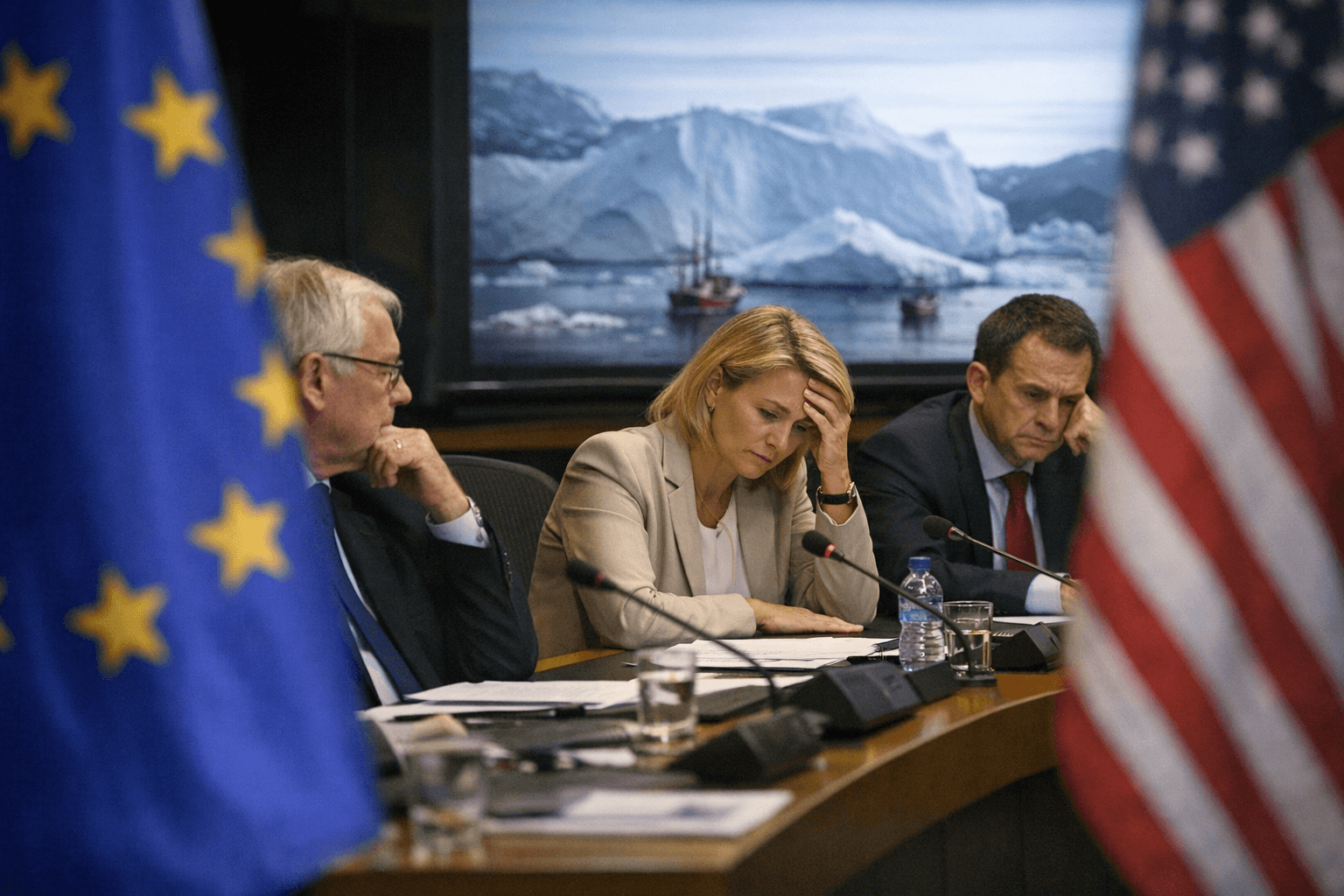
The European Parliament’s Committee on International Trade signalled a halt to procedural steps toward ratifying the EU‑U.S. trade agreement, postponing a vote that had been expected next week and injecting fresh uncertainty into transatlantic relations. The move follows public threats by U.S. President Donald Trump to levy tariffs on a group of European countries tied to his campaign to acquire Greenland.
Lead MEPs handling the file met on Wednesday afternoon and agreed to suspend the ratification process, deferring a vote that had been scheduled for next week. The committee had not adopted a formal final decision by midday, but members indicated the anticipated vote will not go ahead for now, delaying both parliamentary approval and the formal implementation of the pact. INTA Chair Bernd Lange is due to brief journalists later this afternoon to outline next procedural steps.
The pause was precipitated by the president’s social media warnings that new tariffs would target Denmark, Sweden, Norway, France, Germany, the Netherlands, Finland and the United Kingdom unless his demand for a U.S. purchase of Greenland is addressed. The president signalled an initial 10 percent levy from February, rising to 25 percent by June if no agreement is reached. MEPs characterise those threats as a breach of the spirit - and potentially the terms - of the transatlantic arrangement, making approval politically untenable at this stage.
The trade agreement in question was negotiated and politically agreed last July and would set U.S. tariffs on imports from the EU at 15 percent while the European Union would cut its own tariffs on U.S. industrial imports to 0 percent. Although the political deal has been clear in outline, it has required formal endorsement by the European Parliament to become binding. Many lawmakers had already been preparing amendments; some had privately described the pact as unbalanced in the U.S. favour.
Political group leaders in the Parliament moved rapidly once the tariff threats escalated. The centre‑right EPP, the centre‑left S&D and the centrist Renew adopted a common position to suspend work on the agreement. EPP president Manfred Weber said approval "is not possible at this stage." Renew president Valerie Hayer called suspension "an extremely powerful lever." By contrast, some lawmakers remain sceptical that the pause will be definitive: EPP lawmaker Željana Zovko had earlier insisted the deal "will not be postponed."
Markets reacted to the heightened political risk as trade uncertainty rippled through global asset prices. Major U.S. indices fell, the dollar weakened while the euro strengthened to $1.1731 and the pound edged up to $1.346. Global borrowing costs and long‑term government bond yields ticked higher as investors reassessed transatlantic economic policy risk.
The suspension does not automatically doom the agreement, but it marks a significant political escalation and underscores the fragility of deals dependent on diplomatic trust. The bloc is also contending with other contested trade dossiers: internal debate continues over whether to refer the Mercosur accord to the European Court of Justice, adding to parliamentary strain.
European leaders are convening an emergency meeting to coordinate a response to the tariff threats, and discussion is expected over whether to reactivate previously prepared retaliatory measures targeting about €93 billion of U.S. goods. For now, the pause is a clear message: trade implementation cannot proceed while core partners publicly threaten unilateral measures that undermine negotiated commitments and the norms of allied diplomacy.
This article was produced by Prism’s automated news system from verified source data, official records, and press releases, then run through automated quality and moderation checks before publishing. The system is built and supervised by the people who set the standards it runs under. Read our full AI policy.
Did this article answer your question?

