MIT Vaccine Adviser Levi Faces Scientific Credibility Crisis Before Key CDC Panel
Experts say RFK Jr.'s vaccine adviser Retsef Levi failed basic scientific standards, raising alarms about the integrity of U.S. immunization policy.

More than a dozen scientists and public health experts have concluded that Retsef Levi, the MIT operations management professor elevated by Health and Human Services Secretary Robert F. Kennedy Jr. to a COVID-19 vaccine advisory role, failed to meet basic scientific standards in his own research on the topic, sharpening concerns about the direction of American vaccine policy ahead of an Advisory Committee on Immunization Practices meeting.
Levi's appointment, which connects him to the work of ACIP either as a working group chair feeding into the committee or as a direct member, depending on the source, comes after Kennedy fired all 17 members of the CDC's vaccine advisory panel on June 9, 2025. Two days later, he named eight new members, several of them vaccine critics. Kennedy justified the mass dismissal in a Wall Street Journal op-ed, writing: "A clean sweep is needed to re-establish public confidence in vaccine science."
At the center of the criticism is a non-peer-reviewed paper Levi co-authored with Joseph Ladapo, the Florida surgeon general whom The Guardian has described as an "unexpected source of vaccine misinformation" and who once compared vaccine mandates to slavery. The paper claimed recipients of the Pfizer vaccine had a roughly 40% higher all-cause mortality than Moderna recipients over 12 months. Public health experts who reviewed the paper found its methodology deeply flawed. One expert, whose identity was not disclosed in available reporting, said of Levi: "Having no answers to our professional questions he continued to insist he was right and 'on to something'. It was clear he came with an agenda." Levi did not respond to that specific criticism.
Ladapo, for his part, has dismissed his critics, saying his push for "honesty and transparency" from government has been met with "a word salad of pandering and gaslighting."
Nadav Davidovitch, an epidemiologist who served on Israel's national pandemic advisory committee, placed Levi within a broader pattern: prominent figures from prestigious institutions who injected themselves into pandemic policy debates without expertise in vaccines, infectious disease or epidemiology.
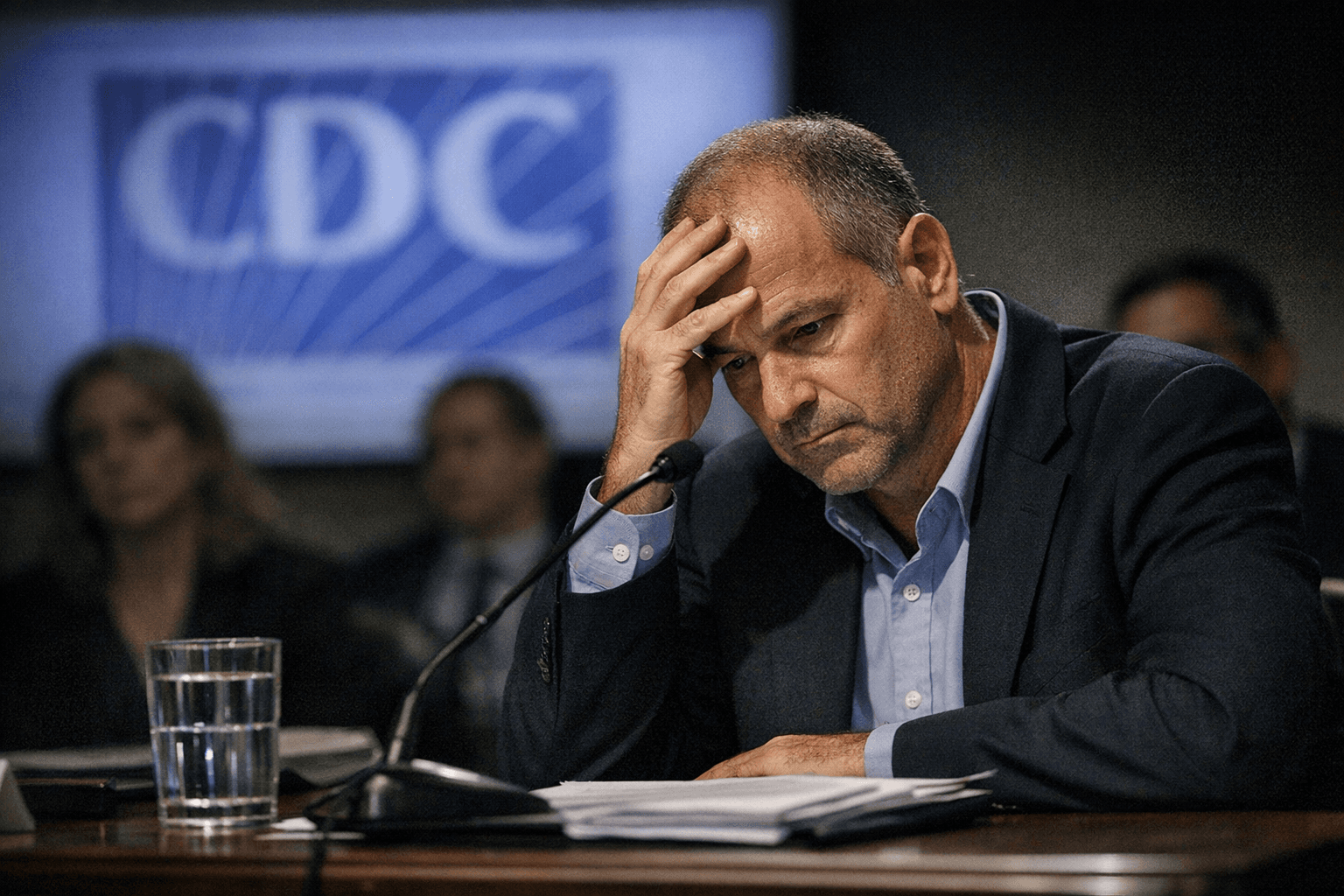
Yonatan Grad, a professor of immunology and infectious diseases at Harvard T.H. Chan School of Public Health, described the institutional stakes plainly. "ACIP has long been a trusted and valued source of guidance on vaccines and vaccination policy," he said. "The new members of ACIP are hand-picked by RFK Jr. and most have no evident expertise in vaccines, clinical trials, or infectious diseases. Many of them have been critical of vaccines."
The institutional consequences are already visible. Behavioral scientist Brewer, whose research focuses on vaccination behavior, warned that "ACIP recommendations were the gold standard for what insurers should pay for, what providers should recommend, and what the public should look to," adding that provider organizations have already begun to turn away from ACIP guidance.
Dr. Bruce A. Scott, president of the American Medical Association, called ACIP "a trusted source of science- and data-driven advice" and warned that Kennedy's overhaul, combined with declining vaccination rates, will drive an increase in vaccine-preventable diseases.
Kennedy's restructuring of ACIP is not his first unilateral move on vaccines; he previously changed COVID-19 recommendations without consulting the committee, a step that drew condemnation from medical and public health organizations. The convergence of a hollowed-out advisory panel, appointments of figures with contested scientific records, and the erosion of provider confidence in ACIP guidance represents a fundamental stress test for the infrastructure that has governed U.S. vaccine policy for decades.
Know something we missed? Have a correction or additional information?
Submit a Tip