Europe’s far right turns on Trump after Iran war, erratic behavior
Europe’s nationalist right is treating Trump as a liability after the Iran war, as AfD and National Rally leaders break ranks for different political reasons.
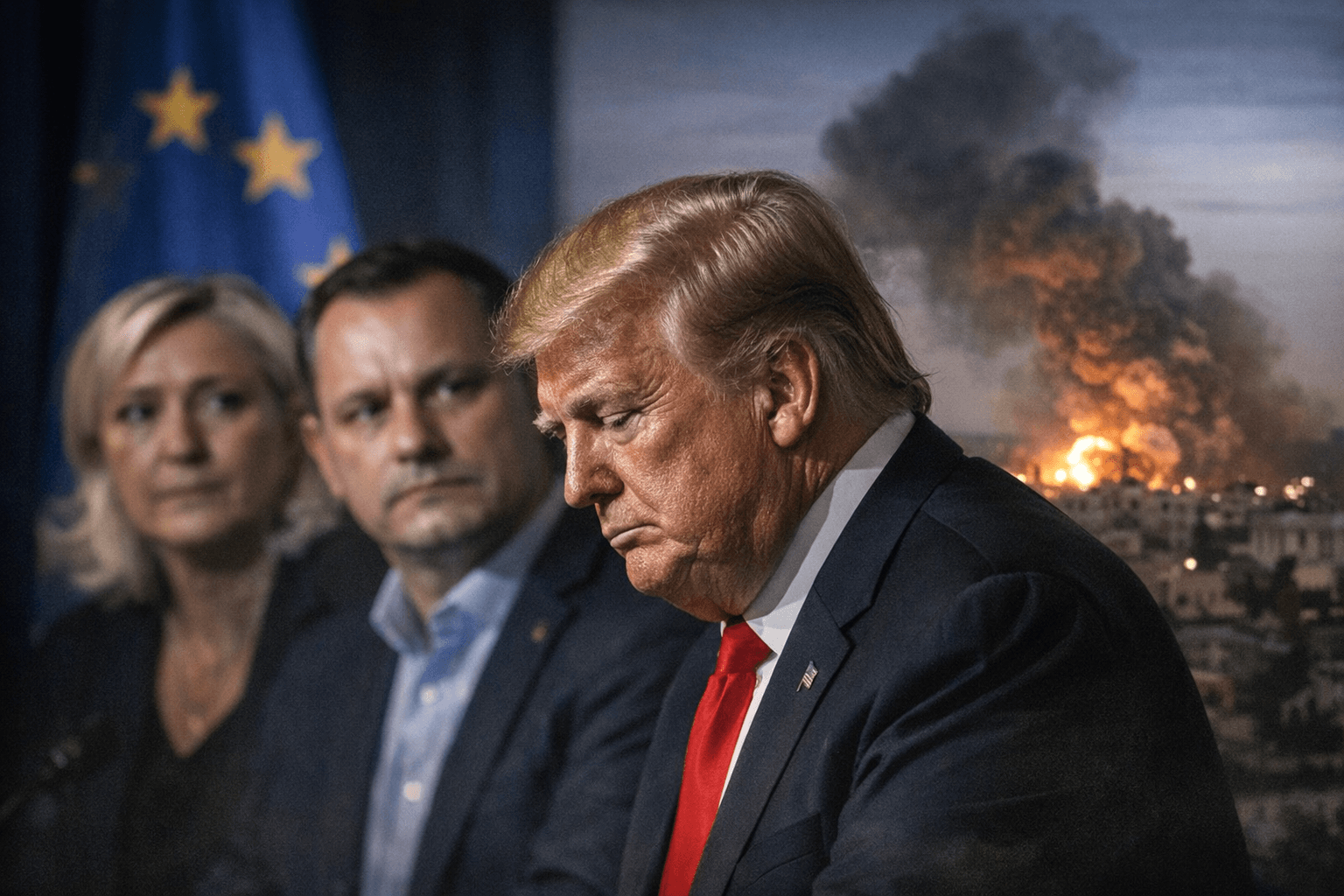
Europe’s nationalist right is starting to treat Donald Trump less like a patron and more like a political risk. After months of celebrating his return, figures from Germany’s Alternative for Germany and France’s National Rally are now distancing themselves, with the Iran war and Trump’s erratic behavior hardening doubts about whether his backing still helps.
In Germany, AfD co-chair Tino Chrupalla moved from praise to pushback. He had applauded J.D. Vance’s February 2025 speech at the Munich Security Conference, where the vice president accused European governments of suppressing free speech and criticized the exclusion of populist parties, including the AfD. Chrupalla later cited Spain under Socialist Pedro Sánchez as a model for saying “no” to Trump and demanded the withdrawal of U.S. troops from Germany, a sign that sovereignty talk is now being used to distance the party from Washington.
That shift reflects how exposed Germany is to a souring transatlantic relationship. The Carnegie Endowment described Trump’s first 100 days as a “brutal, multipronged assault” on trade, security and shared values. German exports to the United States amount to about 4% of GDP, and the country still hosts the largest contingent of U.S. forces in Europe, along with American nuclear weapons. For a party that wants to look patriotic and anti-elite, overt dependence on Trump has become harder to defend.

France’s National Rally is drawing a different lesson. Jordan Bardella said Trump’s aims in Iran were “totally erratic” and rejected any sense of American political tutelage. That caution reflects domestic politics as much as ideology. Trump is unpopular with French voters, and too-close identification with him can look less like independence than vassalage. Marine Le Pen’s 2017 visit to Trump Tower after Trump’s first election showed that personal ties between Trump and Europe’s nationalist right are not new, but they have not translated into lasting unity.
The broader right is now split over whether Trump remains an asset or has become a liability. Daniel Hegedüs of the Institute for European Policy in Berlin said J.D. Vance’s visit to Hungary during the April 12, 2026 election campaign was a political “kiss of death” and “didn’t help,” after Viktor Orbán’s defeat despite strong Trump administration backing. That loss underlined a new reality: in parts of Europe, Trump’s endorsement can now cost more than it delivers, pushing nationalist parties to choose between ideological kinship and electoral self-preservation.
This article was produced by Prism’s automated news system from verified source data, official records, and press releases, then run through automated quality and moderation checks before publishing. The system is built and supervised by the people who set the standards it runs under. Read our full AI policy.
Did this article answer your question?