Europe’s heatwaves are forcing school closures and climate adaptation
Europe's schools are becoming the frontline of climate adaptation as heatwaves close classrooms and expose buildings never designed for prolonged heat.
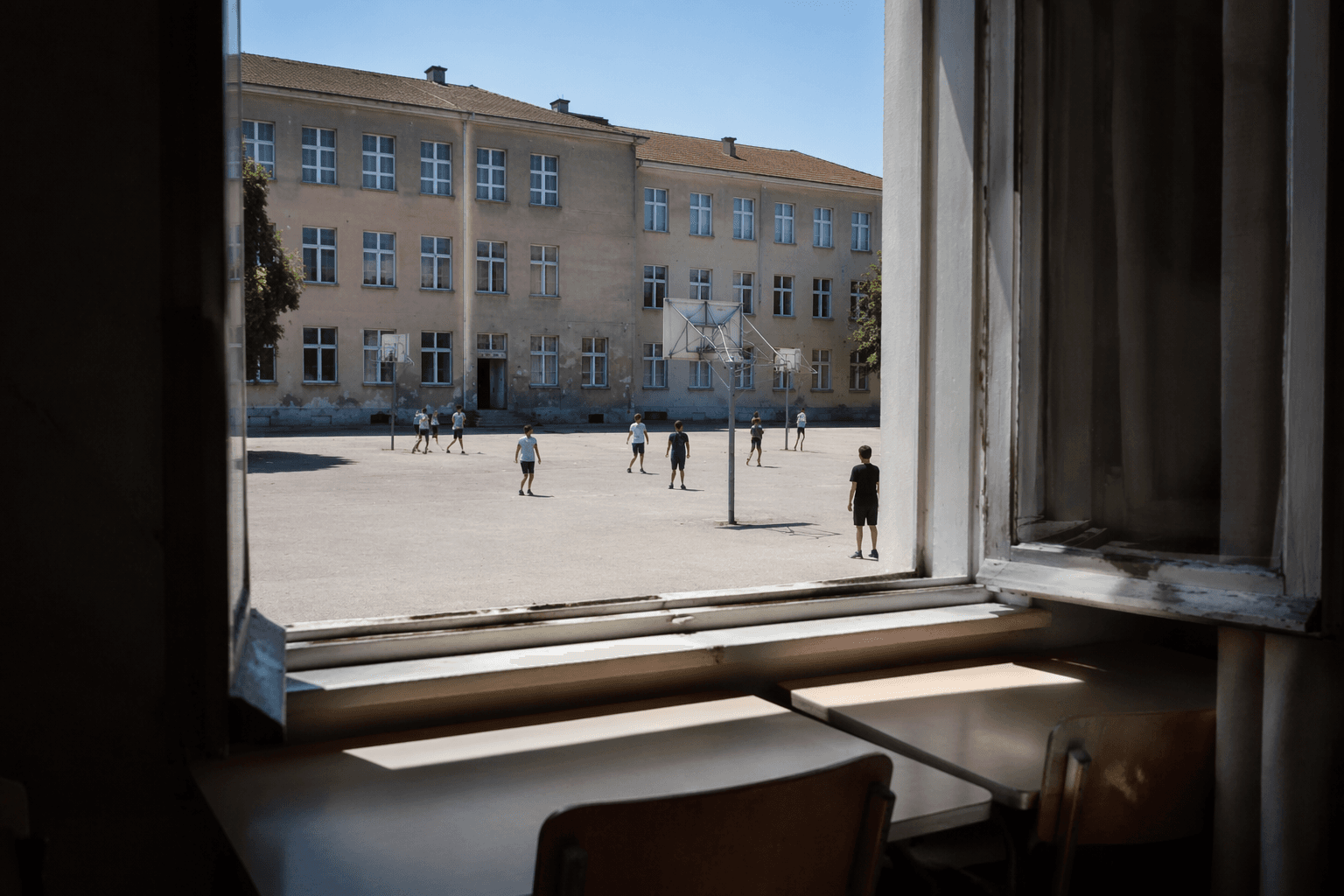
Schools on the front line
Europe’s classrooms are turning into climate alarms. As the hottest stretches of the year run deeper into the school calendar, teachers and pupils are being asked to learn in buildings that were built for colder weather and shorter summers, not prolonged heat. That shift is making school heat an education problem, a health problem, and a public policy problem at the same time.
The scale of the warning is hard to miss. Copernicus Climate Change Service’s European State of the Climate 2025 says Europe is the fastest-warming continent, with temperatures rising by about 0.56°C per decade over the past 30 years. Since the 1980s, Europe has warmed at roughly twice the global average, which helps explain why heat is no longer an occasional disruption but a recurring stress test for schools and public buildings across the continent.
What overheating does to learning
When classrooms overheat, the damage is immediate. UK government climate-risk materials warn that overheating can make learning difficult and, without adaptation, some teaching spaces may face days when learning cannot reasonably take place during extreme heat. Another UK briefing says high temperatures can be one of the key factors affecting children’s concentration in schools, which means heat erodes learning long before a classroom is officially closed.
That disruption scales quickly. UNICEF’s 2025 analysis found that at least 242 million students in 85 countries had their schooling disrupted by extreme climate events in 2024. In the same year, UNICEF said heatwaves were the single biggest climate hazard disrupting schooling worldwide, affecting an estimated 171 million students. Those numbers show that heat does not only make lessons uncomfortable, it interrupts attendance, compresses the school day, and widens the gap between children in protected buildings and those in structures with little cooling or shade.
Why closures are becoming part of the response
European governments are already treating extreme heat as a reason to shut schools, not just to send out hydration reminders. Greece closed schools and the Acropolis during an early-summer heatwave in June 2024, a striking reminder that the same weather event can disrupt both education and public life. France also closed large numbers of schools during a 2025 heatwave, showing that the question is no longer whether heat can force closures, but how often that will happen as summers get hotter.
These closures matter beyond the headline. For families, they can scramble work and childcare arrangements in a matter of hours. For students, they can mean lost instructional time, shortened schedules, or days when class is impossible because the building itself has become unsafe or unusable. For public systems, each closure is a sign that adaptation is no longer optional infrastructure planning, it is basic continuity planning.

Why old school buildings struggle
One reason the problem keeps returning is that many school buildings were designed for a different climate. Researchers and policy guidance in Europe warn that older school buildings were often built to retain heat in cold weather rather than dissipate it in hotter summers. That design mismatch is now colliding with hotter Septembers, longer warm spells, and classrooms that trap heat through the day.
Retrofitting those buildings is not a small task. Public schools are large, heavily used structures, and any serious upgrade has to contend with insulation, ventilation, shading, windows, roofs, and the limits of budgets that are already stretched thin. The cost of inaction is visible in every closed classroom and every lost hour of learning, but the upfront cost of adaptation also falls on school systems that must compete with other urgent public needs.
What climate-resilient schools look like
The European Commission has already started framing the answer as a building and health issue, not just an energy issue. In 2023, it published EU-level technical guidance on adapting buildings to climate change, collecting and synthesizing existing methods, specifications, best practices, and guidance for climate-resilient buildings. That approach matters because schools cannot be treated as ordinary office blocks. They need to support concentration, protect children’s health, and remain usable during extreme weather.
The Commission’s separate report on school learning environments goes further, arguing that education infrastructure can be made more climate-resilient, supportive of student health and well-being, and conducive to learning. That is the standard now facing policymakers: not simply keeping children indoors, but designing spaces that remain safe enough and cool enough for learning to continue when temperatures climb.
The policy choice ahead
Europe’s heat problem in schools is no longer a seasonal annoyance that can be solved with a few fans and an early dismissal. It is a structural challenge shaped by a continent warming twice as fast as the global average, a school system already seeing climate-driven disruption around the world, and a building stock that was not designed for prolonged heat. The next wave of adaptation will be measured not only by whether schools stay open, but by whether public buildings are finally retrofitted to let learning continue when summer arrives early and lingers late.
This article was produced by Prism’s automated news system from verified source data, official records, and press releases, then run through automated quality and moderation checks before publishing. The system is built and supervised by the people who set the standards it runs under. Read our full AI policy.
Did this article answer your question?