Evaluating Geometric Tattoo Portfolios: What to Inspect and Questions to Ask
Learn the exact portfolio cues and direct questions that separate precise geometric artists from hobbyists — check lines, symmetry, dotwork skill, placement flow, and follow three concrete vetting steps.
1. Line quality: "Perfectly straight lines" and clean, sharp edges
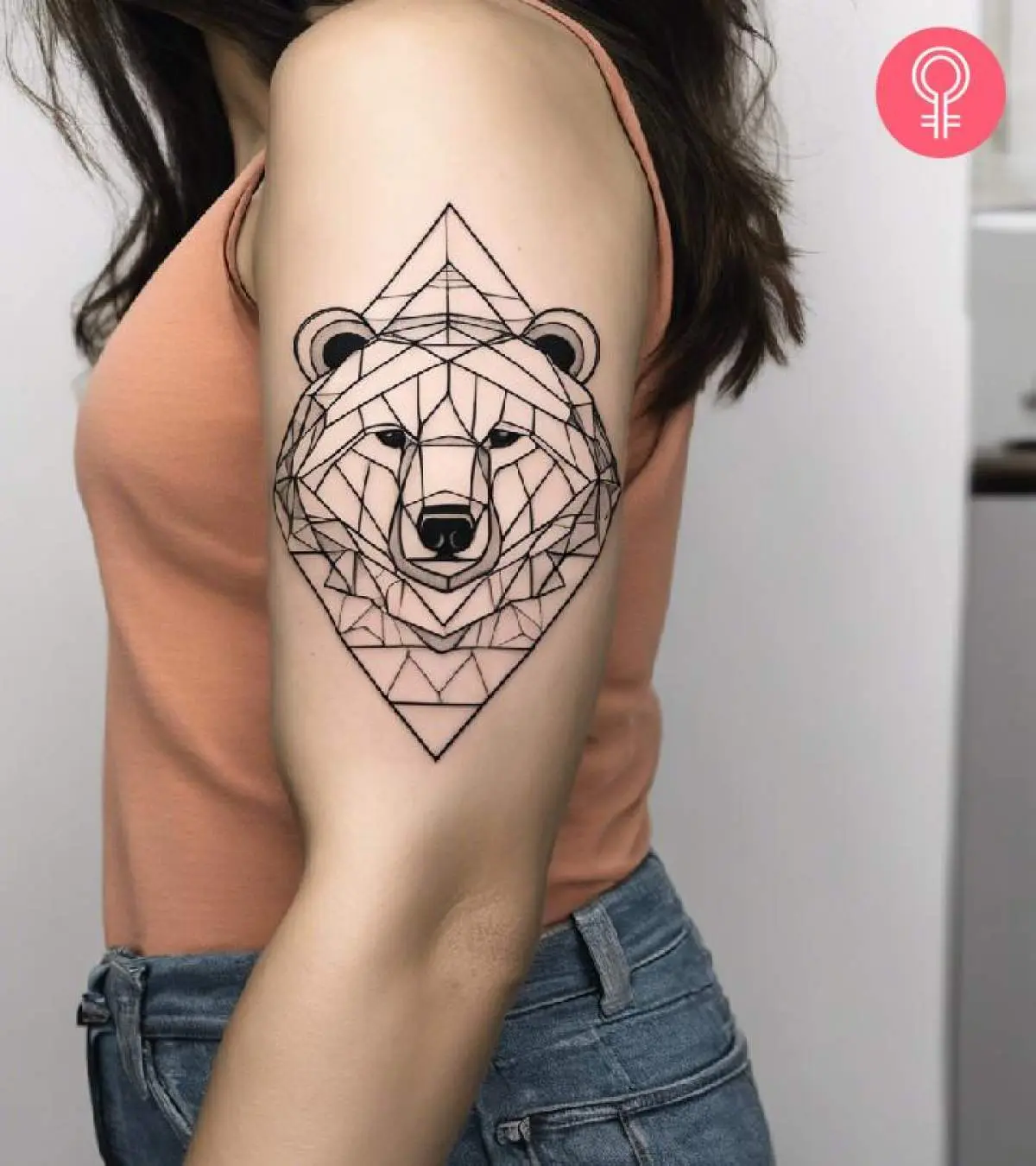
Good geometric work rests on line precision. Bowlerinc’s checklist leads with "Perfectly straight lines" and tells collectors to "Look for clean, sharp lines, well-executed layering, and attention to detail." Scan portfolio photos for smooth, consistent strokes and no breaks; Bowlerinc’s guidance specifically urges you to "Check for smooth, consistent lines without any breaks." If lines wobble in close-up shots, the artist may not have the steady hand a complex geometric piece requires.
2. Symmetry and precision: "Symmetrical shapes" are non-negotiable
"Symmetrical shapes" and "Symmetry and Precision: Ensure the designs are perfectly symmetrical and precise" are repeated markers of quality in the sources. Bowlerinc adds that "Symmetry is a defining characteristic of geometric tattoos" and that artists "carefully consider the natural flow of the body" to keep shapes aligned. When inspecting a portfolio, zoom into mandalas, tessellations and mirrored halves to see whether axes match and intersections meet cleanly.
3. Pattern detail, layering, and cleanliness: "Detailed, clean patterns"
Bowlerinc’s notes include "• Detailed, clean patterns" and emphasize "well-executed layering" and "attention to detail." Evaluate whether fills, negative space and overlapping elements read clearly at different scales. A strong portfolio shows complex compositions without visual muddiness — individual pattern elements should remain distinct rather than blurring into each other.
4. Dotwork and fine-line technique: proven technical range
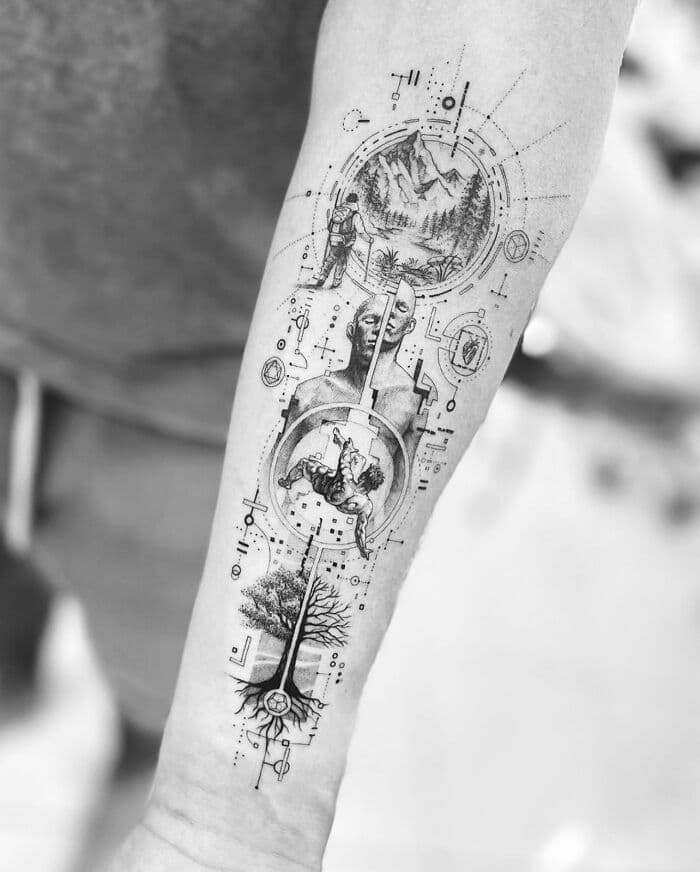
Alohatattoos lists "Proven ability with dotwork and fine-line techniques," while Certified Tattoo Studios names "dotwork, line work, stippling, and shading" as the toolkit for geometric artists. Look for consistent dot density, even stippling gradients, and fine-line work that holds together in close-up photos. These techniques distinguish minimalist icons from dense sacred-geometry pieces and show the artist’s technical breadth.
5. Portfolio diversity: "Diverse Styles" and composition range
Bowlerinc advises you to check "Diverse Styles: See if the artist can handle different geometric styles (minimalist, abstract, sacred geometry, etc.)." Alohatattoos echoes this with "Portfolio diversity spanning minimalist and complex compositions." A useful portfolio will include micro-icons and large, layered mandalas or sleeves — this signals the artist can scale composition and adjust technique to suit placement and narrative scope.
6. Client reviews and professionalism: look for precision praise
Alohatattoos recommends "Positive client reviews highlighting precision and professionalism" and Certified Tattoo Studios explicitly tells readers to "read reviews from past clients." Reviews that call out clean line work, steady hands, punctual sessions, and tidy aftercare instructions are valuable. Reviews help verify that portfolio photos reflect consistent studio practices rather than occasional standout pieces.
7. Placement and flow: check how work follows body contours
Both Bowlerinc and Alohatattoos stress that placement matters. Bowlerinc explains that artists "carefully consider the natural flow of the body when designing a tattoo, ensuring that lines align seamlessly with the body’s contours." Alohatattoos gives concrete format examples: "Full sleeves utilize cascading triangles, dotwork shading, and interlocking lines to form cohesive visual stories," while "Half-sleeve designs combine sacred geometry motifs with negative-space transitions for bold impact," and "Tiny geometric icons—like micro-circles, minimalist arrows, or single-line hexagons—offer subtle yet meaningful accents." Match the artist’s portfolio formats to your intended placement to confirm they understand scale and flow.
8. Preview, stencil, and in-studio verification: see the design on your body
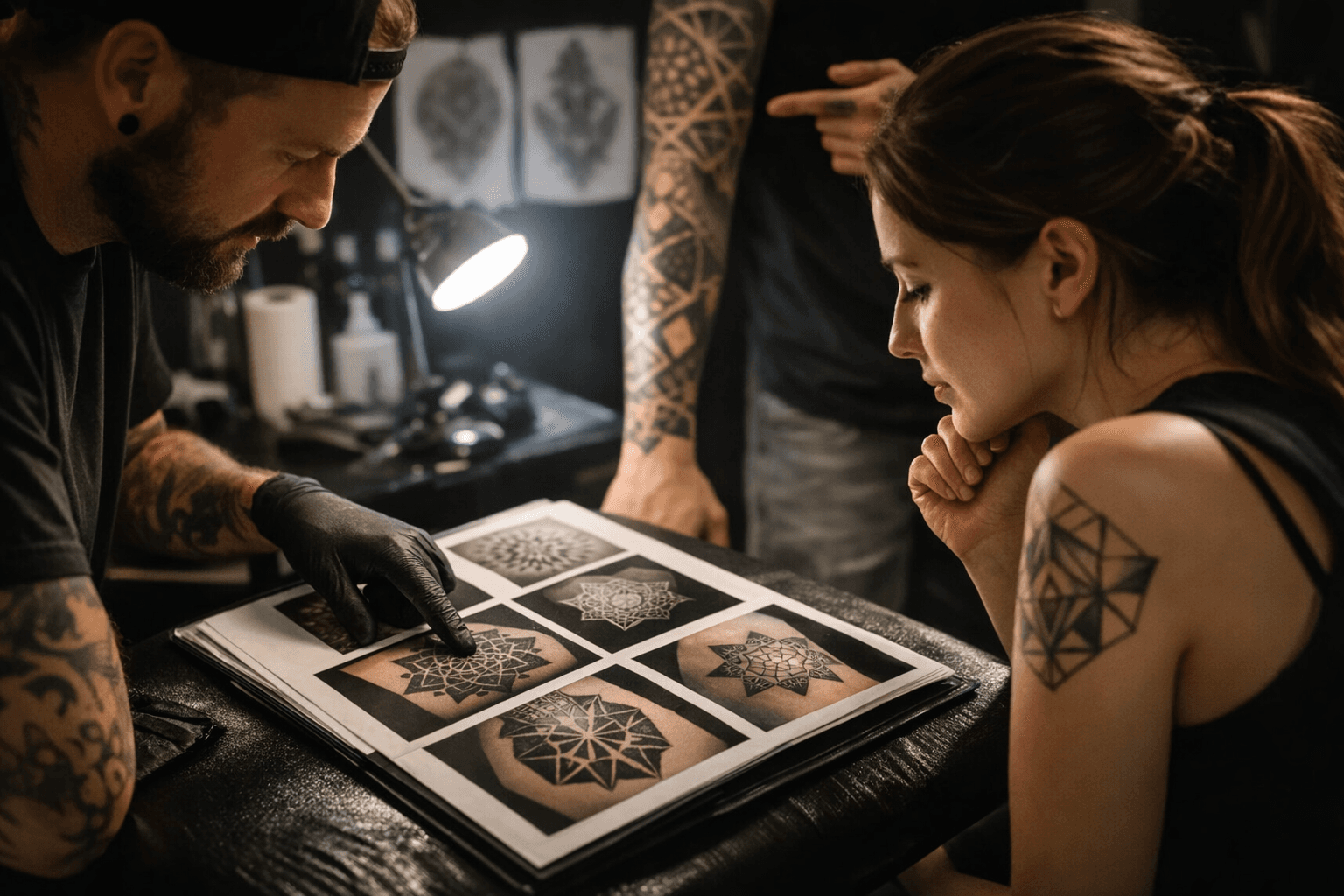
Bowlerinc advises: "Work with your tattoo artist to see a preview or stencil of the design on your body before committing." Certified Tattoo Studios also suggests meeting in person to "get a feel for their personality and style and ensure you're on the same page regarding your vision for the tattoo." Insist on an in-studio mockup or stencil placement so you can judge how symmetry and line direction will interact with muscle and bone — it's a practical rehearsal that reveals whether the artist plans for body flow.
9. Integration with existing tattoos: "Absolutely!" it can be done
Bowlerinc explicitly asks, "5. Can I get a geometric tattoo if I have other types of tattoos?" and answers: "• Absolutely! Geometric patterns can complement other styles, and a skilled artist can seamlessly integrate them into existing tattoos." When reviewing portfolios, look for examples where the artist has blended geometric elements with color work, portraits, or script — that demonstrates the ability to harmonize geometry without visual conflict.
10. The practical vetting steps: do your research, ask around, meet in person, trust your gut
Certified Tattoo Studios lays out these four steps: "1. Do your research. ... Check out portfolios online or in person, and read reviews from past clients to get an idea of their work. 2. Ask around. ... Talk to friends or family who have tattoos, and see if they have any recommendations. 3. Meet in person. ... get a feel for their personality and style and ensure you're on the same page regarding your vision for the tattoo. 4. Trust your gut. ... If something doesn't feel right about a particular artist, trust your instincts and move on." Use these steps as a checklist during the decision process: portfolio screens, local recommendations, a studio visit for stencils and conversation, and final instinctive judgment.
11. Healed results: promised guidance but the detailed checklist is missing
The Original Report promises this guide will cover "what to inspect in photos, how to spot consistent healed results, and which questio" — however, that text is truncated and does not supply explicit healed-result criteria. Given the gap, lean on Certified Tattoo Studios’ instruction to "Check out portfolios online or in person, and read reviews from past clients" when assessing healed consistency. Prioritize portfolios that explicitly label healed photos, client testimonials that reference longevity, and in-studio examples you can examine in person.
12. Why precision matters: steady hands and experience
Certified Tattoo Studios warns geometric work "require[s] an artist with a steady hand and years of experience." Bowlerinc frames geometric tattoos as "a mesmerizing blend of art, science, and spirituality," where "symmetry is a defining characteristic." Those phrases underline a practical truth: technical skill isn’t optional. If a portfolio shows repeated small errors in alignment or inconsistent dotwork, you’re looking at either inexperience or a mismatch in specialization.
13. Studio and portfolio cues: personal pages and branded studios
Some sources are explicit about where portfolios live: Bowlerinc prompts readers to "Always review the artist’s portfolio of geometric pattern tattoos (you can see mine here)," and Alohatattoos—"Written By Jon Poulson"—recommends visiting Aloha Tattoos for geometric expertise. Certified Tattoo Studios appears as a branded label in its guidance. Use these cues to identify whether work is tied to an individual artist’s page or a studio showcase; both can be useful, but an individual portfolio often makes style and authorship clearer.
Conclusion Geometric tattoos demand measurable signs of skill: "Perfectly straight lines," "symmetrical shapes," "detailed, clean patterns," and proven technique in "dotwork, line work, stippling, and shading." Combine close portfolio scrutiny with Certified Tattoo Studios’ vetting steps — research, ask around, meet in person, trust your gut — and insist on a preview or stencil in-studio. Where the Original Report’s promised healed-results checklist is missing, rely on in-person portfolio checks and client reviews to verify consistency. Do this, and you’ll separate precise, experienced geometric practitioners from the rest — and walk into your session knowing the math and craft behind the art.
Know something we missed? Have a correction or additional information?
Submit a Tip