Young Kazakhs revive traditional geometric ornaments through a surge in tattooing
Over the past month tattoo studios across Kazakhstan have reported a clear uptick in requests for traditional Kazakh ornamental patterns, now being inked where carpets and yurt walls once wore them.
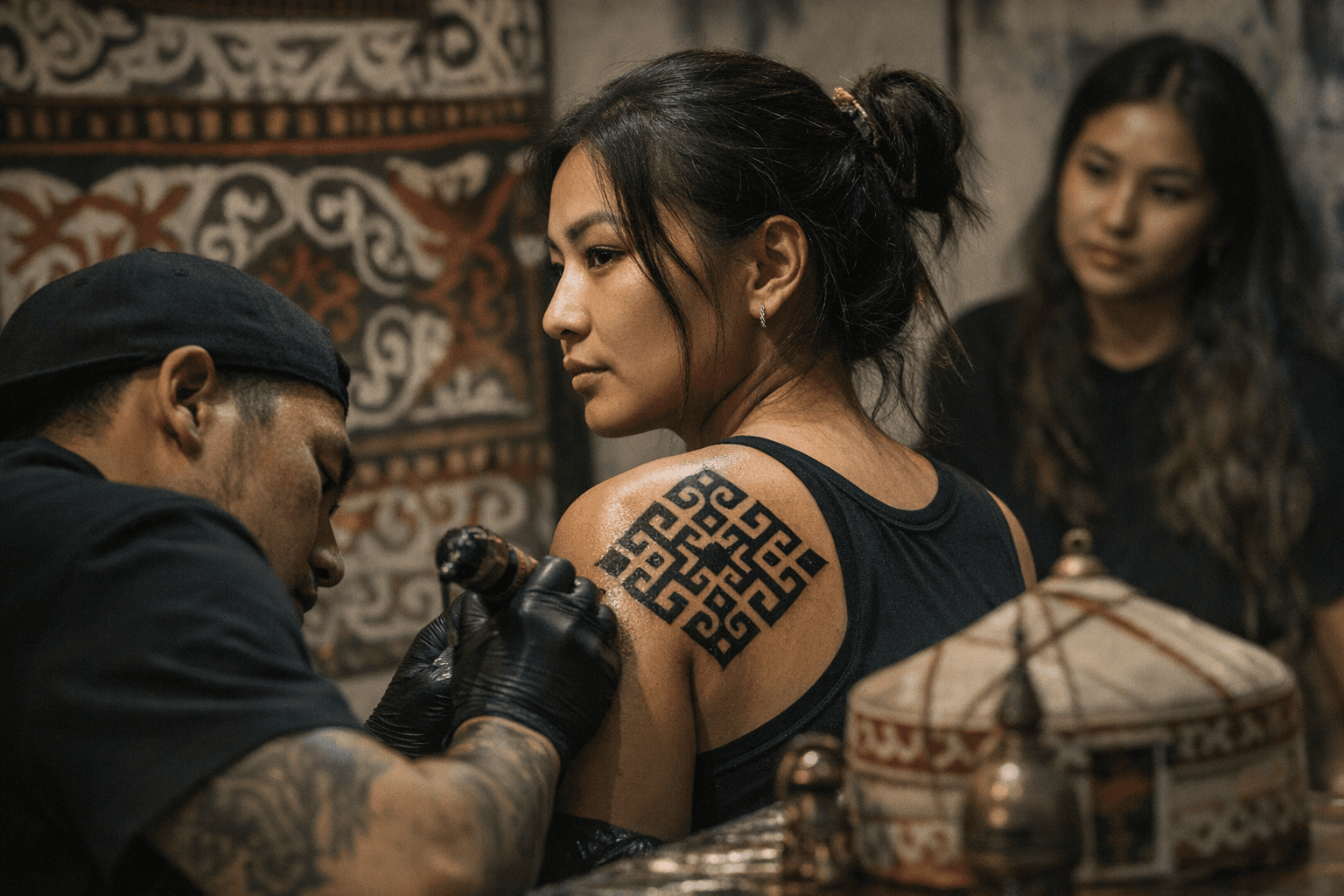
Over the past month tattoo studios across Kazakhstan have reported a noticeable rise in requests for traditional Kazakh ornamental patterns — the geometric motifs once woven into carpets, carved into wood and painted on yurts — now being adapted for skin. These motifs originally served protective and symbolic functions, used to ward off evil spirits, attract good fortune and signal status on weapons and horse harnesses.
The visual language of these ornaments stretches back to written sources from the beginning of the 16th century. Defining features include flowing lines and curved patterns reminiscent of animal horns or waves, while cosmological signs such as spirals, crosses and circles referred to the sun, the earth and the concept of an eternal cycle of life. Motif categories are explicit: zoomorphic elements like horns, wings and hooves stood for strength and prosperity; floral elements signified fertility; geometric forms such as diamonds, circles and zigzags were linked to protection and harmony. Historically, ornaments decorated clothing, carpets, felt pieces, wooden and metal utensils, and the interior of the yurt — in short, ornaments accompanied people throughout their lives.
Tattoo artists adapting these motifs tell clients they are transferring a living visual code from objects to bodies. Where once ornaments were woven into fabric, carved into wood or engraved in metal, they are increasingly becoming part of yet another surface - the human body. The book "Secrets of the ornament" is often used by Sabyrbayeva and her clients to choose the design and understand the meaning behind each ornament, a practice that ties contemporary requests to a reference framework rather than leaving selection purely aesthetic.
The revival is not limited to skin. In Astana, hair stylist and artist Nazym Omirzak has translated keste — a type of ornamental embroidery and one of the most distinctive forms of Kazakh applied folk art — into modern hair art. Omirzak, who has been working as a hair stylist since 2018 and describes herself as self-taught, began experimenting after finding an old wig at home and recalling the embroidery technique she saw once in school. "I grew up in a traditional Kazakh family. I love our culture deeply. It naturally finds its way into my work," she says. "Sometimes ideas come suddenly, so I write them down right away. Some stay in my mind for months. That’s when I know I have to create them." Her practice, she adds, is deliberate about meaning: "Hair embroidery is individuality. People choose patterns that transform a hairstyle into something meaningful. Ornament is a cultural code. It doesn’t just decorate, it communicates." Photos of her work are credited to Omirzak’s personal archive and to Aruzhan Batyrkhan.
Designers and brands have already woven national patterns into fashion, branding, architecture, urban design and corporate identities; tattooing and hair embroidery now extend that visual revival into intimate, wearable forms. What began as a run of requests at studios over a recent month is being framed as a broader cultural reclamation — young Kazakhs are reconnecting with inherited symbols and translating them into personal statements on body and hair, carrying motifs recorded in the 16th century into 21st century lives.
Know something we missed? Have a correction or additional information?
Submit a Tip