Ex-CIA officer accused of fake spy program found with gold bars
A former CIA officer was found with 303 gold bars and $2 million in cash after investigators say he built a fake spy program to siphon federal money.

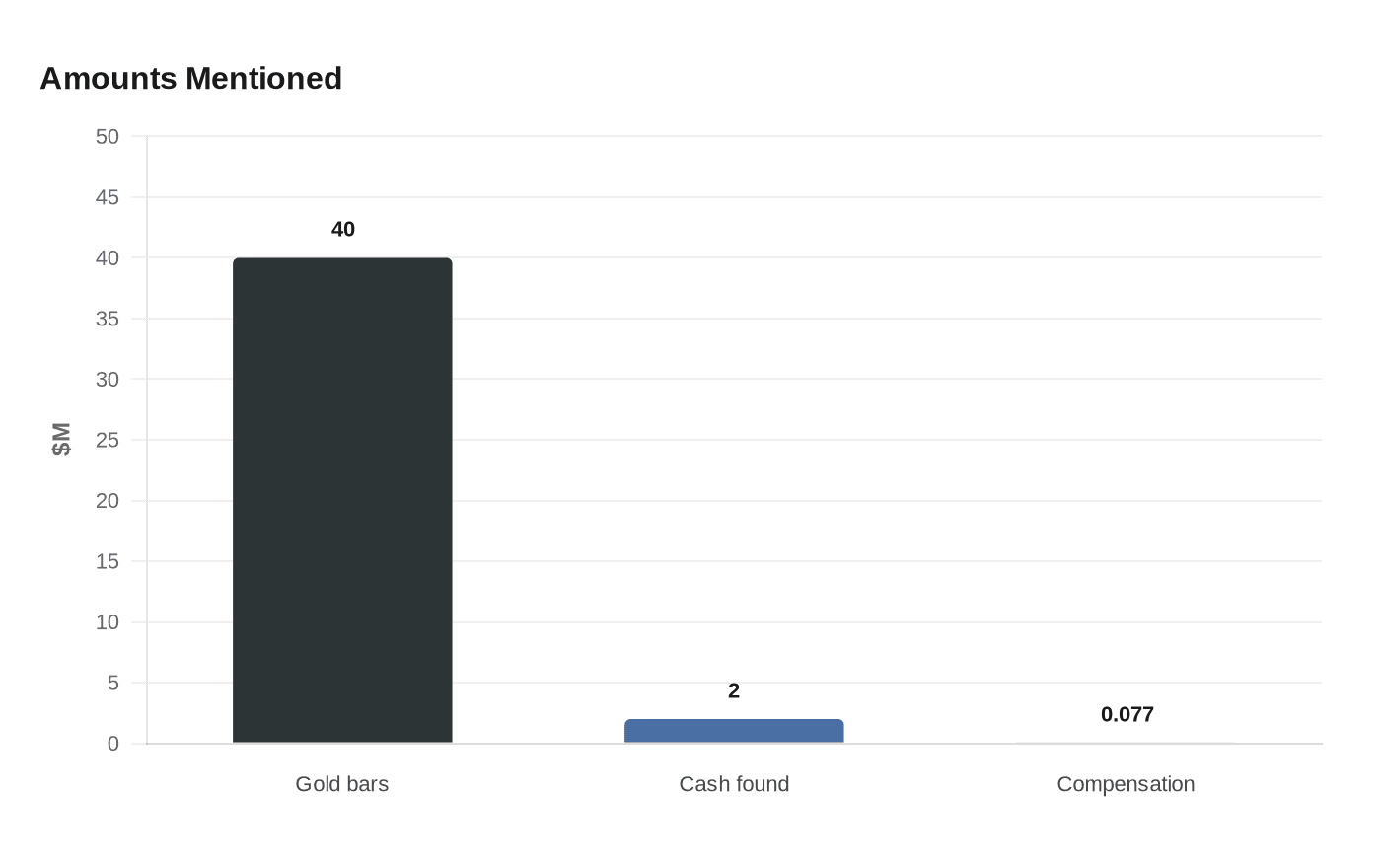
Federal agents say David J. Rush, a former senior CIA officer with top-secret clearance, turned an official cover story into a private windfall: investigators searching his Northern Virginia home on May 18 found about 303 one-kilogram gold bars, worth more than $40 million, along with roughly $2 million in cash.
Prosecutors allege Rush spent years operating a fraudulent intelligence effort described in reporting as a “black box” program, presented as continuity-of-government work, the emergency planning designed to keep Washington functioning after catastrophe. They say he used a fabricated contract to divert millions of dollars for personal use while working inside one of the government’s most secretive systems.
The allegations cut to a larger breach of trust inside the national security state. Rush worked at the CIA for about 17 years, giving him the kind of access and institutional familiarity that can make oversight harder, not easier. The case suggests that when a program is cloaked in secrecy, and when its purpose is tied to emergency preparedness and classified operations, basic checks on spending and authority can be weakened just enough for abuse to go unseen.
On June 5, a federal judge ordered Rush detained pending trial, agreeing with prosecutors that he posed a flight risk. Investigators also say he lied for years about his background, including claims that he graduated from Clemson University and Rensselaer Polytechnic Institute and that he had been a Navy pilot. ABC News reported allegations that Rush also claimed 744 hours of military leave after his 2015 Navy discharge, resulting in about $77,000 in compensation.
The case now sits at the intersection of insider fraud, classified-program abuse, and a striking physical cache of wealth. Beyond the gold bars, the larger question is how a senior officer could allegedly build a fake spy operation under official cover, move federal money through it, and keep the scheme alive long enough to amass millions before federal agents arrived at his Virginia home.
This article was produced by Prism’s automated news system from verified source data, official records, and press releases, then run through automated quality and moderation checks before publishing. The system is built and supervised by the people who set the standards it runs under. Read our full AI policy.
Did this article answer your question?