Exit polls show Radev's coalition set to win Bulgaria election
Exit polls put Rumen Radev’s coalition first with up to 39.2% after Bulgaria’s eighth vote in five years, but a majority still looks out of reach.
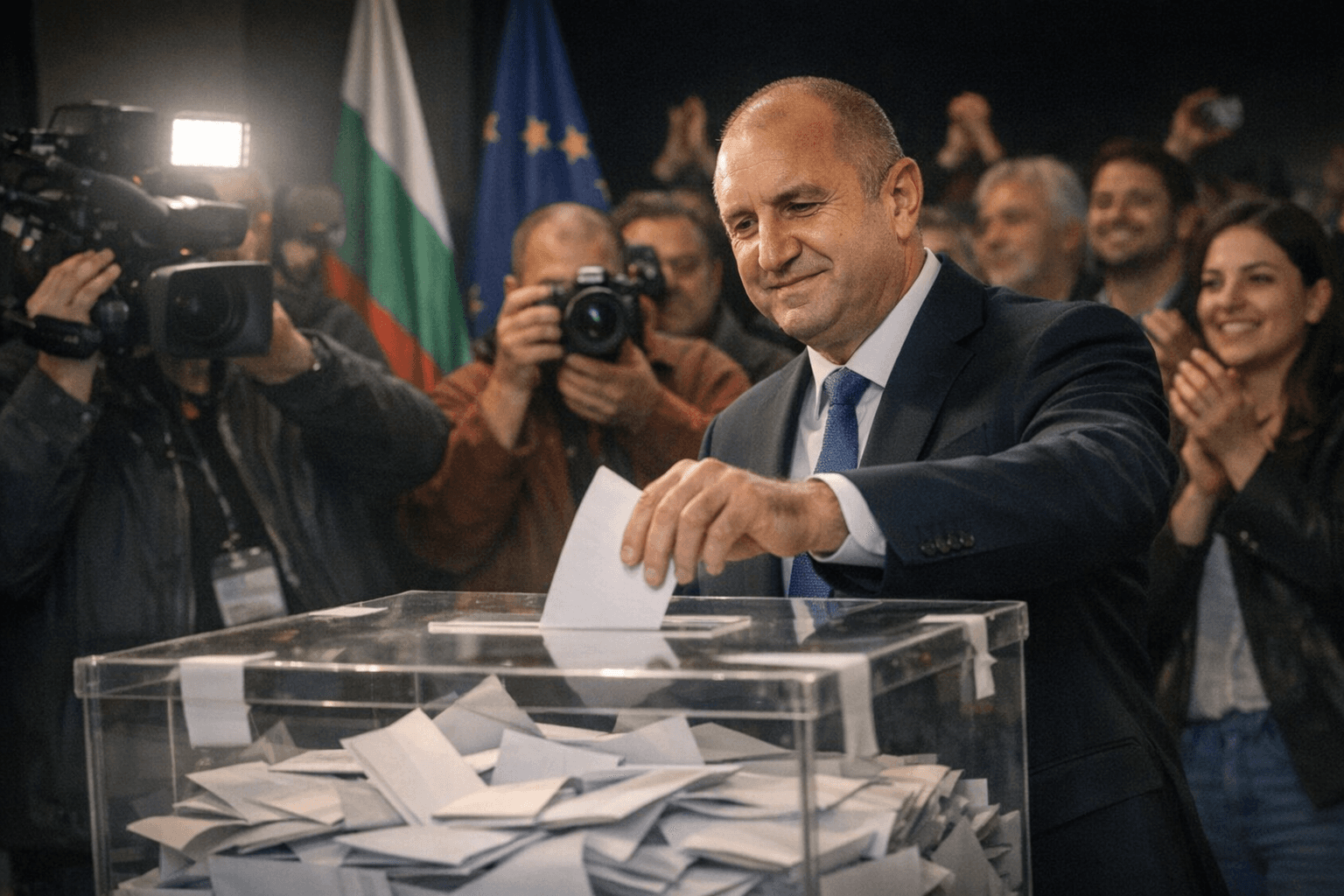
Exit polls pointed to a sweeping win for Rumen Radev’s Progressive Bulgaria coalition, giving the former president about 37.5% to 39.2% of the vote and leaving the center-right GERB-UDF bloc far behind at roughly 16% to 17%. The result offered voters a sharp break from years of stalemate, but not a clean path to government in Bulgaria’s 240-seat parliament.
The election, held on April 19, came after another government collapsed in December 2025, when the Rosen Zhelyazkov administration resigned on December 11 after weeks of anti-corruption protests. It was Bulgaria’s eighth parliamentary election in five years, a sequence that has left the country trapped in repeated snap votes and fragile caretaker administrations. The latest ballot suggested that weariness with corruption and instability had finally pushed enough voters toward a new alignment around Radev.
Turnout was stronger than in the country’s recent contests. Bulgaria’s Central Electoral Commission said 34.6% of eligible voters had cast ballots by 4 p.m., well ahead of the 26.25% recorded at the same hour in the October 2024 parliamentary election. That rise suggested a more mobilized electorate, even if participation remained modest by European standards.
Yet the numbers also pointed to the limits of Radev’s breakthrough. With no outright majority in sight, Progressive Bulgaria would likely need coalition partners to govern, turning the next phase into a difficult arithmetic test. Any workable alliance would have to bridge sharp divides over corruption, economic management and foreign policy, while also accommodating a fragmented parliament in which GERB-UDF, led by Boyko Borissov, remained a significant but weakened force.
The stakes extend beyond Sofia. Radev has opposed sanctions on Russia and military aid for Ukraine, positions that could pull Bulgaria away from the EU’s mainstream if they shape the next government’s agenda. The result is being watched as part of a wider regional shift after Viktor Orban’s setback in Hungary, with Bulgaria now emerging as the next test of whether anti-establishment politics can convert voter anger into durable power. For a country exhausted by deadlock, the exit polls offered the prospect of change. They also underscored how hard it may be for Bulgaria to turn a protest vote into a governing majority.
Know something we missed? Have a correction or additional information?
Submit a Tip