U.S. Presses Iran Over Enriched Uranium as IAEA Seeks Stockpile Data
Iran’s uranium stockpile was last verified days before the June 2025 fighting, and inspectors have been out ever since. Washington and the IAEA now lack basic data on where it is and how far it has advanced.
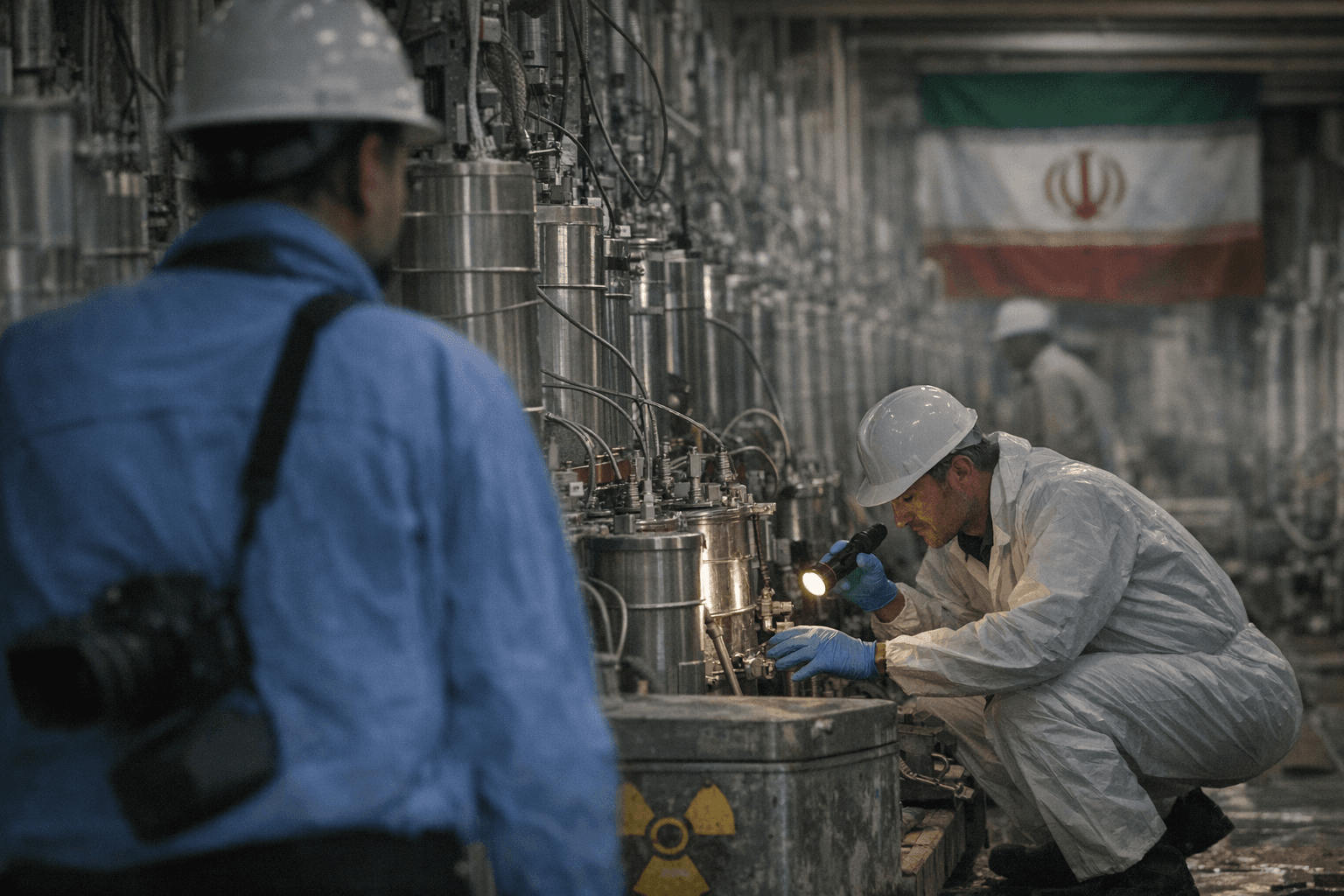
Iran’s more than 400 kg of highly enriched uranium was last verified by IAEA inspectors only days before the June 2025 military conflict began. After the attacks on Iranian nuclear sites, the agency stopped verification work and withdrew all inspectors by the end of June, leaving the core facts about the stockpile outside independent view.
That gap is now the center of the dispute. In its February 27, 2026 report, GOV/2026/8, the IAEA Board of Governors said six older U.N. Security Council resolutions on Iran had been reinstated as of September 28, 2025. The board also asked the agency to report on Iran’s uranium stockpile, including its locations, quantities, chemical forms and enrichment levels, along with centrifuge inventories. Those are not technical footnotes. They are the information needed to determine whether Iran still holds the same material the agency last saw, whether it has been dispersed, and whether it can be quickly advanced further.
That distinction matters for policy. A verified stockpile above 400 kg of highly enriched uranium, especially if accompanied by evidence of higher enrichment or expanded centrifuge capacity, would materially change the calculations in Washington and allied capitals. It would sharpen pressure for enforcement, affect the credibility of diplomacy, and raise the stakes of any discussion about containment or coercive action. Without verified locations and enrichment levels, public claims about restraint or escalation remain untested.
The United States has already moved to organize that response. In January 2026, the State Department said 40 countries met in Prague, Czech Republic, to push implementation of the restored sanctions on Iran. The department said the reinstated resolutions require Iran to suspend uranium-enrichment, heavy-water and reprocessing-related activities. But the enforcement architecture is only as strong as the inspection record behind it, and that record has been frozen since the inspectors left Iran.
Until the IAEA regains access, the central question is not rhetorical but practical: whether Iran’s stockpile remains where it was last seen, or whether it has crossed a threshold that would force Washington and its partners to rethink their options.
This article was produced by Prism’s automated news system from verified source data, official records, and press releases, then run through automated quality and moderation checks before publishing. The system is built and supervised by the people who set the standards it runs under. Read our full AI policy.
Did this article answer your question?


