Turkey Seeks Balance Between U.S. Alliance and New Global Partners
Turkey is using U.S. unpredictability to widen its options, from sanctions talks over the S-400s to deeper courtship of BRICS and the Shanghai Cooperation Organization.
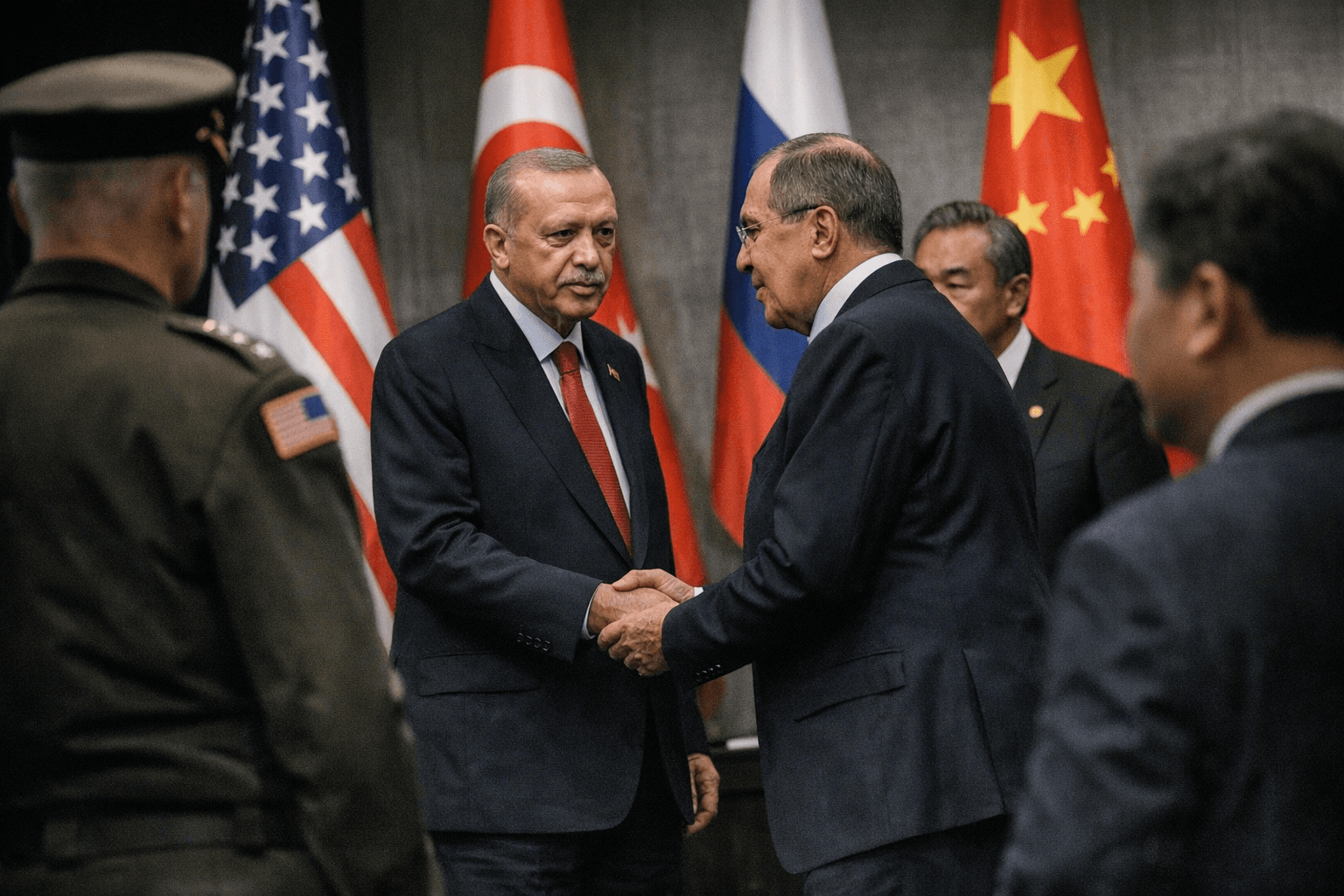
Turkey is trying to preserve its U.S. alliance while building a wider diplomatic safety net, a balancing act sharpened by Washington’s role as an indispensable partner that is also seen in Ankara as coercive and unpredictable. That tension was on display at the Antalya Diplomacy Forum, where Turkish officials framed the gathering around “Mapping Tomorrow, Managing Uncertainties” and opened a panel asking whether middle powers can save a rules-based world order.
For Turkey, the calculation is increasingly practical. The country is a NATO ally, the European Union is its largest trading partner and foreign investor, and bilateral trade with the bloc reached a record high of more than €210 billion in 2024. At the same time, Ankara has sought closer ties with BRICS and the Shanghai Cooperation Organization, signaling that it wants more than one strategic lane as American policy shifts from administration to administration.
The pressure points with Washington remain familiar. The United States sanctioned Turkey in 2020 after its purchase of Russia’s S-400 air-defense system and removed it from the F-35 fighter program, decisions that still hang over the relationship. On April 17, U.S. Ambassador Tom Barrack said Washington and Ankara could soon resolve the S-400 sanctions issue, and said F-35 readmission was, from his boss’s point of view, “fine.” That kind of transactional opening captures how both sides now manage a relationship that alternates between cooperation and friction.
Turkey’s hedging is not just a reaction to Washington. It reflects a longer arc that began when the European Union formally recognized Turkey as a candidate on December 12, 1999, and when the 2001 financial crisis pushed reforms that strengthened Ankara’s emergence as a middle power. Today, Turkey’s location gives it leverage with NATO allies, Russia, Ukraine and Iran, making it useful as a mediator even when its alignment is unclear.
Domestic strains also shape the foreign-policy posture. The International Monetary Fund said in February 2026 that Turkish inflation was 31 percent year-on-year in December, while growth remained solid after a year of balancing disinflation and expansion. A market tracker put annual inflation at 30.87 percent in March 2026, underscoring why Ankara has strong incentives to keep markets, energy routes and trade channels open wherever it can. In that environment, balance is no longer a slogan for Turkey. It is the operating system.
This article was produced by Prism’s automated news system from verified source data, official records, and press releases, then run through automated quality and moderation checks before publishing. The system is built and supervised by the people who set the standards it runs under. Read our full AI policy.
Did this article answer your question?


