Experts warn podcast health misinformation is spreading to millions of Americans
Health advice is now arriving through trusted voices and synthetic doctor deepfakes, turning podcasts into a fast-moving public-health risk.
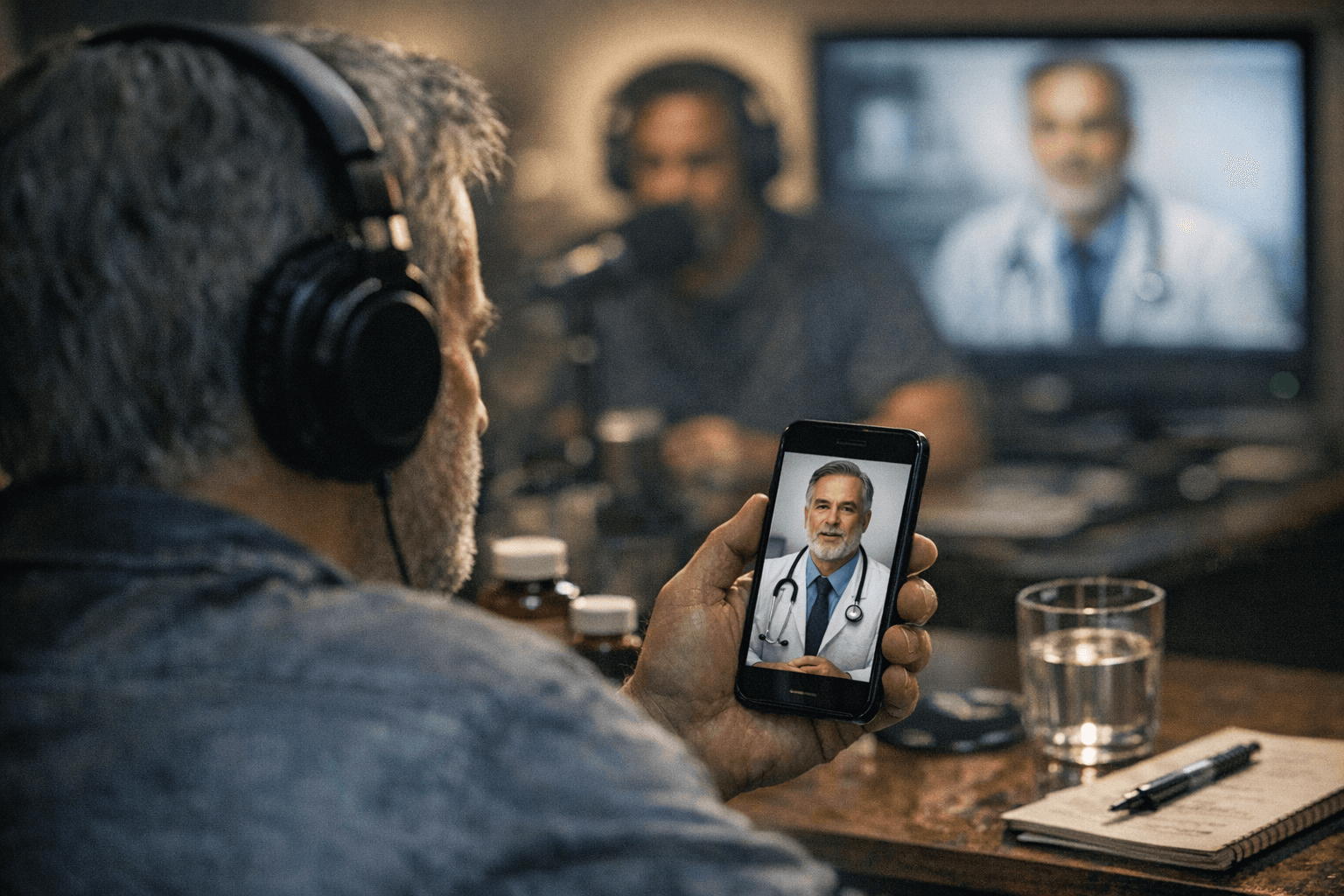
Millions of Americans now get health information from podcasts, and that familiar format has become a new fault line in the fight over medical truth. Pew Research Center says podcasts are increasingly part of many U.S. adults’ information diets, and its 2023 research found roughly half of U.S. adults listen to them. That reach has made audio shows an attractive vessel for claims that can sound confident, personal and medically precise even when they are not.
Public health officials and researchers warn that the problem is not just bad advice, but the speed and scale at which it spreads. The U.S. Surgeon General’s office has said misinformation now moves quickly across online and social channels, while the World Health Organization distinguishes public-health disinformation as false information pushed with malicious intent to sow mistrust. In a media environment where listeners often hear hosts as friends or guides, those dynamics can turn a podcast into a trust machine.
An AFP-reported investigation in January 2025 said influential American and European podcasters were spreading harmful health misinformation while largely escaping scrutiny. A separate BBC World Service investigation in December 2024 found that Steven Bartlett’s Diary of a CEO included an average of 14 harmful health claims across 15 health-related episodes, and that the show had shifted more toward health topics since 2020. Bartlett later pushed back on the findings, underscoring how quickly these disputes can become fights over credibility as well as content.
Experts say artificial intelligence is making the problem worse. A 2024 BMJ study found that large language models still had imperfect safeguards and transparency measures, and could be misused to generate health disinformation. A 2025 review concluded that generative AI increases the volume, speed and perceived credibility of false health claims, while making them harder to detect. CBS News has also reported that AI-generated deepfakes impersonating doctors are already circulating online, spreading false health advice with a professional polish that can fool even careful listeners.
That is why some medical experts say podcasts now represent a public-health trust problem, not just a content-moderation problem. Synthetic authority can sound more convincing than a warning label, especially when a host blends anecdotes, certainty and medical jargon. In a country where nearly half of adults listen to podcasts, the stakes are no longer limited to bad takes and viral embarrassment. False claims can shape decisions about vaccines, treatments and when to seek care, and once that trust is broken, public health pays the price.
This article was produced by Prism’s automated news system from verified source data, official records, and press releases, then run through automated quality and moderation checks before publishing. The system is built and supervised by the people who set the standards it runs under. Read our full AI policy.
Did this article answer your question?