Explosion and fire at Violanta biscuit plant near Trikala kills workers
An explosion and fire at the Violanta biscuit factory during the night shift killed multiple workers and injured others, prompting rescue operations and an official probe.
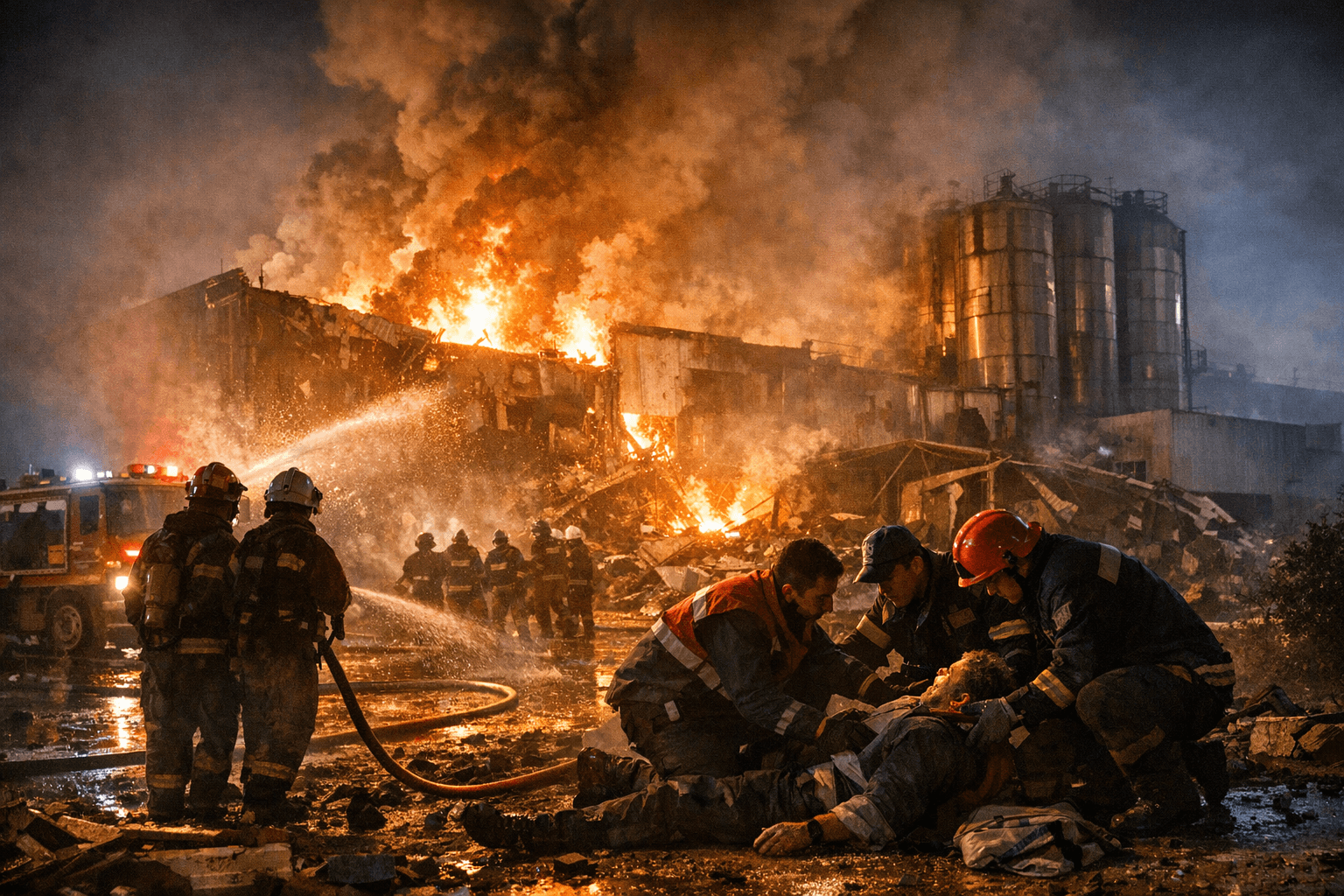
A powerful explosion ripped through the Violanta biscuit factory near Trikala during the night shift on Jan. 26, 2026, triggering a major fire that killed multiple workers and left several others injured, emergency services said. Initial reports put the death toll between three and five workers, with additional injuries; authorities later revised casualty figures as rescue teams continued search and recovery operations and awaited a consolidated official count.
Firefighters, emergency medical teams and civil protection units extinguished the blaze after several hours and conducted a systematic search of the damaged production halls. Local hospitals received injured workers for treatment; municipal officials closed nearby roads and set up a crisis center to coordinate family notifications and immediate relief. The factory, a production site for Violanta-branded biscuits that supplies grocery retailers across Greece, was temporarily sealed as investigators and safety inspectors entered the scene.
The human cost is immediate and stark in Trikala, a regional center for light manufacturing and food processing. Night-shift workers are typically the smallest crews on site, which complicates accounting when an accident destroys centralized production areas. Emergency responders described the scene as extensive structural and equipment damage that will likely keep the plant offline for weeks while forensic and engineering teams determine the cause.
Industry specialists say the biscuit and broader baked-goods sector faces short-term supply disruption when a key facility goes offline, though national market shortages are unlikely unless the factory supplies a disproportionate share of a specific product line. Retailers sourcing Violanta products may substitute from rival brands or import alternatives, temporarily altering shelf assortments and promotional plans. Insurers and corporate risk managers will closely monitor any claims that follow; significant damage and liability payouts typically translate into higher premiums and added compliance costs for food manufacturers.
The incident also raises questions about industrial safety in food processing plants. Safety experts note that facilities handling flour, sugar and other fine powders can create explosive atmospheres if dust is not properly controlled, ventilated and cleaned. Equipment malfunctions, ignition sources in electrical systems, and procedural lapses during maintenance are common vectors in such explosions, although investigators have not released a cause in this case. Greek labor inspectors and technical agencies are expected to prioritize the probe, reviewing maintenance records, permits and compliance with workplace safety regulations.
Policy implications extend beyond this plant. A high-profile fatality event typically accelerates regulatory scrutiny and can prompt legislative reviews of inspection frequency, fines and mandatory safety investments, particularly in sectors with concentrated dust and thermal hazards. Longer term, such incidents can nudge firms toward further automation and centralized safety systems, shifting labor needs and local employment patterns in regions reliant on factory jobs.
For families and the local community in central Greece, the immediate priorities are search, recovery and care for the injured. For the industry and regulators, the focus will be on identifying causes, assigning liability and considering measures to prevent recurrence. Authorities said they would release official casualty and cause determinations once forensic examinations and safety audits are complete.
This article was produced by Prism’s automated news system from verified source data, official records, and press releases, then run through automated quality and moderation checks before publishing. The system is built and supervised by the people who set the standards it runs under. Read our full AI policy.
Did this article answer your question?


