FAA seeks AI tool to spot air traffic conflicts hours early
The FAA is considering AI that could flag flight conflicts up to two hours early, part of a $32.5 billion push to modernize a strained air traffic system.
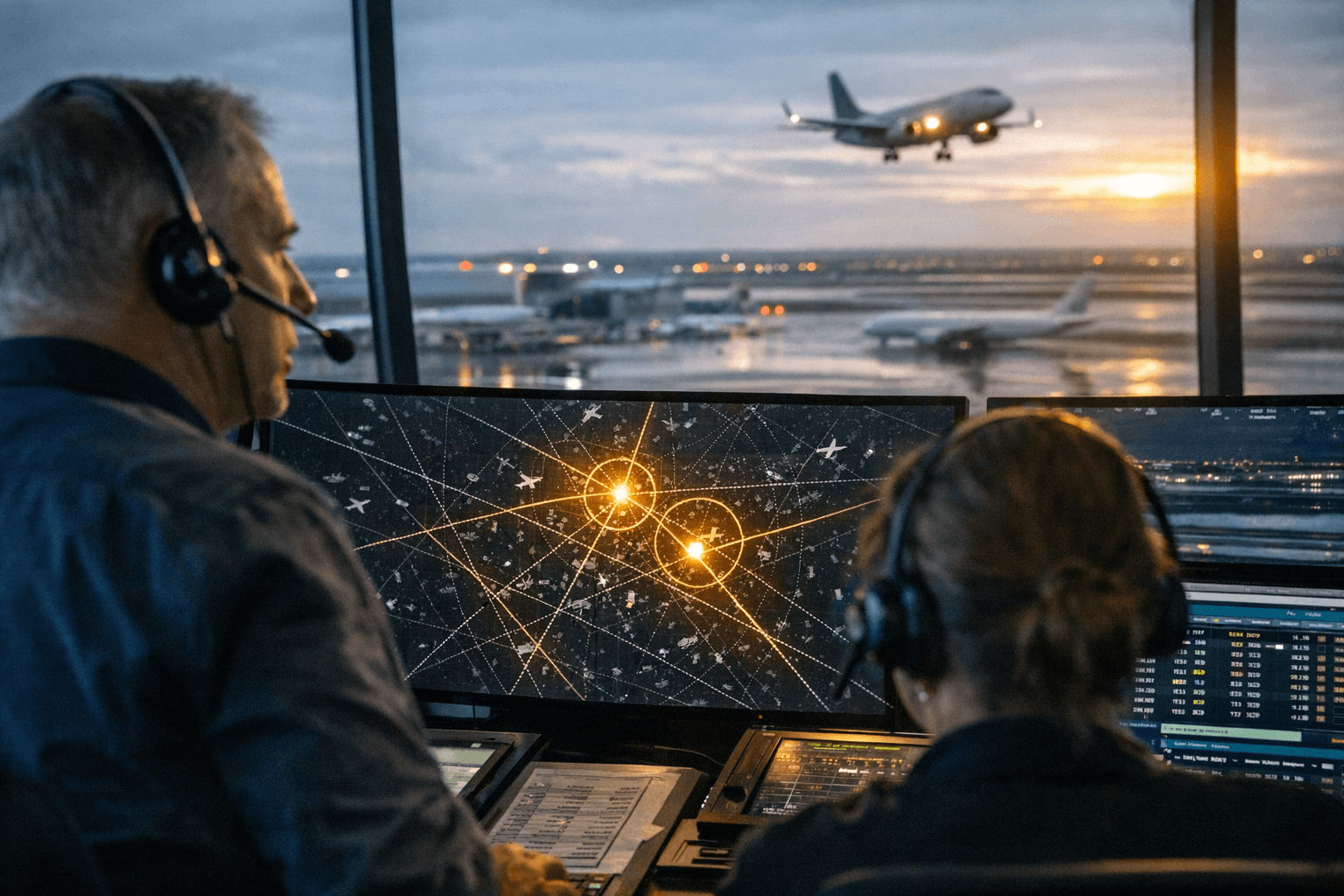
The Federal Aviation Administration is weighing proposals from Palantir Technologies Inc., Thales SA and Air Space Intelligence Inc. for a new artificial-intelligence system designed to help air traffic controllers spot conflicts hours before they turn critical. Transportation Secretary Sean Duffy said at a media event on April 18, 2026, that the goal is to give controllers earlier warning of schedule problems and bottlenecks at busy airports, while keeping the final decision-making in human hands.
The proposed platform, called SMART, short for Strategic Management of Airspace Routing Trajectories, would analyze flight paths and flag trouble far sooner than the current process allows. FAA officials said the system could give controllers about an hour and a half to two hours to deconflict traffic before a problem reaches a critical range, making the software a planning tool inside the national airspace system rather than a back-end analytics add-on.
The push comes as the FAA faces pressure on several fronts: a staffing shortage, a wave of safety concerns after airport incidents and near-misses, and a long-running fight over how to pay for modernization. The agency’s controller workforce reached 14,264 in fiscal 2024, after hiring 1,811 new controllers that year and more than 5,700 over the previous five years. Even so, the Government Accountability Office said in January 2026 that the FAA remained short staffed despite roughly 200,000 applicants over several years.
The GAO also found that controller numbers have fallen about 6% over the last decade while flights relying on the system have increased 10%. It said becoming fully certified can take up to six years and that only about 2% of applicants complete the full process, a reminder that the human side of air traffic control remains a bottleneck even as the agency looks to software to ease the pressure.
SMART is part of a broader $32.5 billion modernization program that also includes replacing hundreds of radars and expanding the controller workforce. Congress has already provided $12.5 billion, and FAA officials say about $20 billion more will be needed to finish the overhaul. In November 2025, the agency separately said it was seeking a Common Automation Platform to replace the current en route and terminal systems used in air route traffic control centers, terminal radar approach controls and towers.
The AI effort is being rolled out alongside a renewed hiring campaign. On April 10, 2026, Duffy and the FAA said the annual air traffic control hiring window would open at midnight on April 17. The agency said it had almost 11,000 controllers in service, more than 4,000 trainees in the pipeline and its highest staffing level in six years, while reporting it hired 20% more controllers from January through September 2025 than in the same period a year earlier.
The modernization effort also includes hardware. In January 2026, the federal government selected RTX and Indra to replace 612 radar systems dating to the 1980s, with installations expected by summer 2028. Together, the radar replacement, automation overhaul and AI conflict-detection system show an agency trying to rebuild the air traffic control stack at once, while still leaving the judgment that moves aircraft safely through crowded skies with trained controllers.
This article was produced by Prism’s automated news system from verified source data, official records, and press releases, then run through automated quality and moderation checks before publishing. The system is built and supervised by the people who set the standards it runs under. Read our full AI policy.
Did this article answer your question?