Gray whales are entering San Francisco Bay more often, and dying there
Gray whales are slipping into San Francisco Bay more often, and 21 have died there since 2018 as warming seas and ship traffic turn the inlet into a trap.
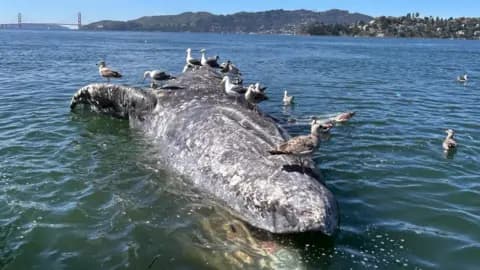
Gray whales are slipping into San Francisco Bay more often, and the waterway is becoming a deadly pinch point. Scientists have identified 114 individual gray whales in the bay between 2018 and 2025, and 21 of them were found dead, a minimum mortality rate of 18% for whales entering the bay. Only four of those whales were seen in more than one year, a sign that most of the animals are passing through rather than establishing any stable seasonal pattern.
That is the central uncertainty now facing researchers: whether San Francisco Bay is an isolated hazard or part of a wider shift in gray whale behavior tied to warming oceans and changing food supplies. Gray whales traditionally migrate between Arctic feeding grounds and Baja California lagoons, but scientists say the climate crisis is altering where prey is available and may be pushing some whales to forage in places they historically bypassed. The Golden Gate Strait, narrow and crowded with vessel traffic, has become a bottleneck for both whales and boats. In foggy Bay conditions, the animals’ low surfacing profile makes them hard to see.
The local danger is unfolding against a broader population decline. NOAA estimates the eastern North Pacific gray whale population fell from 20,500 in 2019 to 14,526 in 2023. That slide came after a 2019-2023 unusual mortality event that involved 690 strandings across the United States, Mexico and Canada and was closed by NOAA in March 2024. Scientists have linked that mortality wave to ecosystem changes in Arctic feeding areas, underscoring how quickly a problem that begins in northern waters can show up hundreds of miles south.
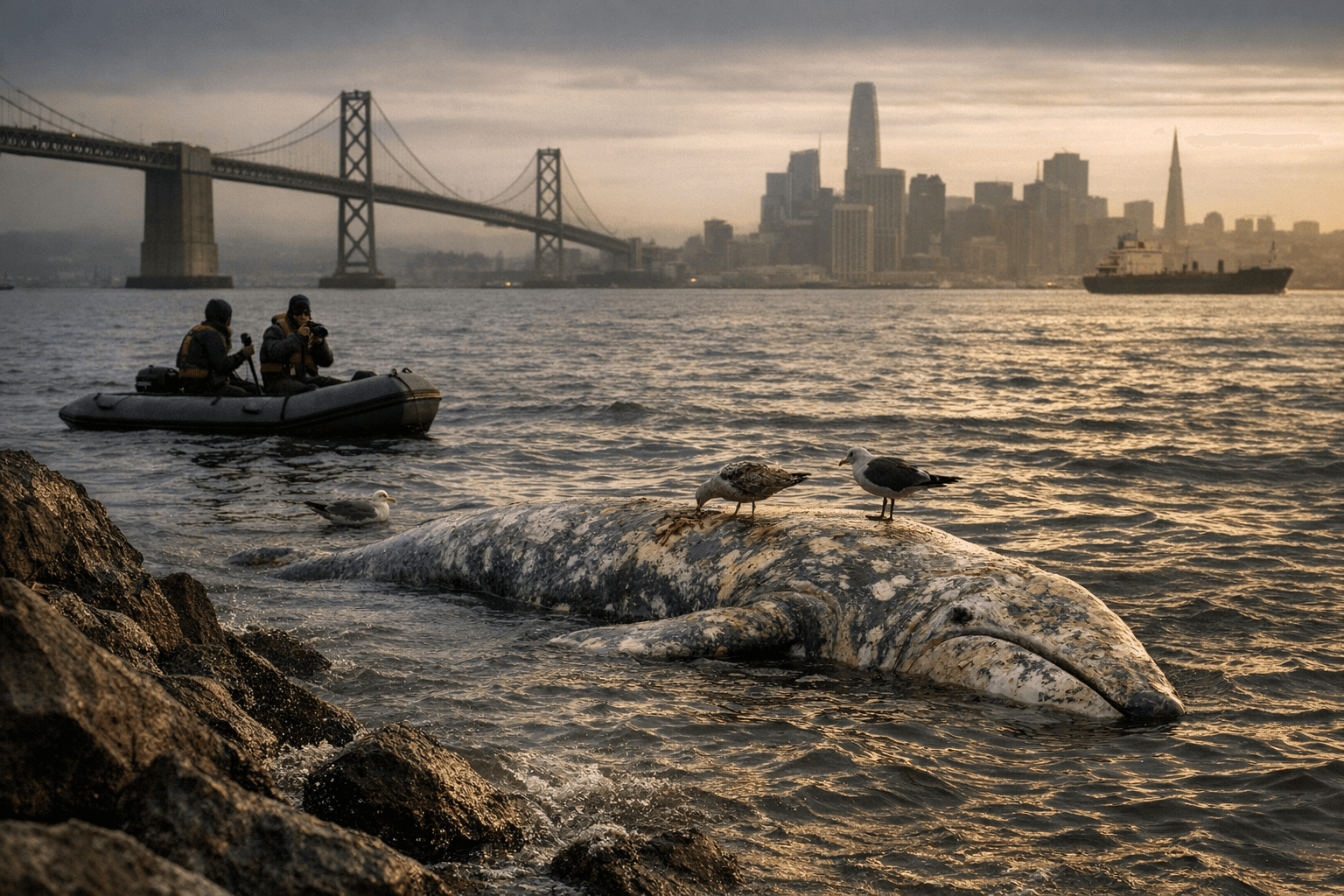
The Bay Area has already felt the strain. In 2025, the California Academy of Sciences and partners confirmed 24 dead whales in the wider San Francisco Bay Area, including 21 gray whales, two unidentified baleen whales and one minke whale. Eight of the gray whale deaths were judged suspect or probable vessel strikes. A gray whale found off Alameda in 2024 was also judged likely killed by blunt-force trauma from a vessel strike. Those deaths came as researchers and local agencies expanded response efforts, including altering ferry lanes based on sighting data, increasing mariner alerts through the U.S. Coast Guard, and launching Whale Smart in February 2026 to train commercial vessel operators, including high-speed ferries and passenger boats. The message from the Bay is stark: when a warming ocean reshapes migration, the casualties can surface first in crowded urban waters.
This article was produced by Prism’s automated news system from verified source data, official records, and press releases, then run through automated quality and moderation checks before publishing. The system is built and supervised by the people who set the standards it runs under. Read our full AI policy.
Did this article answer your question?

