South Dakota prairie grouse thrive at Fort Pierre grassland
Prairie chickens and sharp-tailed grouse are booming at Fort Pierre, but their success also marks what is at stake as native grasslands shrink. The birds are a living gauge of prairie health, land management, and conservation priorities.
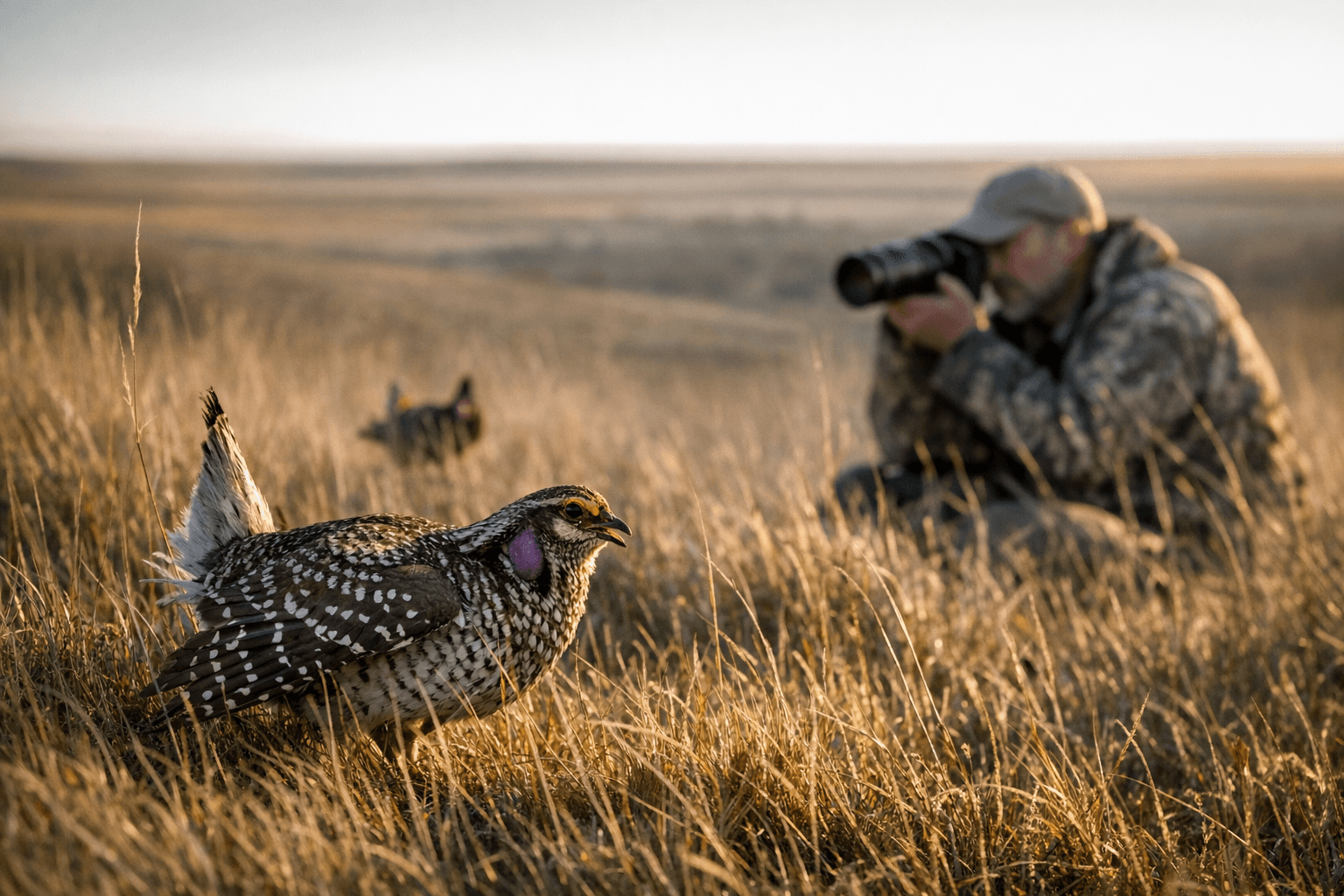
A grassland stronghold still hums with life
At Fort Pierre National Grassland, the spring ritual of prairie grouse is more than a scenic wildlife moment. The booming display of sharp-tailed grouse and greater prairie-chickens is a signal that a rare sweep of native prairie still functions as habitat, not just open land.
The grassland covers about 116,000 acres south of Fort Pierre, north of Interstate 90, and west of the Lower Brule Indian Reservation. In a state where state wildlife officials group sharp-tailed grouse and greater prairie-chickens together as prairie grouse, Fort Pierre stands out as one of the best places to see what healthy grassland still looks like when the right mix of space, cover, and seasonal quiet remains in place.
What the birds reveal about prairie health
Prairie grouse are not just charismatic birds. They are an indicator species for the mixed-grass prairie they depend on, and their numbers rise or fall with habitat availability. That makes their presence at Fort Pierre a conservation story first and a wildlife spectacle second.
State and federal wildlife documents point to the same underlying truth: prairie grouse depend strongly on grassland habitat. When prairie is fragmented, converted, or managed in ways that reduce native structure, the birds lose the open display grounds and surrounding cover they need to survive and reproduce. Their success at Fort Pierre suggests that this stretch of prairie still offers the habitat conditions these native species require, even as grasslands continue to disappear elsewhere.
Why Fort Pierre draws watchers and researchers alike
The U.S. Forest Service says visitors can reserve free spring viewing blinds at Fort Pierre National Grassland to watch the birds’ mating dances on leks, the communal display grounds where males gather and compete for mates. Those reservations are available from April 1 to May 15, and requests open each year on February 1.
That access matters because the lek is where prairie conservation becomes visible. A functioning lek means the birds are not only surviving, but also finding enough secure grassland to gather in spring without constant disturbance. Bird watchers can use the blinds to observe and photograph the displays, but the broader value is ecological: these gatherings reflect the health of the habitat surrounding them.
The numbers tell a larger land story
The Forest Service reported 1,221 displaying males at Fort Pierre National Grassland in spring 2025. That total marked a 40 percent increase from the previous year’s record and represented the highest count in 50 years of surveys on the grassland.
Those figures are striking not simply because they are large, but because they come from a long-running survey that tracks a species tightly tied to landscape conditions. When a 50-year record reaches a new high, it suggests that current land stewardship is supporting the birds in a way that deserves attention. It also highlights how rare it is to see prairie habitat function at this scale in the modern Great Plains.
How South Dakota keeps track of prairie grouse
South Dakota Game, Fish and Parks monitors prairie grouse through spring lek surveys, hunter harvest surveys, and wing collections from hunters. The agency says reproduction is harder to forecast than pheasants, which is why these multiple data sources matter.
The state’s prairie grouse action plan for 2023-2027 was finalized in May 2023 and is intended to guide management on an annual basis, with formal evaluation at least every five years. A supporting management document emphasizes maintaining or expanding sustainable populations through habitat stewardship and partnerships. That framework reflects a simple conservation reality: these birds do not recover by chance. They respond to coordinated decisions about grasslands, land use, and long-term care.
Why the species mix matters in South Dakota
Sharp-tailed grouse and greater prairie-chickens are both native prairie birds, but together they tell a wider story about the condition of central and western South Dakota’s grasslands. Their shared dependence on open prairie makes them especially useful as a gauge of habitat quality across the region.
State officials describe them as prairie grouse found primarily in prairie-dominated landscapes. That distinction matters because it links the birds to a land system, not just a single wildlife site. When their numbers are strong at Fort Pierre, it points to a prairie that still holds together enough to support complex native behavior. When those numbers decline elsewhere, it often reflects deeper losses in the grassland itself.
What preservation looks like on the ground
Preserving open prairie is not a passive act. It depends on habitat stewardship, partnerships, and land management that keeps grasslands intact and productive for wildlife. At Fort Pierre National Grassland, that means maintaining the broad open spaces that leks require and the surrounding native cover that supports the birds across the rest of the year.
The grassland’s size, about 116,000 acres, gives it unusual value in a region where large, continuous prairie has become harder to find. Its location near Fort Pierre and Pierre also makes it accessible to the public, which helps connect conservation to direct observation. Seeing prairie grouse display in a place like this can turn an abstract concern about prairie loss into something immediate and measurable.
A national stake in a local success
The scene near Fort Pierre is about more than one strong spring count. Prairie grouse embody the condition of America’s disappearing prairie ecosystems, and their numbers are one of the clearest signs of whether native grassland is still functioning as it should.
That is why the 2025 Fort Pierre tally matters beyond South Dakota. A record-setting number of displaying males on a 50-year survey line suggests that when grassland is protected and managed well, native prairie birds can still thrive. In a country where open prairie has been steadily diminished, that is both a conservation success and a warning: the birds are doing well here because the habitat still exists, and the future of the species depends on keeping it that way.
This article was produced by Prism’s automated news system from verified source data, official records, and press releases, then run through automated quality and moderation checks before publishing. The system is built and supervised by the people who set the standards it runs under. Read our full AI policy.
Did this article answer your question?

