Fact-check: SNAP drop driven by new rules, not fraud surge
SNAP enrollment fell by nearly 4.3 million as Congress tightened rules, not because fraud suddenly surged or need disappeared.
The drop in SNAP enrollment looks less like an economic success story than a policy consequence. From January 2025 to January 2026, participation fell by nearly 4.3 million people, and the federal data now available run only through January 2026, with USDA updating those tables on April 24, 2026.
That matters because Agriculture Secretary Brooke Rollins has framed the decline as proof that fraud is being rooted out and wages are rising fast enough to push families off food stamps. She has said, “a lot of it is fraud,” and argued that people do not need food stamps because wages are outpacing inflation. But the fraud numbers do not support a drop of this size. In fiscal year 2023, 41,476 people were disqualified for fraud out of more than 42 million SNAP participants, less than 1 percent of the total.

The bigger driver is the law President Donald J. Trump signed on July 4, 2025: Public Law 119-21, the One Big Beautiful Bill Act of 2025. USDA says it changes SNAP eligibility, benefits and administration. It expands work requirements to able-bodied adults through age 64, limits the child-care exemption to households with a child under 14, and removes some exceptions for homeless individuals, veterans and former foster youth. USDA also says the Thrifty Food Plan can no longer be reevaluated upward in the same way it had been, a change that affects benefit levels over time.
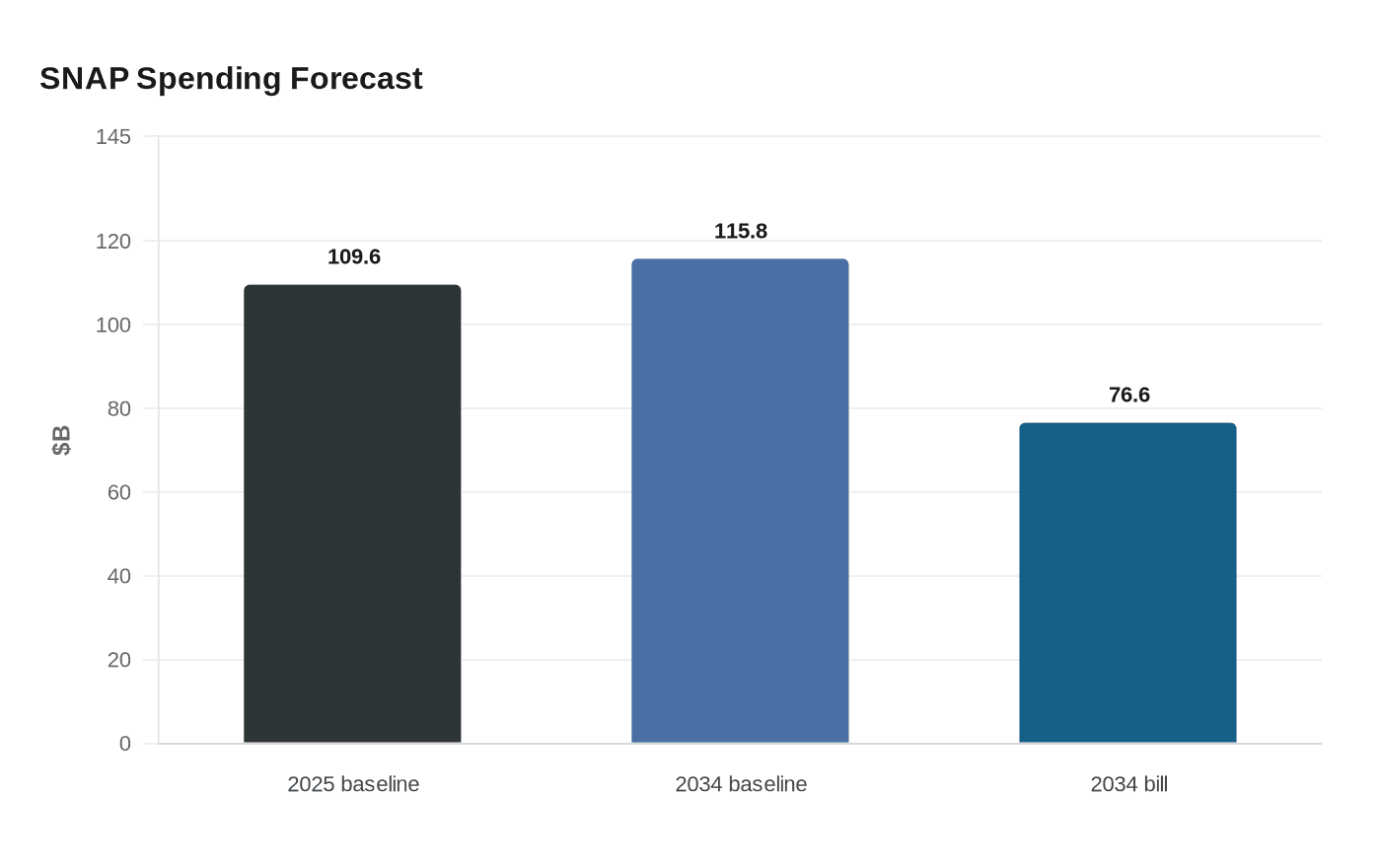
The Congressional Budget Office said the SNAP-related provisions would cut spending by $285.7 billion over 2025 through 2034. In its estimates, SNAP spending would fall to $76.6 billion in 2034, down from a baseline projection of $109.6 billion in 2025 and $115.8 billion in 2034. CBO also projected the average monthly benefit would drop to $213 by 2034, compared with $227 in the baseline. In a separate dynamic analysis, the office said the bill’s SNAP policies would reduce the federal deficit by $309 billion over the decade.
Researchers say that kind of decline is what a tighter safety net looks like. Cornell researchers found on April 8, 2026, that the move from paper food stamps to electronic benefit transfer cards increased SNAP participation by 1.6 percentage points overall, with especially large gains among people under 25. Yale School of Public Health’s Chima D. Ndumele warned that expanded work rules and reporting burdens can cause eligible people to lose benefits. SNAP is the nation’s largest domestic food and nutrition assistance program and accounted for about 70 percent of USDA nutrition assistance spending in fiscal year 2024, which makes its shrinkage a major policy choice, not a fraud breakthrough.
This article was produced by Prism’s automated news system from verified source data, official records, and press releases, then run through automated quality and moderation checks before publishing. The system is built and supervised by the people who set the standards it runs under. Read our full AI policy.
Did this article answer your question?

