Families sue U.S. over missile strike off Venezuela, allege unlawful killings
Families of two Trinidadian men sued the U.S. over an October missile strike, alleging wrongful deaths and extrajudicial killings.
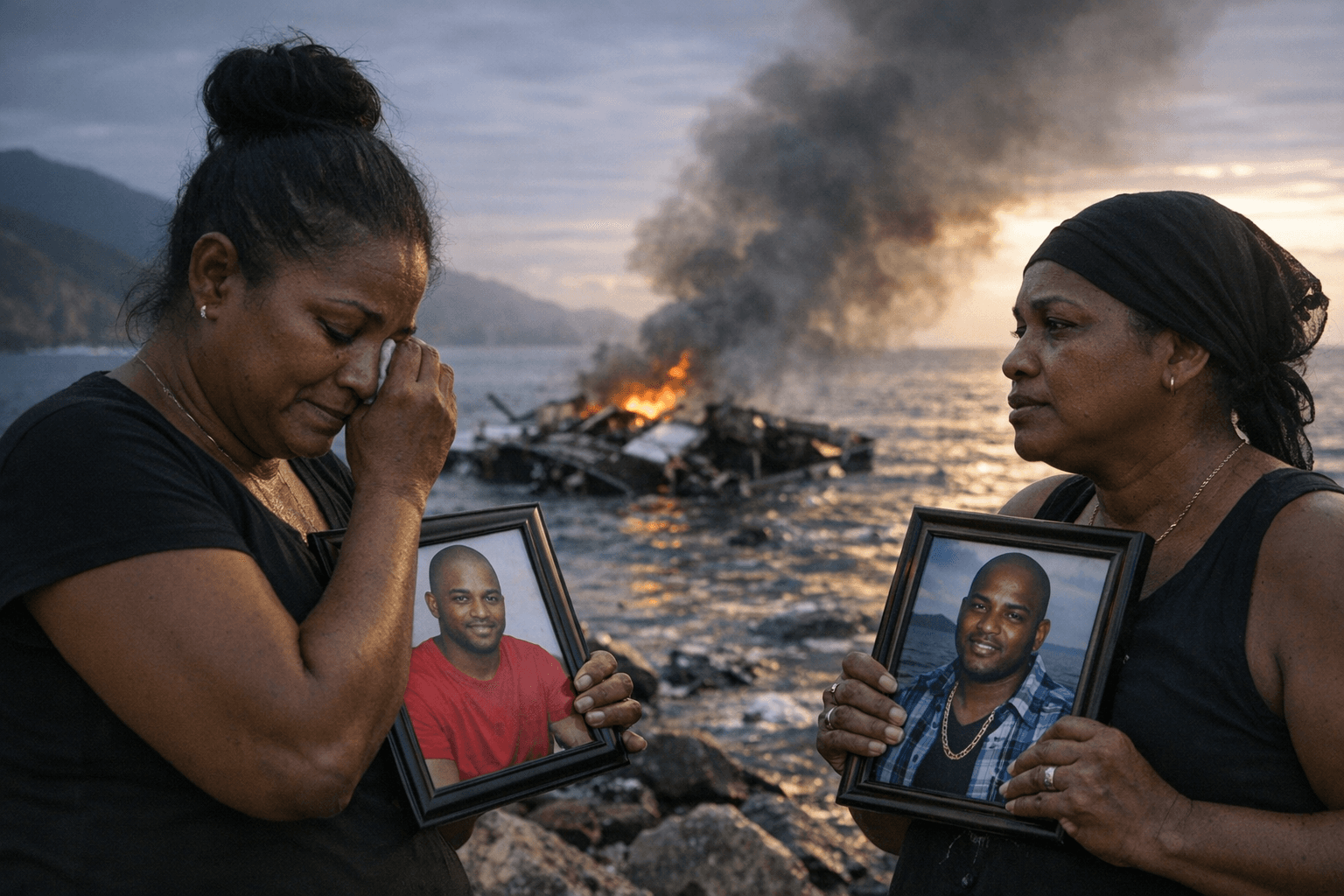
Family members of two Trinidadian men killed in a U.S. missile strike on a boat off the coast of Venezuela filed a wrongful-death lawsuit in federal court in Boston on Tuesday, alleging the strike was “manifestly unlawful” and amounted to “extrajudicial killing.”
The complaint, filed on January 27, 2026, seeks to hold the U.S. government accountable for the Oct. 14 strike that the plaintiffs say killed their relatives while the men were aboard a vessel in international waters near Venezuela. The lawsuit names the United States as defendant and brings claims under federal wrongful-death principles and international law norms insofar as U.S. courts will allow.
The filing frames the case as an assertion of legal limits on the use of lethal force by U.S. actors beyond national borders. It argues that the strike violated domestic tort standards and fundamental protections under international human rights law against arbitrary deprivation of life. The plaintiffs are asking the court to recognize compensatory redress for the families and to establish that the operation exceeded lawful authority.
The case lands at the intersection of two contentious legal currents: growing litigation over U.S. use of force abroad and the persistent tension between national security secrecy and judicial review. Historically, courts have dismissed or limited claims involving overseas military or intelligence actions on grounds such as sovereign immunity, the political question doctrine, or the state-secrets privilege. The Boston filing will test how those doctrines apply when plaintiffs frame a lethal strike as a wrongful-death claim anchored in both domestic tort principles and internationally recognized prohibitions on extrajudicial killing.
Beyond legal doctrine, the suit raises diplomatic and policy questions. The plaintiffs’ nationality and the strike’s location in waters off Venezuela highlight regional sensitivities among Caribbean and Latin American governments toward U.S. military activity. The prospect of litigation also increases pressure on executive branch transparency about how lethal decisions are authorized, reviewed, and carried out when they involve non-U.S. nationals in or near foreign territorial waters.
Legal experts say such cases can shape policy even when courts ultimately dismiss them. Successful or prolonged litigation can force greater declassification, produce administrative reviews, or prompt congressional oversight that alters targeting procedures and accountability mechanisms. Conversely, judicial rebuffs based on immunity or national security grounds can reinforce executive discretion and limit remedies available to foreign victims and their families.
The lawsuit arrives amid broader public debate over the role of long-range strikes and precision weapons in U.S. counterthreat operations. For markets, the immediate economic impact is likely to be limited, but sustained regional instability or deteriorating diplomatic ties could influence energy and shipping routes that matter to global trade and commodity markets over time.
How the federal court in Boston handles jurisdictional and merits questions will be closely watched as a potential precedent for similar claims. At stake is not only compensation for grieving families but also the degree to which U.S. courts will scrutinize lethal operations that occur beyond U.S. territory and implicate both domestic liability rules and international legal norms.
This article was produced by Prism’s automated news system from verified source data, official records, and press releases, then run through automated quality and moderation checks before publishing. The system is built and supervised by the people who set the standards it runs under. Read our full AI policy.
Did this article answer your question?

