Fast action prevents deck fuel spills from becoming major hazards
Fuel spills on deck are time-critical; immediate ventilation, containment, and proper disposal protect crew and the environment. Follow steps to clean up safely and avoid legal consequences.
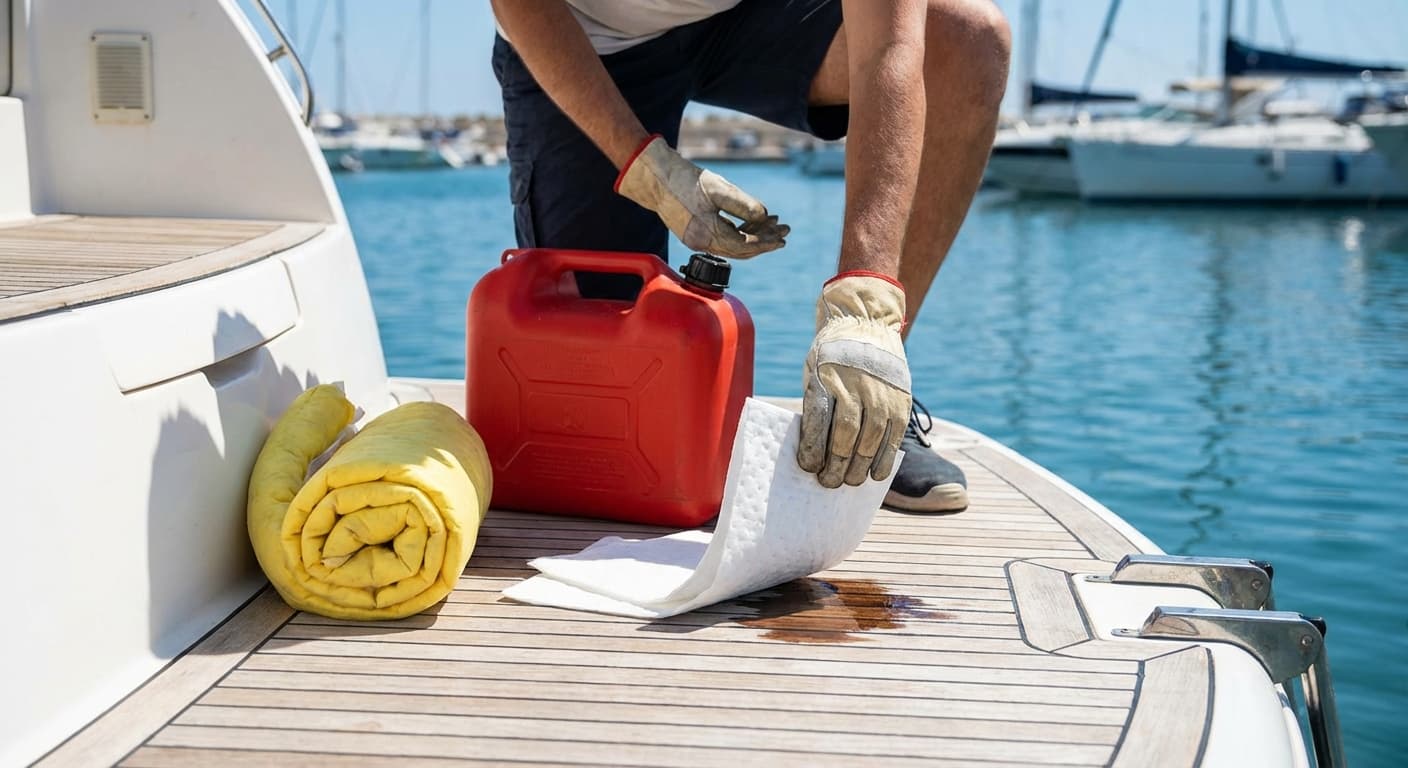
Fuel on deck creates a short window of heightened risk because gasoline vapors are heavier than air and can sink into bilges and enclosed spaces where a single spark can ignite them. Diesel is less volatile but still flammable and leaves persistent odors. Earlier this month, a practical response checklist was circulated to help skippers and crew contain spills, complete cleanup without harming the environment, and document disposal to limit regulatory exposure.
The first priority was ventilation and removing ignition sources. Open hatches, run blowers, and shut down engines, electronics, and any smoking. Contain the spill before cleaning by deploying absorbent booms and pads around the fuel and blocking deck drains and scuppers to keep petroleum off the water. Work from the outside of the spill inward and replace saturated pads as you go.
Use marine-grade absorbent pads designed to soak petroleum while repelling water. Store used, fuel-saturated materials in sealed, fuel-safe containers for hazardous-waste disposal; do not toss them in the trash or overboard. Ordinary household soaps and detergents are a trap during initial cleanup because emulsifiers can spread fuel and wash it into the water, creating potential Clean Water Act violations. Only after most of the free fuel is removed should a marine-safe degreaser be used sparingly, applied to stubborn stains or odors and rinsed with the minimum amount of captureable water.
Teak and textured non-skid surfaces require patience and targeted products; aggressive scrubbing can damage finishes and still fail to remove embedded fuel. Inspect the bilge after any deck spill. Fuel vapors and liquid can migrate below, so place bilge absorbents and avoid running bilge pumps until the water runs clear and free of sheen.
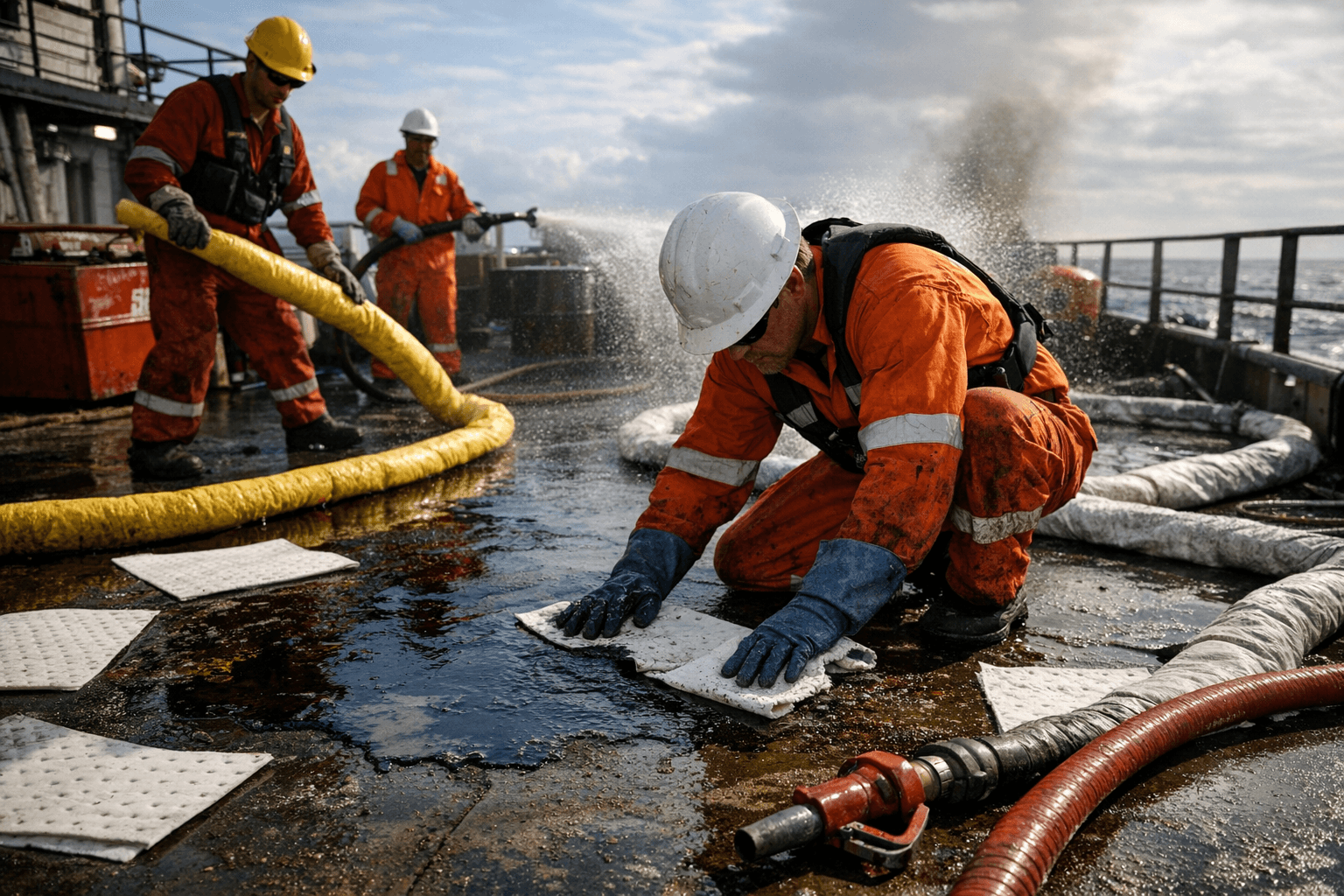
Disposal and documentation are both practical and legal priorities. Fuel-saturated materials are hazardous waste and must be taken to a marina collection point or a local hazardous-waste facility. Properly documenting the cleanup, what was disposed of, and where it went can mitigate consequences if authorities review the incident. Discharging oil or fuel to navigable waters is illegal under the Clean Water Act, and recorded cleanup steps are essential if regulators become involved.
Prevention remains the best protection. Use funnels and spill collars when fueling, fill slowly, monitor tank levels closely, inspect hoses and connections regularly, and keep a marine spill kit accessible. Train your crew in the sequence of ventilate, contain, absorb, and dispose so response is second nature.
For larger spills notify marina staff or local environmental authorities and consider hiring licensed marine spill contractors. For routine incidents take used absorbents to your marina hazardous-waste collection point or local hazardous-waste facility and keep clear records. Protecting your boat, crew, and the water starts with quick, practiced action and follows through with correct disposal and documentation.
Sources:
Know something we missed? Have a correction or additional information?
Submit a Tip