Fatigue Cracks Found in Engine Pylon of Crashed UPS MD 11
The National Transportation Safety Board said investigators found fatigue cracks in the left engine pylon aft mount lug of the MD 11 that crashed after takeoff from Louisville, killing 14 people. The finding has prompted immediate inspections, a temporary grounding of similar aircraft, and a likely policy debate over aging aircraft oversight and inspection standards.
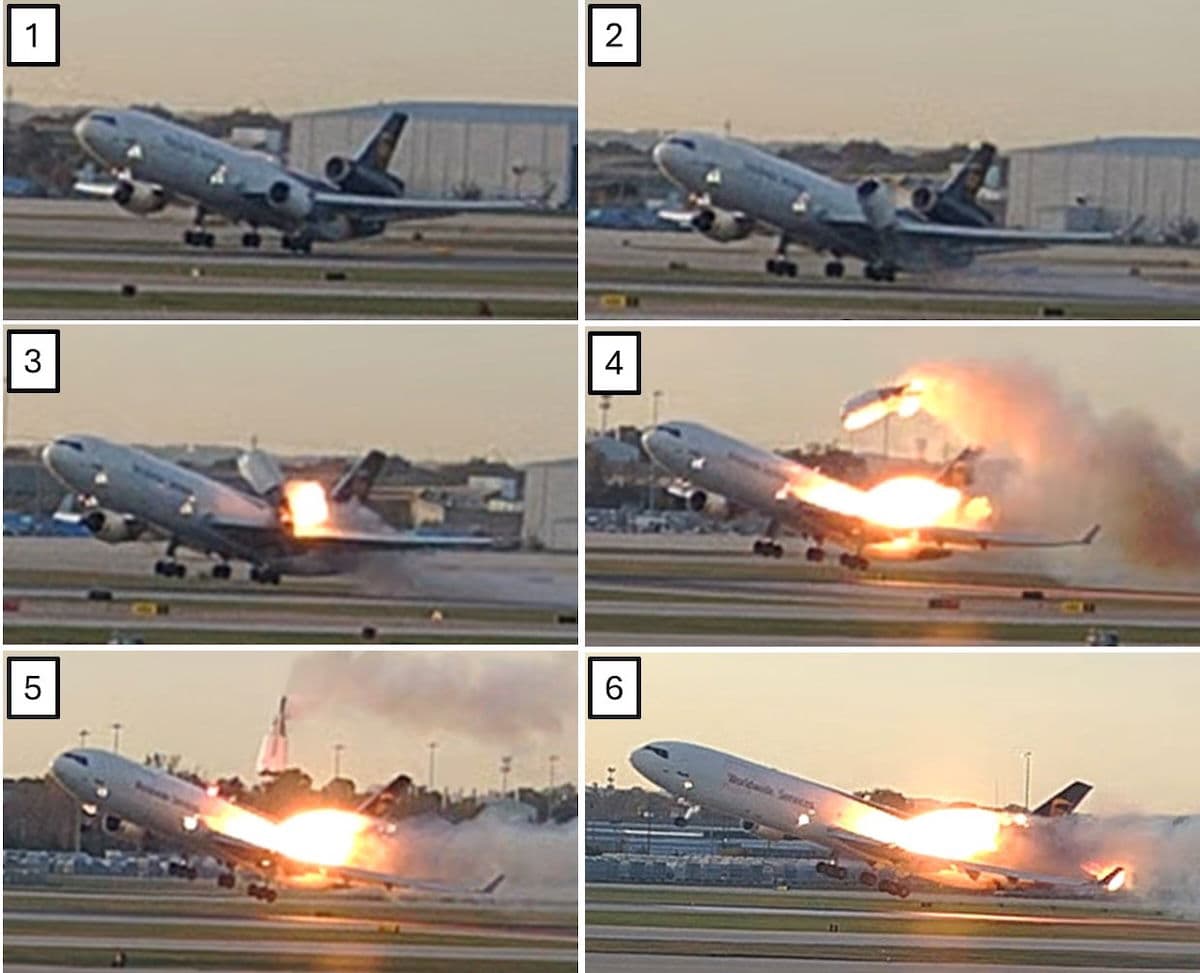
Investigators with the National Transportation Safety Board concluded that long developing fatigue cracks were present in a critical support element on the McDonnell Douglas MD 11 cargo jet that crashed during rotation after takeoff from Louisville Muhammad Ali International Airport on November 4. The preliminary report released on November 20 identified the left engine pylon aft mount lug as the component that failed, and the agency published images showing the left engine separating from the wing as fire consumed the airplane.
The NTSB said the detached pylon and engine assembly remained attached to each other when it separated from the wing, a detail that shapes the technical picture of the failure and will guide forthcoming metallurgical analyses. Investigators tied the failure mode to long developing fatigue cracking and referenced similar historical failures including a 1979 incident involving the DC 10, underscoring the risk that aged structural fittings can pose when cracks propagate undetected.
The immediate industry response was swift. Major carriers operating MD 11 and related DC 10 types temporarily grounded portions of their fleets while the Federal Aviation Administration issued directives requiring inspections of pylon mounts. UPS and other operators have cooperated with investigators and begun accelerated inspection programs. The FAA said it will review inspection intervals and maintenance practices while the aviation industry evaluates whether current rules adequately capture the risk posed by slow forming fatigue damage in critical fittings.
The case has already raised questions about how regulators and operators oversee aging aircraft airframes and components. The MD 11 fleet is predominantly used in cargo service, and many airframes have accumulated decades of flight cycles. Current inspection regimes rely on a combination of scheduled visual checks and nondestructive testing targeted by age and usage. The NTSB preliminary finding highlights the possibility that existing intervals and techniques may not always detect cracks that develop over long time spans, prompting regulators to consider tighter mandates or new inspection technologies.
Beyond technical fixes, the episode could trigger renewed congressional attention to aviation safety oversight. Lawmakers may scrutinize the relationship between the NTSB, the FAA, and operators to assess whether inspection rules, data sharing, and enforcement have kept pace with the realities of aging fleets. Policy choices could include narrowing inspection intervals, mandating specific nondestructive testing protocols, or increasing resources for FAA inspectors charged with monitoring airlines and repair stations.
Operationally, the groundings and inspections are imposing short term strain on cargo logistics, with carriers reallocating capacity and customers facing potential delays. For the families of the 14 victims and the broader traveling public, the central concern is preventing another catastrophic failure. The NTSB emphasized that its work is ongoing and that a final probable cause determination will await detailed metallurgical testing and a full review of maintenance records and inspection histories.
As investigators continue to pore over parts, paperwork, and images, the preliminary finding has already forced regulators and operators to reassess risk management for older aircraft and to confront policy choices about how best to ensure structural integrity over the long life of commercial airplanes.
This article was produced by Prism’s automated news system from verified source data, official records, and press releases, then run through automated quality and moderation checks before publishing. The system is built and supervised by the people who set the standards it runs under. Read our full AI policy.
Did this article answer your question?