FDA allows "no artificial colors" labels for non-petroleum dyes
FDA will permit "no artificial colors" claims when products avoid petroleum-based dyes, easing makers' shift to natural colorants under a federal initiative.
The Food and Drug Administration said it will permit food manufacturers to label products "no artificial colors" when those products do not contain petroleum-based dyes, a change the agency framed as intended to speed industry adoption of natural alternatives.
In a Feb. 5 press release, the FDA said it had sent a letter to industry notifying companies that the agency intends to exercise enforcement discretion for voluntary labeling consistent with the new standard. "Companies will now have flexibility to claim products contain 'no artificial colors' when the products do not contain petroleum-based colors," the agency said, tying the move to broader Department of Health and Human Services efforts to phase out petroleum-based synthetic colors under the administration's Make America Healthy Again initiative.
The policy reverses a longstanding practical limit on such claims. Historically, firms generally could say a product had "no artificial colors" only when it contained no added color at all, whether the coloring was synthetic or derived from natural sources. FDA officials said the change is intended to remove what they described as a market impediment and make it easier for manufacturers to try plant- and algae-derived dyes.
FDA Commissioner Marty Makary framed the step as clearing a barrier to natural alternatives. "We acknowledge that calling colors derived from natural sources 'artificial' might be confusing for consumers and a hindrance for companies to explore alternative food coloring options," he said in the agency statement. "We're taking away that hindrance and making it easier for companies to use these colors in the foods our families eat every day."
Industry observers and ingredient suppliers welcomed regulatory flexibility as a way to accelerate reformulation. The FDA said it is publicly tracking company pledges to remove petroleum-based food dyes on a page titled "Tracking Food Industry Pledges to Remove Petroleum Based Food Dyes." Several large manufacturers have already moved to eliminate some synthetic dyes, and major brands have been cited as complying with voluntary efforts to replace petroleum-based colors.
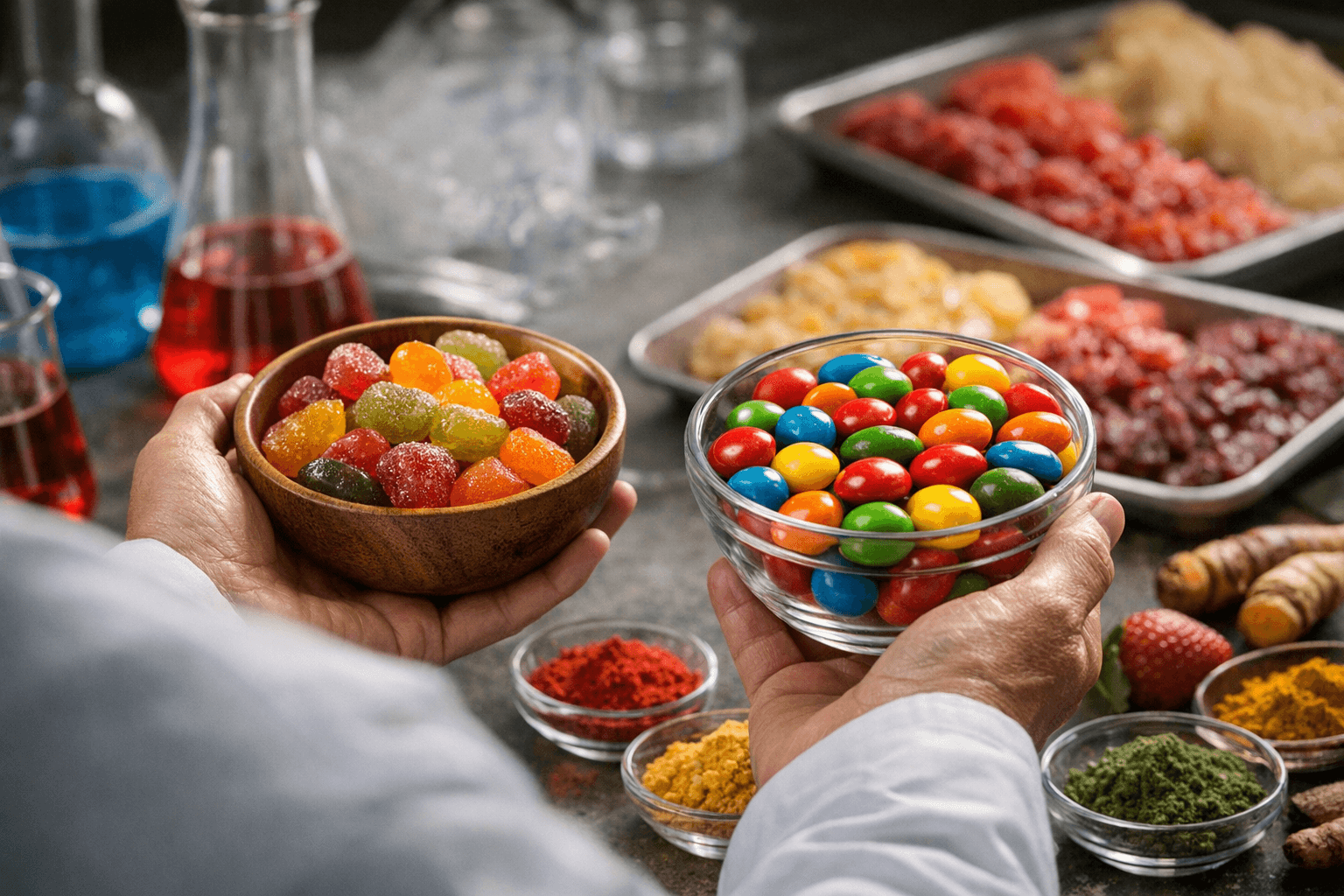
The agency has concurrently approved and expanded uses for a number of natural colorants in recent months. The FDA approved a new beetroot red and broadened the permitted uses of spirulina extract, while industry notices report prior authorizations for butterfly pea flower extract as a blue colorant. The agency currently allows roughly three dozen natural dyes in foods, even as it has banned or proposed restrictions on certain petroleum-based additives, including last year's ban on Red No. 3 and a proposed ban on Orange B.
Consumer advocates pressed for clearer guardrails, warning the labeling change could confuse shoppers about safety. Sarah Sorscher, director of regulatory affairs for the Center for Science in the Public Interest, said the move "could mislead consumers" and raised concern that the new standard might allow "no artificial colors" claims for additives that are not petroleum-based certified colors, including potentially harmful ingredients such as titanium dioxide.
Powder & Bulk Solids reported that the FDA letter lists specific voluntary claims the agency will not take enforcement action against if products do not contain any colors listed in 21 CFR part 74, citing the letter's language: "Made without artificial food colors/colorings"; "No artificial color/colors/coloring"; and "No added artificial color/colors/coloring."
The FDA characterized the decision as part of an ongoing, multi-step effort to transition the nation's food supply away from petroleum-derived synthetic dyes. Regulators, consumer groups and manufacturers now face a near-term challenge in defining which color additives fit the new standard and ensuring label claims align with consumer expectations and safety assessments.
This article was produced by Prism’s automated news system from verified source data, official records, and press releases, then run through automated quality and moderation checks before publishing. The system is built and supervised by the people who set the standards it runs under. Read our full AI policy.
Did this article answer your question?