FDA authorizes first fruit-flavored e-cigarettes for adult smokers, sparking backlash
The FDA approved fruit-flavored vapes for the first time, betting age locks can keep teens out. Critics say the move revives the same flavors that fueled youth nicotine use.

What evidence did the Food and Drug Administration say justified approving fruit-flavored e-cigarettes now, after years of resisting the flavors that health advocates say hooked teenagers?
On May 5, the agency authorized four electronic nicotine delivery system products from Los Angeles-based Glas Inc., the first FDA approval of non-tobacco and non-menthol ENDS products. The decision marks a sharp turn under President Donald J. Trump and gives the vaping industry a long-sought opening in a market regulators have struggled to police since e-cigarettes began selling in the United States in 2007.

The FDA said the four authorized pods contain 50 mg/ml, or 5%, tobacco-derived nicotine and are intended for adults trying to quit or cut back on combustible cigarettes. The agency cited more than 25 million Americans who still smoke cigarettes, arguing that smokers deserve less harmful alternatives. At the same time, it is now betting that a digital age-verification system can keep the products away from minors: users must verify their age with a government ID on a smartphone, pair the device by Bluetooth, and submit to random biometric check-ins. The FDA said most adults 21 and older could complete that process, while youth and young adults could not.
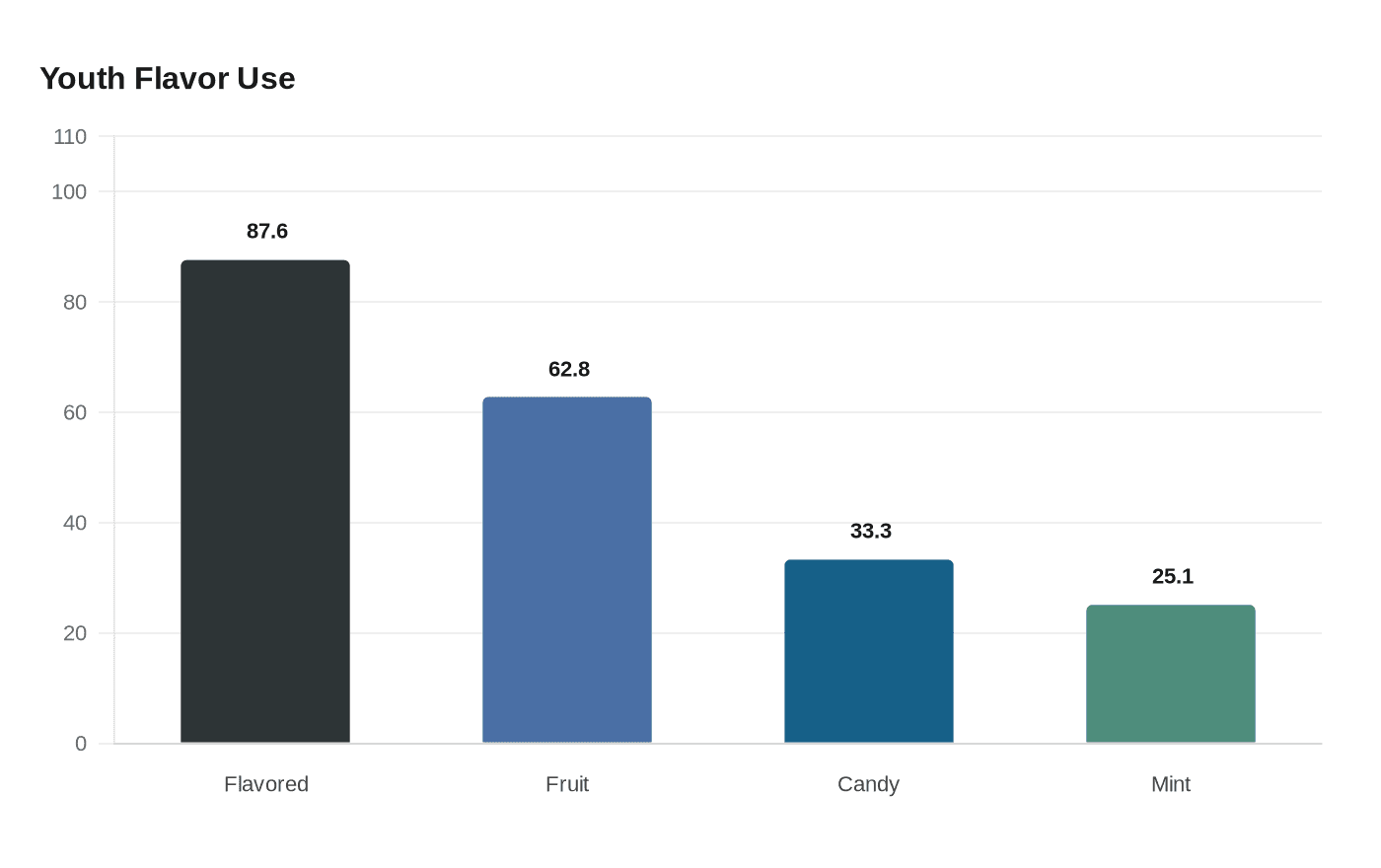
That is the central public-health test. Health groups and parent organizations have long argued that fruit and candy-style flavors make nicotine more appealing to children, and the FDA’s own youth survey data show flavors still dominate underage use. Among youth e-cigarette users in 2024, 87.6% used flavored products, including fruit at 62.8%, candy at 33.3% and mint at 25.1%. The Campaign for Tobacco-Free Kids called the authorization a big step backward and said it conflicts with the FDA’s repeated conclusion that flavors pose a substantial risk to young people.
The numbers on youth use also cut both ways. The 2024 National Youth Tobacco Survey found current e-cigarette use among middle and high school students fell from 2.13 million in 2023 to 1.63 million in 2024, or 5.9%. Use among high school students dropped from 10.0% to 7.8%, and overall youth tobacco use fell from 2.80 million students to 2.25 million. The FDA and Centers for Disease Control and Prevention also said youth e-cigarette use is about one-third of its 2019 peak of more than five million youth users.
That decline gives Trump’s FDA and the vaping industry room to argue for a more permissive approach, if the guardrails hold. It also raises the stakes for a likely new fight over whether flavored nicotine products can be controlled tightly enough to protect teenagers while still offering adults a less harmful alternative to cigarettes.
This article was produced by Prism’s automated news system from verified source data, official records, and press releases, then run through automated quality and moderation checks before publishing. The system is built and supervised by the people who set the standards it runs under. Read our full AI policy.
Did this article answer your question?