Single psilocybin dose changes brain structure, boosts well-being in study
A single 25-milligram psilocybin dose left measurable brain changes a month later, and those early signals tracked with better well-being in 28 first-time users.
A single high-dose psilocybin session produced measurable changes in brain structure and activity that persisted for up to a month, but the findings do not amount to proof of a therapy. In 28 healthy adults who had never used a psychedelic before, researchers saw anatomical and functional shifts after 25 milligrams of psilocybin that were not seen with a 1 milligram placebo.
The work, published in Nature Communications, used an exploratory, placebo-controlled, within-subjects design that combined EEG, fMRI and diffusion tensor imaging. The clearest structural signal came one month after dosing, when scans showed decreased axial diffusivity bilaterally in prefrontal-subcortical tracts, a finding that points to altered white-matter signaling in pathways linking the front of the brain with deeper regions. The study also found increased cortical signal entropy one and two hours after dosing, and that early rise predicted better psychological well-being a month later.
The paper’s clinical meaning is still limited. The 28 participants were healthy volunteers with no diagnosed mental illness, so the results cannot be read as evidence that psilocybin treats depression, anxiety or addiction on their own. The study did, however, tie the entropy changes to next-day psychological insight, and that insight helped explain the later improvement in well-being. In other words, the data suggest that the experience of the trip itself, and the brain activity that accompanies it, may matter to the longer arc of psilocybin’s effects.
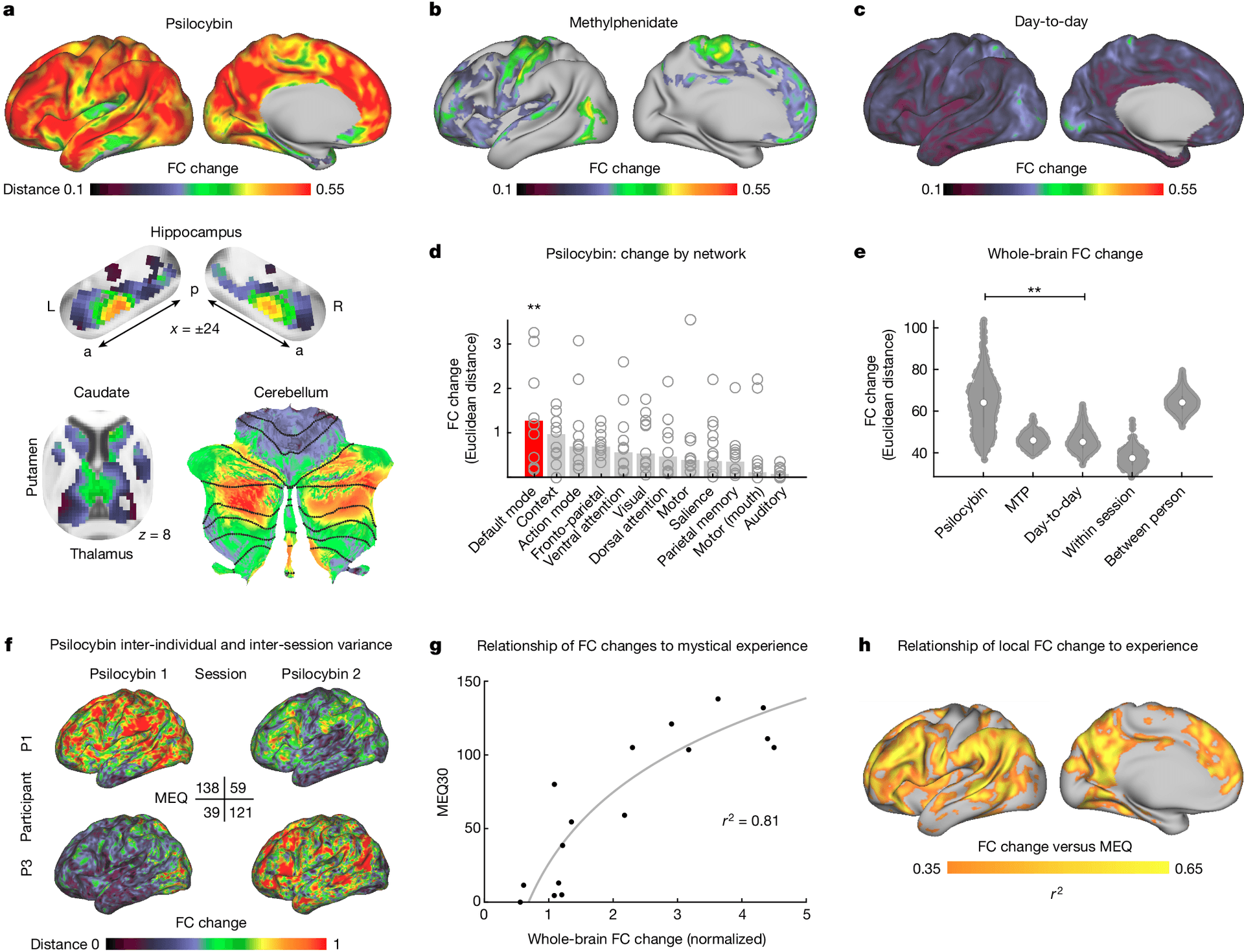
The findings add a structural layer to earlier functional imaging work. In 2024, NIH-highlighted research led by Washington University in St. Louis found that psilocybin drove major changes in functional connectivity across the cortex, thalamus, hippocampus and cerebellum, with some effects lasting at least three weeks and exceeding those seen with methylphenidate. Other work from Imperial College London has reported increased brain connectivity for up to three weeks in people who responded to psilocybin-assisted therapy, alongside improvements in depression.
Robin Carhart-Harris, Levi Gadye, Joshua Siegel, Taylor Lyons, David Erritzoe and David Nutt were among the scientists associated with the latest study, which used secure, light-protected, temperature-controlled psilocybin supplied by COMPASS Pathways. The high-dose session was each participant’s first psychedelic experience, making the results especially notable for first-time exposure. The study sharpens the scientific picture of psilocybin, showing that a single dose can leave a measurable trace in the brain, while leaving open the harder question of whether those changes are beneficial, harmful or simply part of a transient neurobiological response.
Know something we missed? Have a correction or additional information?
Submit a Tip