FDA Clears First TYK2 Inhibitor Sotyktu for Psoriatic Arthritis Treatment
The FDA approved Sotyktu for psoriatic arthritis, giving patients a new oral option backed by two large trials showing significant joint improvement.
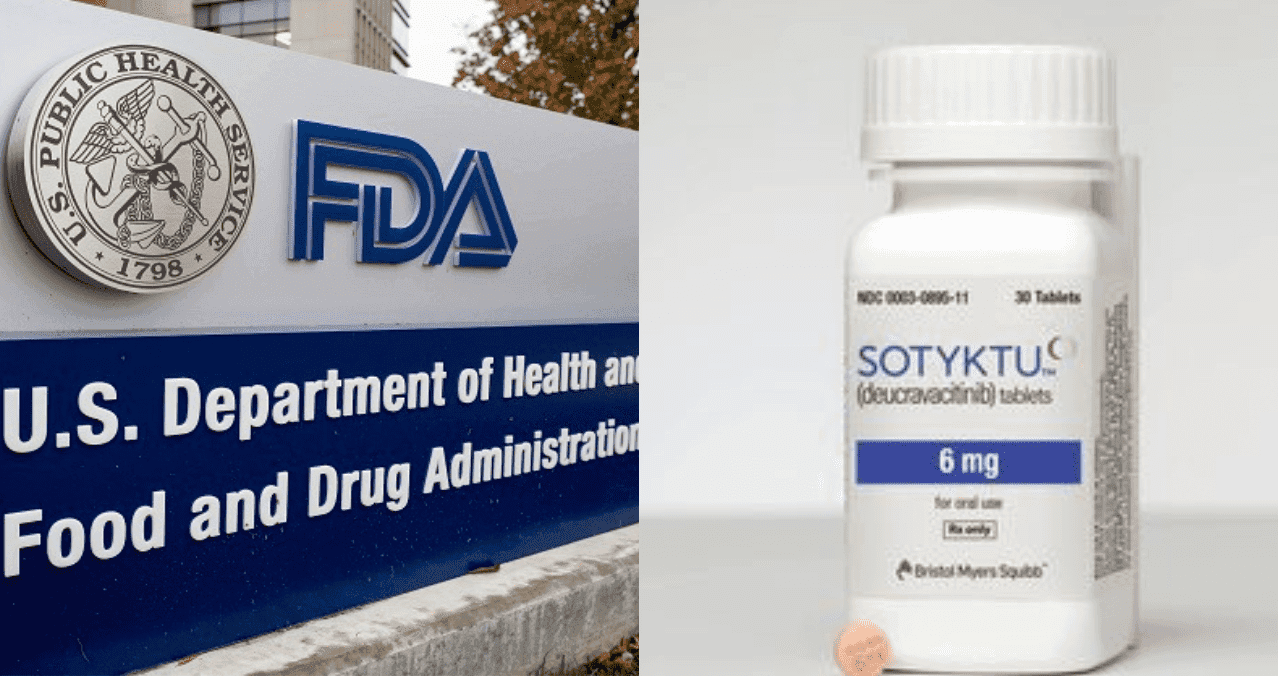
The Food and Drug Administration approved Sotyktu (deucravacitinib) for adults with active psoriatic arthritis on Wednesday, making it the first tyrosine kinase 2 (TYK2) inhibitor cleared for the condition and expanding the drug's reach beyond its original use in plaque psoriasis.
Bristol Myers Squibb, the Princeton-based maker of Sotyktu, announced the decision, which was based on results from two phase 3 trials involving 1,294 adults. The approval covers a 6 mg once-daily oral dose, adding a mechanistically distinct treatment to a field that has long been dominated by injectable biologics and a handful of oral options.
Psoriatic arthritis is a chronic immune-mediated condition that causes inflammation in the joints, tendons, and skin, affecting up to roughly 30 percent of people who have psoriasis. For many patients it means swollen fingers and toes, pain where tendons attach to bone, and progressive joint damage that interferes with daily life.
"PsA is a chronic, progressive autoimmune condition that often involves both the joints and skin. Patients often have trouble moving and staying active and can experience pain in the joints, tendons, or ligaments," said Philip J. Mease, MD, director of rheumatology research at Providence Swedish Medical Center and clinical professor at the University of Washington School of Medicine. "New oral, effective first-line treatments are needed."
The pivotal trials, POETYK PsA-1 and POETYK PsA-2, each included a 16-week placebo-controlled period followed by continued active treatment to 52 weeks. In POETYK PsA-1, 54.2 percent of patients receiving deucravacitinib achieved at least a 20 percent improvement in joint symptoms, the primary endpoint known as ACR20, compared with 34.1 percent on placebo (P < .0001). Results in POETYK PsA-2 were similar, with 54 percent of the drug arm reaching ACR20 versus 39 percent on placebo, a difference of 15 percentage points (95% CI, 7-23).

Deeper responses followed the same pattern. ACR50 response rates were 25 percent versus 14 percent in PsA-1 and 29 percent versus 16 percent in PsA-2. More than half of deucravacitinib-treated patients in both trials showed meaningful improvement in physical function as measured by the HAQ-DI scale at week 16. By week 52 in POETYK PsA-2, 60.8 percent of patients who had switched from placebo to active therapy at week 16 achieved ACR20 response.
The drug works by selectively binding to the regulatory domain of TYK2, producing allosteric inhibition that dampens signaling through IL-23, IL-12, and type 1 interferons, pathways central to psoriatic disease. The safety profile in the PsA trials was consistent with what was observed in plaque psoriasis; the most commonly reported adverse reactions included upper respiratory infections, elevated creatine phosphokinase, herpes simplex, mouth ulcers, folliculitis, and acne.
Mease framed the approval as filling a specific gap: "Sotyktu is an effective oral treatment option which fulfills an unmet need both for patients who prefer an oral and reasonably safe medication early in their treatment course, as well as a new mechanism of action, TYK2 inhibition, to use in patients who have experienced loss of effect or intolerability to a prior immunomodulatory medication."
Sotyktu was first approved in 2022 for moderate-to-severe plaque psoriasis in adults who are candidates for systemic therapy or phototherapy. Wednesday's decision marks the second major indication for the drug, and Bristol Myers Squibb signaled further ambitions. "This latest approval of Sotyktu confirms its important role in managing both skin and joint symptoms of psoriatic disease and is a key milestone as we continue to explore its development in diseases that have limited or no treatment options," said Al Reba, the company's senior vice president of Cardiovascular and Immunology Commercialization.
Know something we missed? Have a correction or additional information?
Submit a Tip