Fed vice chair Jefferson cautiously optimistic as labor market stabilizes
Jefferson said at Brookings he is cautiously optimistic on 2026 growth; labor is stabilizing and inflation should head back to 2 percent.
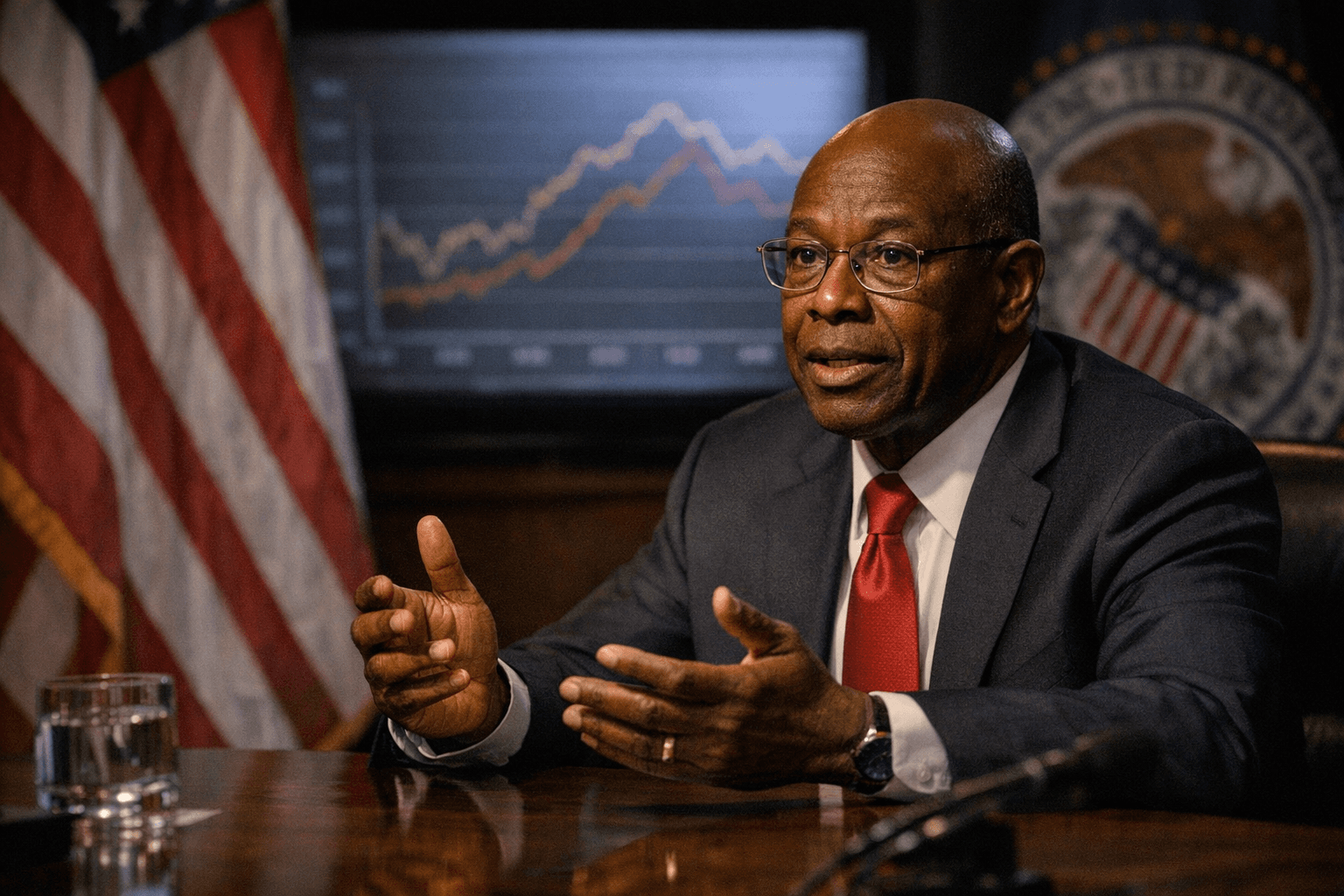
Federal Reserve Vice Chair Philip N. Jefferson said he is “cautiously optimistic” about the U.S. economic outlook, telling a Brookings Institution event in Boca Raton, Florida on Feb. 6 that the labor market is stabilizing and inflation can return toward the Fed’s 2 percent objective. His remarks combined a measured upbeat assessment of growth and jobs with a reiteration of the Fed’s commitment to price stability.
“At the start of this year, I am cautiously optimistic about the economic outlook,” Jefferson said. He added, “I see signs suggesting that the labor market is stabilizing, that inflation can return to a path toward our 2 percent objective, and that sustainable economic growth will continue.” Those remarks framed his endorsement of the Federal Open Market Committee’s recent posture: steady but watchful.
On policy, Jefferson said he supported the FOMC’s decision “last week to maintain the federal funds rate at the current level.” He reviewed recent moves, noting that “over the last year and a half, the Committee lowered the target range for the policy rate by 175 basis points. That included three reductions late last year.” He argued those cuts were calibrated responses to shifting risks to employment and inflation and that they had placed the policy rate “broadly in the range of estimates of the neutral rate.”
Jefferson portrayed the current stance as one that should ease pressure on the labor market while preserving momentum in disinflation. “Our policy stance should help stabilize the labor market while allowing inflation to resume its decline toward our 2 percent target,” he said. He also cautioned that the central bank must remain vigilant: “To be sure, there are risks to both sides of the dual mandate, given to us by Congress, of maximum employment and stable prices. Incoming data bear careful watching.”
The vice chair’s comments underscore a Fed navigating a narrow policy path. After cutting the policy rate by 175 basis points over roughly 18 months, including three reductions late last year, the committee has paused to assess how labor supply, wage growth and services inflation evolve. Jefferson’s language, highlighting both the neutral-rate assessment and the low probability that recent shifts will produce sustained inflation, signals a preference for patience rather than immediate further easing.
Jefferson’s institutional standing adds weight to his appraisal. He has served as a member of the Board of Governors since May 23, 2022 and as vice chair since Sept. 13, 2023. Before joining the Board he held senior academic posts, most recently at Davidson College, and earlier work at the Fed and in economic associations informs his dual focus on employment and prices.
For markets and policymakers, the immediate implication is continuity: the Fed is not tilting toward rapid tightening nor toward an aggressive easing cycle, but is positioning policy to respond to new data. Over the longer term, Jefferson’s emphasis on keeping inflation moving back to 2 percent while allowing the supply side to adjust reflects an expectation that growth can remain modestly above trend without reigniting inflation, provided labor-market and price signals continue to align with that scenario.
This article was produced by Prism’s automated news system from verified source data, official records, and press releases, then run through automated quality and moderation checks before publishing. The system is built and supervised by the people who set the standards it runs under. Read our full AI policy.
Did this article answer your question?