Federal student loan borrowers can get 1% interest discount by Sept. 30 deadline
Borrowers in auto pay can cut interest by 1 percentage point through June 2028, but only if they enroll by 11:59 p.m. ET on Sept. 30.

Federal student loan borrowers enrolled in auto pay can lock in a 1% interest-rate reduction on eligible Direct Loans, but the deadline to qualify is 11:59 p.m. ET on Sept. 30, 2026. The U.S. Department of Education raised the discount from 0.25% to 1% starting July 1, 2026, and the temporary benefit runs through June 30, 2028.
The break applies only to borrowers with Direct Loans disbursed on or after July 1, 2012. Borrowers learn more and enroll at StudentAid.gov. The discount is not a blanket reduction across all federal student loans, and it is temporary.
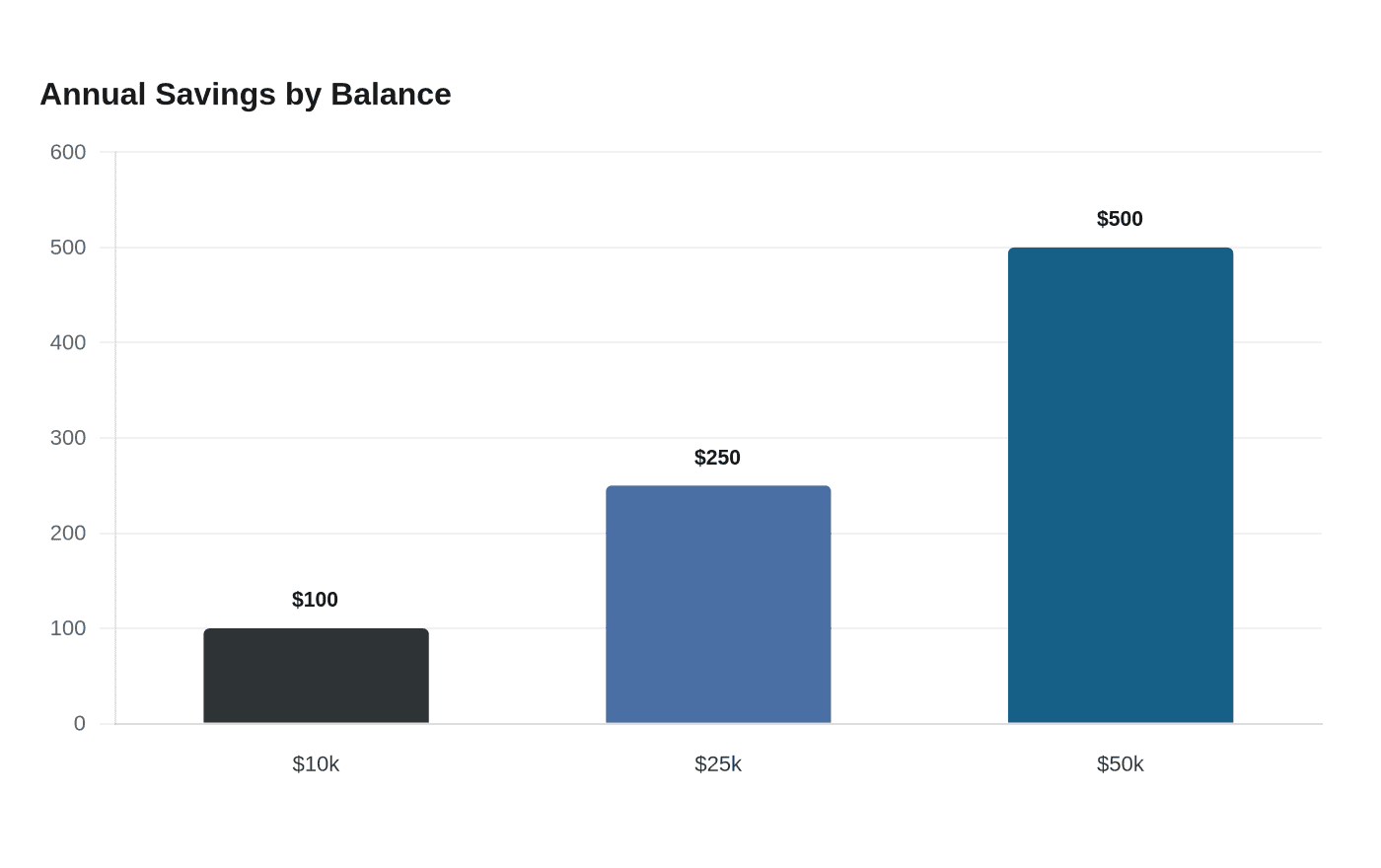
The dollar value is easiest to see by loan balance. A borrower with a $10,000 balance saves about $100 a year, or roughly $8.33 a month, under a 1% interest reduction. A $25,000 balance trims about $250 a year, or $20.83 a month. At $50,000, the savings rise to about $500 a year, or $41.67 a month. Over the full 24 months that the temporary benefit is available, those savings total about $200 on a $10,000 balance, $500 on a $25,000 balance, and $1,000 on a $50,000 balance.
The usual auto-debit discount is 0.25% for eligible Direct Loans, so the change adds 0.75 percentage point of extra relief. On a $20,000 balance, that extra slice alone amounts to about $150 a year, or $12.50 a month, compared with the old discount.
It lowers interest charges, but it does not erase principal or replace income-based repayment protections. The Education Department is also moving borrowers out of the SAVE Plan after a court order on March 10, 2026 and into other repayment plans.
This article was produced by Prism’s automated news system from verified source data, official records, and press releases, then run through automated quality and moderation checks before publishing. The system is built and supervised by the people who set the standards it runs under. Read our full AI policy.
Did this article answer your question?