FERC orders grid operators to speed data center connections
FERC gave data centers a fast track to the grid, but left untouched the power shortage that could still drive up bills and strain reliability.

Federal regulators moved to clear a faster path for data centers and other giant power users to hook into the grid, even as the country’s electricity supply remains tight and household bills keep climbing. The contradiction sits at the center of the new order: speed up connections now, and sort out the shortage later, even though ordinary customers will live with the consequences if reliability or affordability slips.
The Federal Energy Regulatory Commission on June 18 issued tailored show-cause orders under Section 206 of the Federal Power Act to all six regional grid operators under its jurisdiction. The commission gave them 60 days to explain or rewrite tariffs governing how data centers, manufacturing facilities and other large energy users connect to the electric system, with the stated goal of speeding "speed to power" while protecting ratepayers.

FERC said its staff reviewed more than 3,500 pages of public comments before acting. Chairman Laura V. Swett called the move a historic step to modernize markets, preserve "just and reasonable" rates and give investors more certainty. The orders focused on five broad areas, including clearer interconnection processes and deciding who should pay for the transmission and substation upgrades needed to serve large customers. FERC also said data centers would be responsible for the full cost of any grid upgrades required for their connection.
The action was part of a broader federal push that began after Energy Secretary Chris Wright issued an advance notice of proposed rulemaking on large-load interconnection on October 23, 2025. It followed earlier FERC steps in the same case, including a December 18, 2025 order requiring PJM Interconnection to create transparent rules for co-located large loads at generation facilities and a January 2026 approval of Southwest Power Pool’s High Impact Large Load initiative.
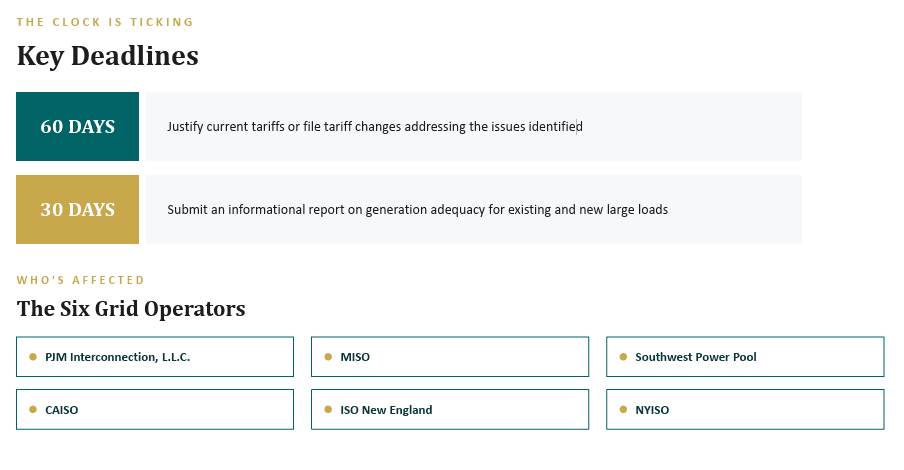
PJM’s territory alone serves more than 67 million Americans across 13 states and Washington, D.C., giving the issue immediate reach across the Mid-Atlantic region and beyond. Texas, where ERCOT operates outside FERC’s direct jurisdiction, was not included in the proceeding. Tech companies and data center developers have pushed for faster interconnections, while utilities, states, regional grid operators and clean-energy advocates have warned that federal intervention could weaken state authority, complicate renewable-energy rules and shift costs onto households already facing higher utility bills.

The pressure is rising as big tech companies including Microsoft, Google, Amazon, Meta, OpenAI and Anthropic spend hundreds of billions of dollars on chips, data centers and power supply. But the central problem remains unresolved: demand is surging faster than new generation and transmission can come online, leaving communities exposed to higher prices and greater blackout risk even as the AI buildout accelerates.
This article was produced by Prism’s automated news system from verified source data, official records, and press releases, then run through automated quality and moderation checks before publishing. The system is built and supervised by the people who set the standards it runs under. Read our full AI policy.
Know something we missed? Have a correction or additional information?
Submit a Tip