Fifa uses AI and tracking cameras to speed offside calls
Twelve roof cameras and a 500Hz ball sensor now flag offsides in seconds, but FIFA still leaves the final call to human video officials.

At FIFA’s Zurich headquarters, offside decisions looked less like a debate and more like a data problem. Twelve dedicated tracking cameras mounted under the stadium roof follow the ball and up to 29 data points on each player 50 times per second, while a sensor inside the official World Cup ball sends information 500 times per second to the video operation room.
FIFA says the semi-automated offside system is designed to help video match officials and on-field officials make faster, more reproducible and more accurate decisions. The machine builds an automated offside alert by combining limb tracking, ball tracking and artificial intelligence, but the final judgment still stays with people: VAR officials manually validate the alert before the referee is informed. The same data is also turned into a 3D animation for stadium screens and broadcasters, giving fans a cleaner look at how the decision was reached.
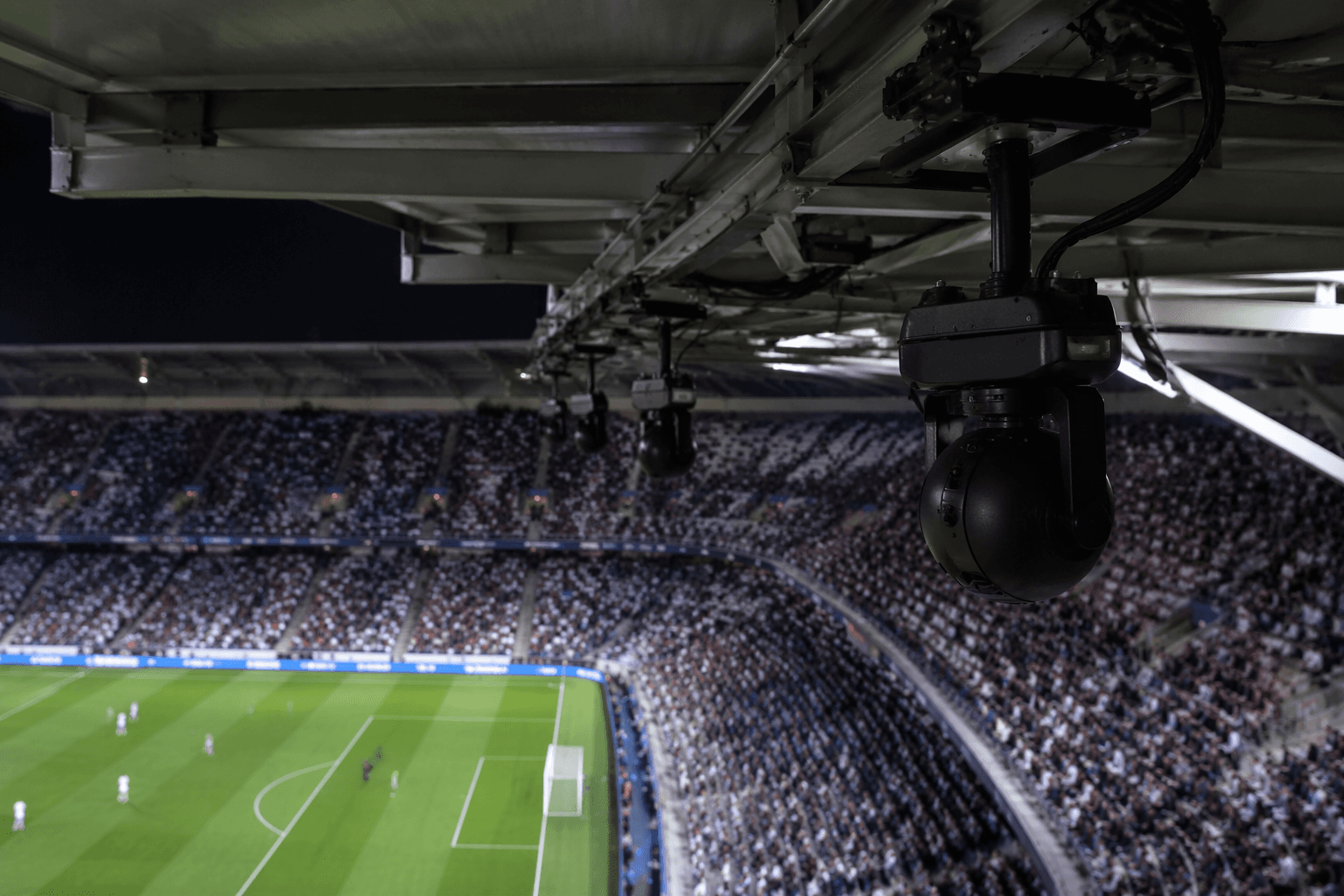
The sport’s governing body has already tested the system under pressure. FIFA says it was successfully trialled at the FIFA Arab Cup 2021 and the FIFA Club World Cup 2021, then announced on 1 July 2022 that it would be used at the World Cup in Qatar. The technology first appeared at the FIFA World Cup 2022, which began on 20 November 2022, turning one of football’s most argued moments into a product of cameras, sensors and software.
FIFA is now pushing that logic further. On 7 January 2026, FIFA and Lenovo unveiled Football AI Pro, AI-enabled 3D player avatars and an updated Referee View ahead of the FIFA World Cup 2026. FIFA says the tournament will be the first 48-team World Cup, staged in Canada, Mexico and the United States, and that Football AI Pro will serve as a generative AI knowledge assistant for all 48 teams. The aim, FIFA says, is not only sharper officiating and match analysis, but also to level the playing field by giving every squad access to the same advanced analytical tools.
The broader message is hard to miss in Zurich, where the FIFA Museum opened Innovation in Action on 1 October 2025. The exhibition traces nearly 100 years of World Cup technology, from VAR and high-speed cameras to wearable sensors, underscoring how quickly football’s most contested decisions are becoming automated in full view of a global audience.
This article was produced by Prism’s automated news system from verified source data, official records, and press releases, then run through automated quality and moderation checks before publishing. The system is built and supervised by the people who set the standards it runs under. Read our full AI policy.
Know something we missed? Have a correction or additional information?
Submit a Tip