Finding a legal spot for your tiny house made practical
Tiny-house owners say locating a legal, practical site is the hardest part; this checklist walks through zoning, utilities, permits and true landed cost.

Finding a legally and practically suitable place to put a tiny house is consistently the biggest hurdle for people choosing small-footprint living. The challenge is less about the build and more about the land: whether a parcel is zoned for your type of dwelling, whether hookups are available, and whether local rules or floodplain issues will block your plan.
Start by confirming zoning and land-use rules. Check whether the parcel allows AHJ-approved dwellings, accessory dwelling units (ADUs), or RV/park use. Setbacks, lot coverage limits and minimum habitable-space ordinances can all render a seemingly perfect lot unusable without variances or special permits.
Next, confirm utility access and the cost to connect. Water, sewer or septic, electricity and communications each carry their own charges and timelines; on many sites the expense and logistics of running hookups or installing systems eclipse the tiny house purchase. Vet soil, drainage and floodplain constraints early, because these site conditions drive foundation choices, permitting and insurance.
Evaluate emergency services access and local permitting requirements. Fire and ambulance response, required ingress and egress, and any mandated fire-safety features affect both approval and insurance. Document the permits you will need and the timelines for review and inspection before committing to a land purchase or build schedule.
Neighborhood covenants and homeowners associations matter. HOAs and neighborhood rules commonly prohibit tiny houses outright or restrict exterior styles, parking and placement. That can leave you with a compliant tiny house that is still unplaceable in the community you want to live in.
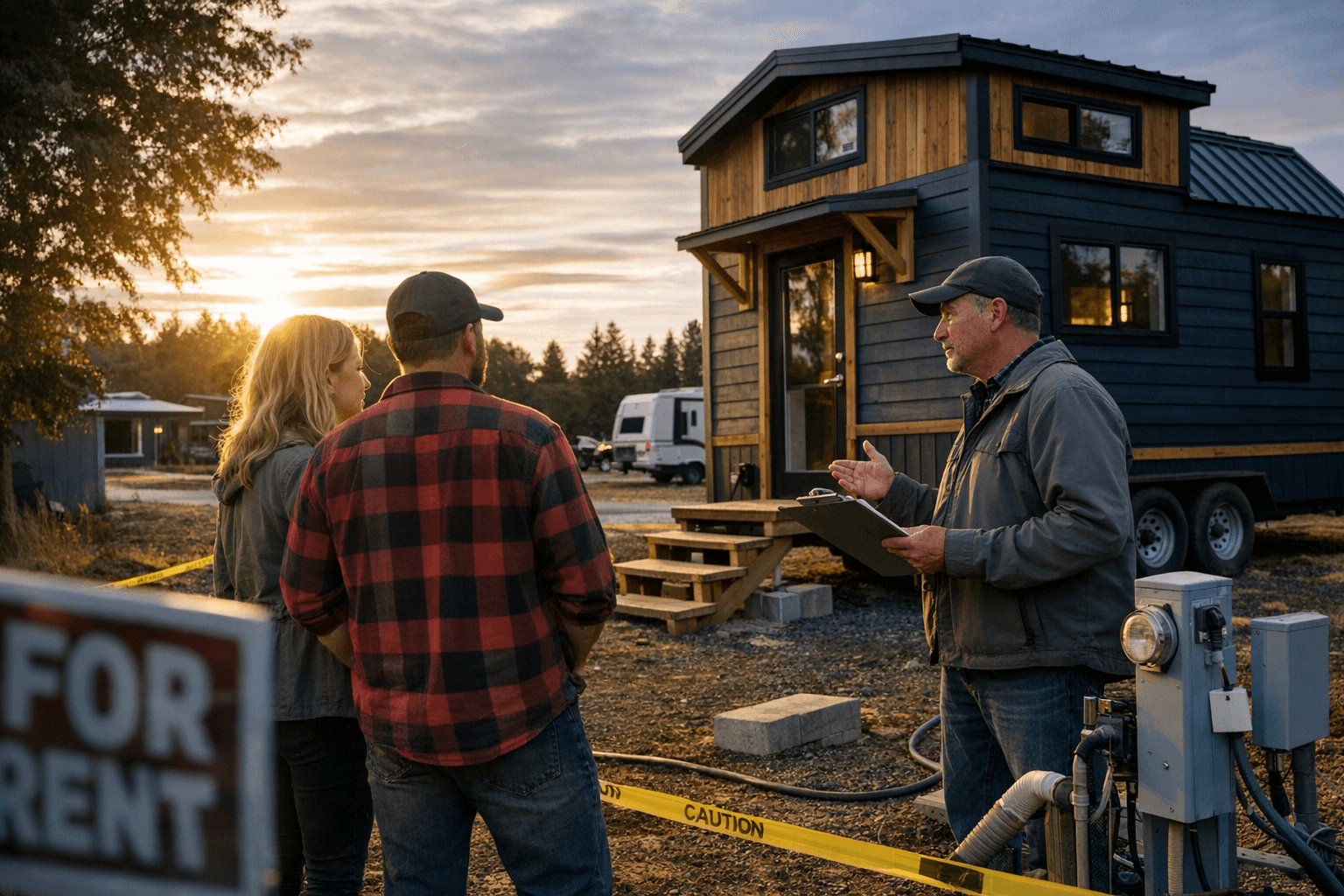
Estimate the total landed cost up front. Land plus permitting, site work and utility hookups often exceeds the cost of the tiny house itself. Builders, real-estate professionals and planners use this checklist as a practical primer to scope projects and present realistic budgets to buyers.
Treat this checklist as a working roadmap: confirm zoning and parcel use, confirm utilities and connection costs, check setbacks and minimum space rules, evaluate emergency services and permits, review HOA and neighborhood constraints, vet soil and floodplain issues, estimate landed cost and document required permits and timelines. Verify every item with the authority having jurisdiction before you sign or build.
The takeaway? Treat site selection as the primary project, not an afterthought. Get documentation, factor in site and permitting costs, and walk the lot with local officials sooner rather than later. Our two cents? Spend the time up front and you’ll avoid costly surprises later.
Sources:
Know something we missed? Have a correction or additional information?
Submit a Tip