Finland may approve Tesla self-driving aid before EU decision
Finland is weighing Tesla’s supervised driving aid before the EU votes, a move that could turn one national approval into a Europe-wide regulatory test.

Finland’s transport authority is weighing whether to recognize Tesla’s FSD Supervised system before the European Union settles the question in October, a step that could give one small Nordic market outsized influence over Europe’s fragmented approach to automated driving. Traficom said it is prepared to move faster if Tesla provides more detail on safety issues, but it has not yet decided whether to approve the system in Finland.
Traficom said it is examining the case on the basis of the Dutch provisional type approval granted on April 10, 2026, and that member states can recognize that approval before the EU committee vote. Jukka Juhola, a senior specialist at Traficom, said the agency has discussed the matter with Tesla and the Dutch approval authority. He also said Finland’s overall view of the system is positive, while stressing that officials are still studying how quickly drivers can regain control, how the system behaves when overtaking in low visibility, and the speed-offset feature that Sweden and Norway have questioned.
The Dutch RDW said it tested Tesla’s system for more than one and a half years on its test track and on public roads before issuing the provisional approval. RDW described FSD Supervised as driver-controlled, not self-driving, and said the driver remains responsible and must always stay in control. The Dutch authority also said sensors monitor whether the driver’s eyes are on the road and whether hands are available to take over immediately if needed.
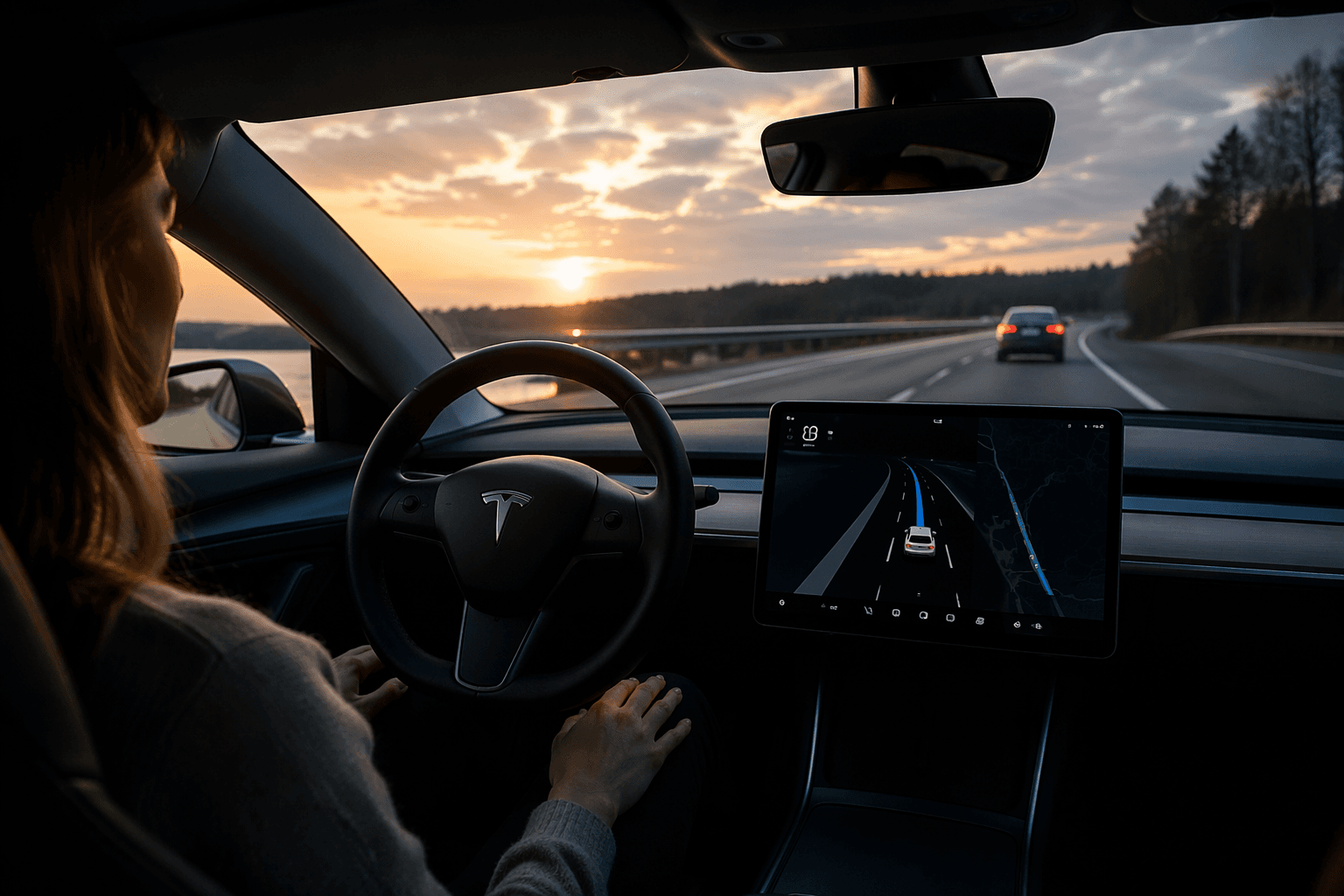
The stakes are larger than Finland’s own fleet. About 6,500 cars in Finland are equipped with the system, a small slice of the country’s roughly 2.7 million passenger vehicles. Traficom said genuine self-driving vehicles may not appear on Finnish roads until around 2028, underscoring that the immediate fight is about precedent, supervision and the boundaries of assisted driving rather than mass adoption. The Finnish agency also said Tesla’s system departs from current legislation because its speed control can use a contextual speed setting and because it does not require the driver’s continuous physical participation when active.
Elsewhere in Europe, the patchwork is already taking shape. The Netherlands was the first to grant provisional approval, while Belgium and Denmark allowed the technology in June 2026, joining Lithuania, Estonia and the Netherlands in giving it some form of authorization. Sweden has urged the EU to reject bloc-wide approval unless Tesla removes the system’s ability to exceed posted speed limits, arguing that systems that systematically exceed legal limits could undermine both the legal framework and the promised safety benefits of automation. Tesla’s presentation of self-published safety statistics to Swedish and Dutch regulators has added another layer of scrutiny, after independent traffic-safety researchers said the material amounted to misleading marketing.
This article was produced by Prism’s automated news system from verified source data, official records, and press releases, then run through automated quality and moderation checks before publishing. The system is built and supervised by the people who set the standards it runs under. Read our full AI policy.
Know something we missed? Have a correction or additional information?
Submit a Tip