Firefighter killed, 10 injured in Robbins Lumber silo explosion in Maine
One firefighter was killed and 10 others hurt when a silo exploded at Robbins Lumber in Searsmont, sending a mass-casualty response across Maine.

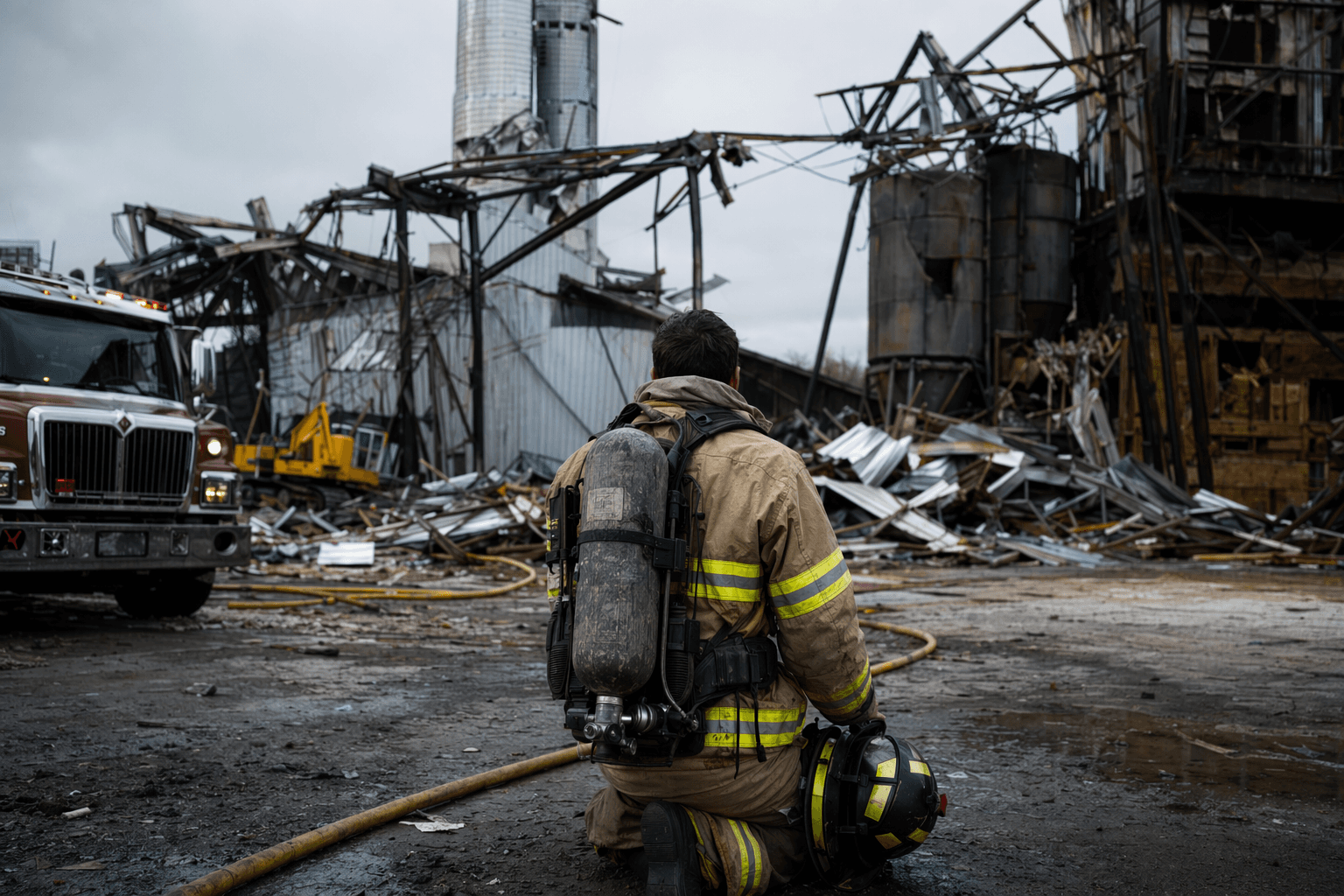
A firefighter died and at least 10 other people were injured after a fire inside a silo at Robbins Lumber in Searsmont turned into an explosion while crews were trying to put it out. The emergency unfolded at the mill at 506 Main Street South, and officials said some of the injured were seriously or critically hurt.
Firefighters were called to the scene around 10 a.m. Friday, May 15, 2026. The fire began in one of the mill’s silos, then exploded as crews worked the blaze, triggering a large regional response from departments across Maine’s Midcoast and beyond. Officials said the fire was contained later in the day, but crews were still working to fully extinguish it.
The Maine State Fire Marshal’s Office is leading the investigation, with assistance from the Bureau of Alcohol, Tobacco, Firearms and Explosives, the Occupational Safety and Health Administration, the Maine Department of Environmental Protection and Maine State Police. Maine Department of Public Safety spokesperson Shannon Moss and Public Safety Commissioner Mike Sauschuck were among the state officials tied to the response. The body of the fallen firefighter was being taken to Augusta.
All employees at the mill were accounted for, according to Catherine Robbins-Halsted, a co-owner and vice president of administration at Robbins Lumber. MaineHealth said Maine Medical Center in Portland was expecting 10 patients from the incident, and MaineGeneral Medical Center activated mass-casualty protocols because of the site’s proximity. Northern Light Eastern Maine Medical Center also was among the hospitals involved in the regional response.
The blaze struck a company with deep roots in Waldo County and in the state’s forestry industry. Robbins Lumber was founded in 1881 and now manages 30,000 acres of its own forests. Its Searsmont milling operation sits on a 40-acre site, and the mill was rebuilt after a fire in 1957 burned it to the ground.
The incident is likely to intensify scrutiny of industrial fire safety, emergency planning and inspection history at the site. Reporting on the mill has noted a history of fires and safety violations, raising new questions about the conditions first responders faced when the silo went up and why the blast proved so deadly for the crews answering the call.
Know something we missed? Have a correction or additional information?
Submit a Tip